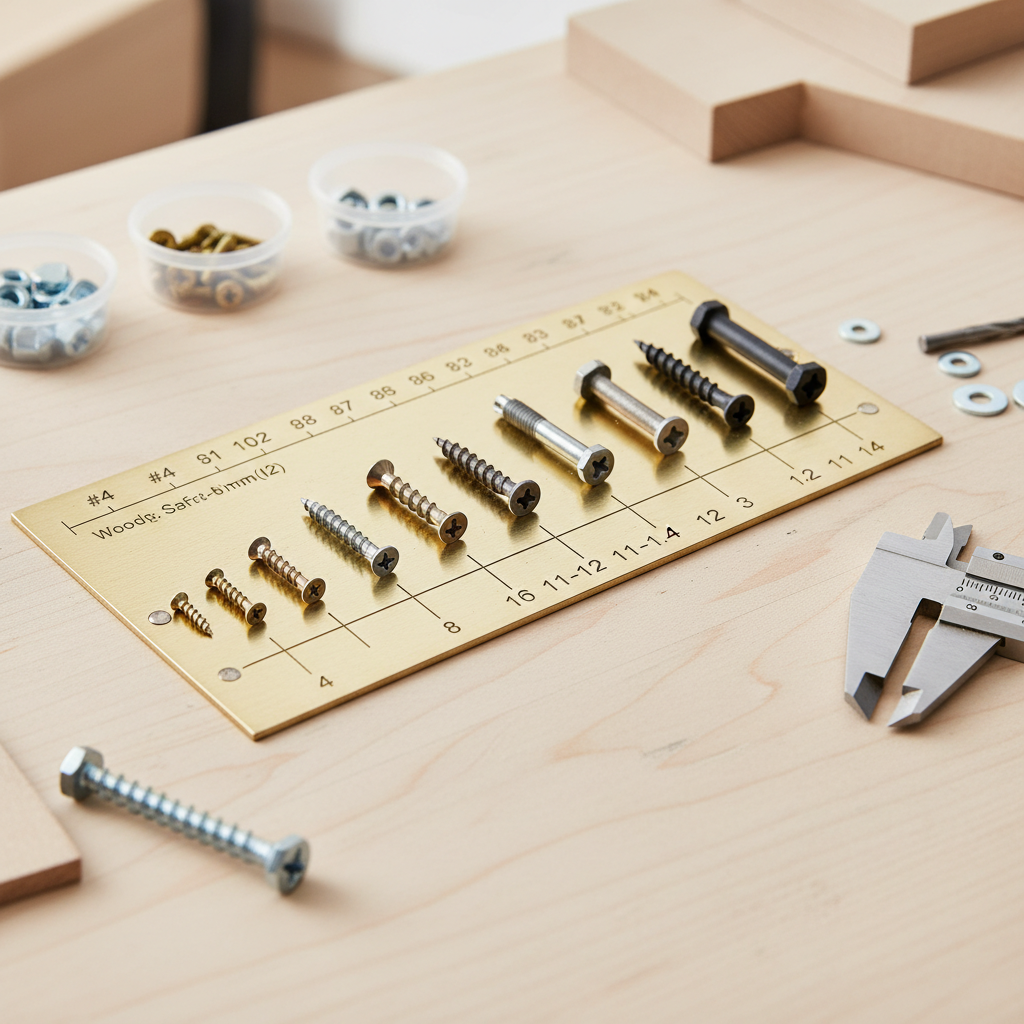
Wood Screw Size Chart and Selection Guide (2026)
Understanding wood screw sizing eliminates guesswork and ensures strong, clean joints in every woodworking and construction project. Screw gauge numbers, length designations, head types, and thread patterns all affect performance. This guide provides a comprehensive size chart and explains how to select the right screw for your wood species, joint type, and application.
Key Takeaways
- Understanding wood screw sizing eliminates guesswork and ensures strong, clean joints in every woodworking and construction project.
- Screw gauge numbers, length designations, head types, and thread patterns all affect performance.
- This guide provides a comprehensive size chart and explains how to select the right screw for your wood species, joint type, and application.
- Screw gauge (diameter from #4 to #14), length for the materials being joined, head type (flat, round, pan, or washer-head), drive type (Phillips, square, star/Torx), thread type (coarse for softwood, fine for hardwood), material (steel, stainless, brass, silicon bronze), and whether you need a pilot hole for your wood species.
- GRK Multi-Purpose screws combine aggressive threads, self-countersinking heads, and star drive for versatility across applications.
What to Consider
Screw gauge (diameter from #4 to #14), length for the materials being joined, head type (flat, round, pan, or washer-head), drive type (Phillips, square, star/Torx), thread type (coarse for softwood, fine for hardwood), material (steel, stainless, brass, silicon bronze), and whether you need a pilot hole for your wood species.
Product Comparison
GRK Multi-Purpose screws combine aggressive threads, self-countersinking heads, and star drive for versatility across applications. SPAX multi-material screws feature a patented serrated thread that reduces splitting. Kreg pocket-hole screws are purpose-built for pocket-hole joinery with specific thread and head profiles. McFeely's offers the widest selection of specialty wood screws including square-drive and stainless options in every gauge and length.
Size Selection Guide
General rule: screw length should be 2-3 times the thickness of the top piece. #6 screws for trim and small projects (shank: 0.138 inch). #8 screws for general woodworking and cabinets (shank: 0.164 inch). #10 screws for structural and outdoor use (shank: 0.190 inch). #12 and #14 for heavy-duty applications. Pilot hole: drill 1/64 inch smaller than shank diameter in softwood, exact shank diameter in hardwood. Countersink for flat-head screws.
Installation Tips
Always predrill when screwing within 2 inches of a board edge or end. Match your pilot hole bit to the screw gauge using a chart or by holding the bit behind the screw — the bit should be visible through the threads but hidden by the shank. Use a countersink for flat-head screws to sit flush. Drive screws with a drill or impact driver set to the appropriate torque. Star/Torx drive resists cam-out better than Phillips.
Common Mistakes to Avoid
Using screws that are too short for adequate holding power in the bottom piece. Skipping pilot holes in hardwood causing splits. Using Phillips drive where star/Torx would prevent cam-out. Not matching the screw gauge to the material thickness. Confusing thread count with gauge number. Using brass screws to drive into hardwood (brass is too soft — drive a steel screw first as a pilot, then replace with brass).
Budget Guide
Standard steel wood screws cost $5-10 per pound (approximately 100-200 screws depending on size). Premium coated and star-drive screws run $8-15 per pound. Stainless steel screws cost $15-30 per pound. Brass and silicon bronze screws are $20-40 per pound. Pocket-hole screws run $10-18 per box of 250-500. An assorted screw kit for a home workshop costs $25-50.
Frequently Asked Questions
Related Guides
Deck Board Clips Comparison
Compare deck board clips from Tiger Claw, Ipe Clip, and Mantis. Find the best hidden clip for groove
Read guideDeck Screws Selection Guide
Find the best deck screws for your project. Compare stainless steel, coated, and composite screws by
Read guideHidden Fastener Systems Comparison
Compare hidden deck fastener systems including Camo, Tiger Claw, and Ipe Clip. Side-by-side review o
Read guideNail Gun and Nail Selection Guide
Choose the right nail gun and nails for framing, finish, trim, and decking. Compare framing nailers,
Read guide