How to Choose the Right Deck Screws for Every Wood Type (2026)
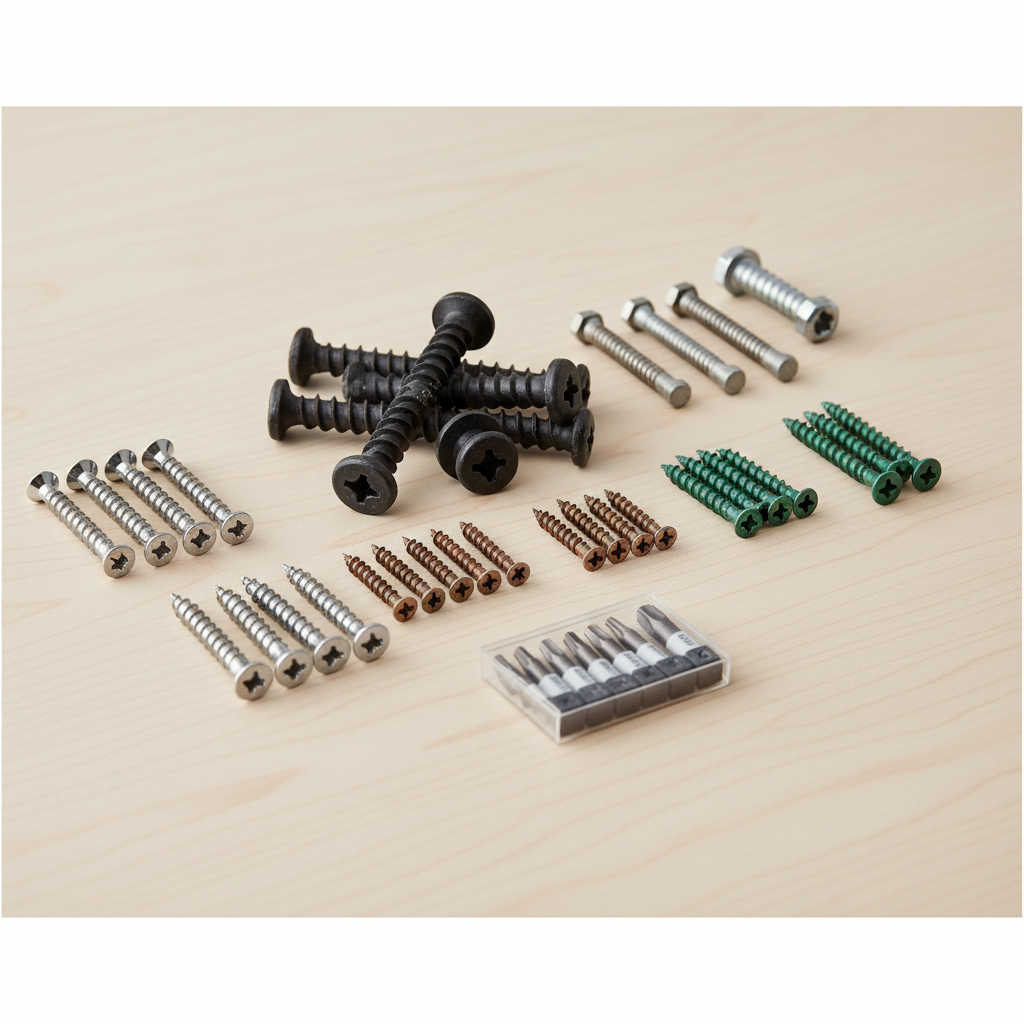
Choosing the right deck screws is critical for structural integrity and long-lasting outdoor projects. The wrong screws can cause wood splitting, corrosion stains, or premature deck failure. This guide covers screw materials, coatings, sizes, and drive types to help you pick the perfect fastener for your lumber species.
Key Takeaways
- Choosing the right deck screws is critical for structural integrity and long-lasting outdoor projects.
- The wrong screws can cause wood splitting, corrosion stains, or premature deck failure.
- This guide covers screw materials, coatings, sizes, and drive types to help you pick the perfect fastener for your lumber species.
- Material compatibility (stainless steel vs coated carbon steel), screw length and gauge for your deck board thickness, drive type (star/Torx vs Phillips vs square), corrosion resistance rating for your climate, thread pattern (coarse for softwood, fine for hardwood), head style (flat, trim, or bugle), and whether you need self-drilling tips for hardwoods like Ipe.
- GRK R4 screws offer excellent holding power with a self-countersinking head and are ideal for general decking.
What to Consider
Material compatibility (stainless steel vs coated carbon steel), screw length and gauge for your deck board thickness, drive type (star/Torx vs Phillips vs square), corrosion resistance rating for your climate, thread pattern (coarse for softwood, fine for hardwood), head style (flat, trim, or bugle), and whether you need self-drilling tips for hardwoods like Ipe.
Product Comparison
GRK R4 screws offer excellent holding power with a self-countersinking head and are ideal for general decking. SPAX PowerLags provide superior corrosion resistance with their multi-layer coating. For premium hardwoods, Starborn Pro Plug system creates a clean plugged finish. Simpson Strong-Tie DCU screws are ACQ-compatible and budget-friendly for pressure-treated lumber.
Size Selection Guide
Use #8 x 2-1/2 inch screws for standard 5/4 deck boards into joists. For 2x6 decking, step up to #10 x 3 inch screws. Ledger board connections require 3-1/2 to 4 inch structural screws. Railing balusters typically need #8 x 1-5/8 inch trim-head screws. Always predrill hardwoods with a bit 1/64 inch smaller than the screw shank.
Installation Tips
Predrill within 1 inch of board ends to prevent splitting. Drive screws at a slight angle for better holding power. Use a depth-setting clutch to avoid overdriving. Space screws 16 inches on center along each joist. For hidden fastening, place screws in the groove edge of grooved deck boards.
Common Mistakes to Avoid
Using interior-grade screws outdoors leading to rust streaks within months. Mixing metals (e.g., galvanized screws with ACQ-treated wood causes accelerated corrosion). Overdriving screws past the board surface weakening the hold. Skipping predrilling on hardwoods causing splits. Using screws that are too short for the board thickness.
Budget Guide
Economy coated screws run $30-50 per 1,000 count for pressure-treated lumber projects. Mid-range polymer-coated options like GRK R4 cost $60-90 per 1,000. Premium stainless steel screws for hardwood or coastal applications range $100-180 per 1,000. Budget roughly 350 screws per 100 sq ft of decking.