Structural Screws vs Lag Bolts: Choosing the Right Heavy-Duty Fastener (2026)
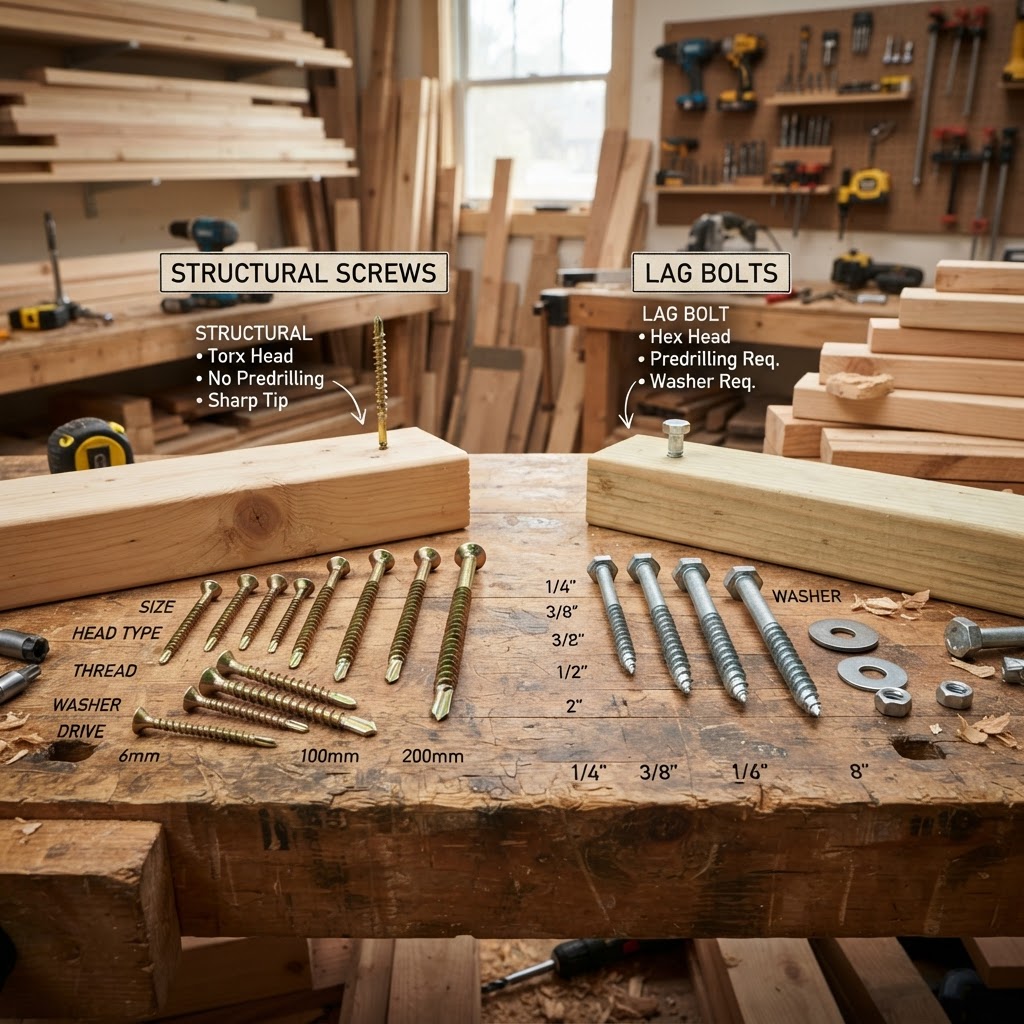
When building decks, pergolas, and heavy timber structures, the choice between structural screws and traditional lag bolts affects both installation time and connection strength. Structural screws have revolutionized timber framing by eliminating the need for predrilling, but lag bolts remain the code-specified fastener for many critical connections. This guide compares these two heavy-duty fasteners head-to-head.
Key Takeaways
- When building decks, pergolas, and heavy timber structures, the choice between structural screws and traditional lag bolts affects both installation time and connection strength.
- Structural screws have revolutionized timber framing by eliminating the need for predrilling, but lag bolts remain the code-specified fastener for many critical connections.
- This guide compares these two heavy-duty fasteners head-to-head.
- Connection type (ledger board, beam-to-post, joist-to-beam), required shear and withdrawal loads, local building code specifications, wood species and density, installation tools available (impact driver vs ratchet wrench), corrosion resistance requirements, and whether the connection needs to be inspectable for code compliance.
- Simpson Strong-Tie SDWS Timber Screws are ICC-ESR evaluated structural screws that replace lag bolts in many applications with no predrilling.
What to Consider
Connection type (ledger board, beam-to-post, joist-to-beam), required shear and withdrawal loads, local building code specifications, wood species and density, installation tools available (impact driver vs ratchet wrench), corrosion resistance requirements, and whether the connection needs to be inspectable for code compliance.
Product Comparison
Simpson Strong-Tie SDWS Timber Screws are ICC-ESR evaluated structural screws that replace lag bolts in many applications with no predrilling. GRK RSS Rugged Structural Screws provide high shear values with a washer-head design. Traditional 1/2 inch lag bolts with washers remain the code standard for deck ledger connections in many jurisdictions. FastenMaster LedgerLok is specifically designed and code-listed as a lag bolt alternative for ledger connections.
Size Selection Guide
Lag bolts: 1/2 x 4 inch for ledger connections through 2x stock into rim joist. 3/8 x 3 inch for post-to-beam connections. Structural screws: equivalent sizes vary by manufacturer — a #10 x 4 inch structural screw often replaces a 3/8 x 4 inch lag. For ledger boards, most codes accept two 1/2 inch lag bolts or equivalent structural screws per joist spacing. Always check the manufacturer's load tables against your engineering requirements.
Installation Tips
Lag bolts require a pilot hole (typically 3/16 inch for 3/8 inch lags and 1/4 inch for 1/2 inch lags) and a washer under the head. Drive with a ratchet wrench or impact wrench. Structural screws install directly with a heavy-duty impact driver — no predrilling needed in most softwoods. Do not overdrive either fastener past the wood surface. Stagger fastener placement to avoid splitting along the grain line.
Common Mistakes to Avoid
Using standard deck screws instead of rated structural screws for load-bearing connections. Omitting the washer under lag bolt heads allowing the head to pull through. Predrilling too large a pilot hole for lag bolts reducing holding power. Not checking that your structural screw has an ICC-ESR evaluation report for code compliance. Using an underpowered drill that stalls and breaks screws.
Budget Guide
Lag bolts cost $0.50-2.00 each for common sizes plus $0.10-0.25 per washer. Structural screws run $1.00-3.00 each but eliminate pilot hole drilling time. For a deck ledger (16 ft span), expect 10-12 lag bolts at $8-24 total or 10-12 structural screws at $15-36 total. The labor savings from not predrilling often offsets the higher structural screw cost.
Frequently Asked Questions
Related Guides
Deck Board Clips Comparison
Compare deck board clips from Tiger Claw, Ipe Clip, and Mantis. Find the best hidden clip for groove
Read guideDeck Screws Selection Guide
Find the best deck screws for your project. Compare stainless steel, coated, and composite screws by
Read guideHidden Fastener Systems Comparison
Compare hidden deck fastener systems including Camo, Tiger Claw, and Ipe Clip. Side-by-side review o
Read guideNail Gun and Nail Selection Guide
Choose the right nail gun and nails for framing, finish, trim, and decking. Compare framing nailers,
Read guide