The Complete Guide to Stud Finders (2026)
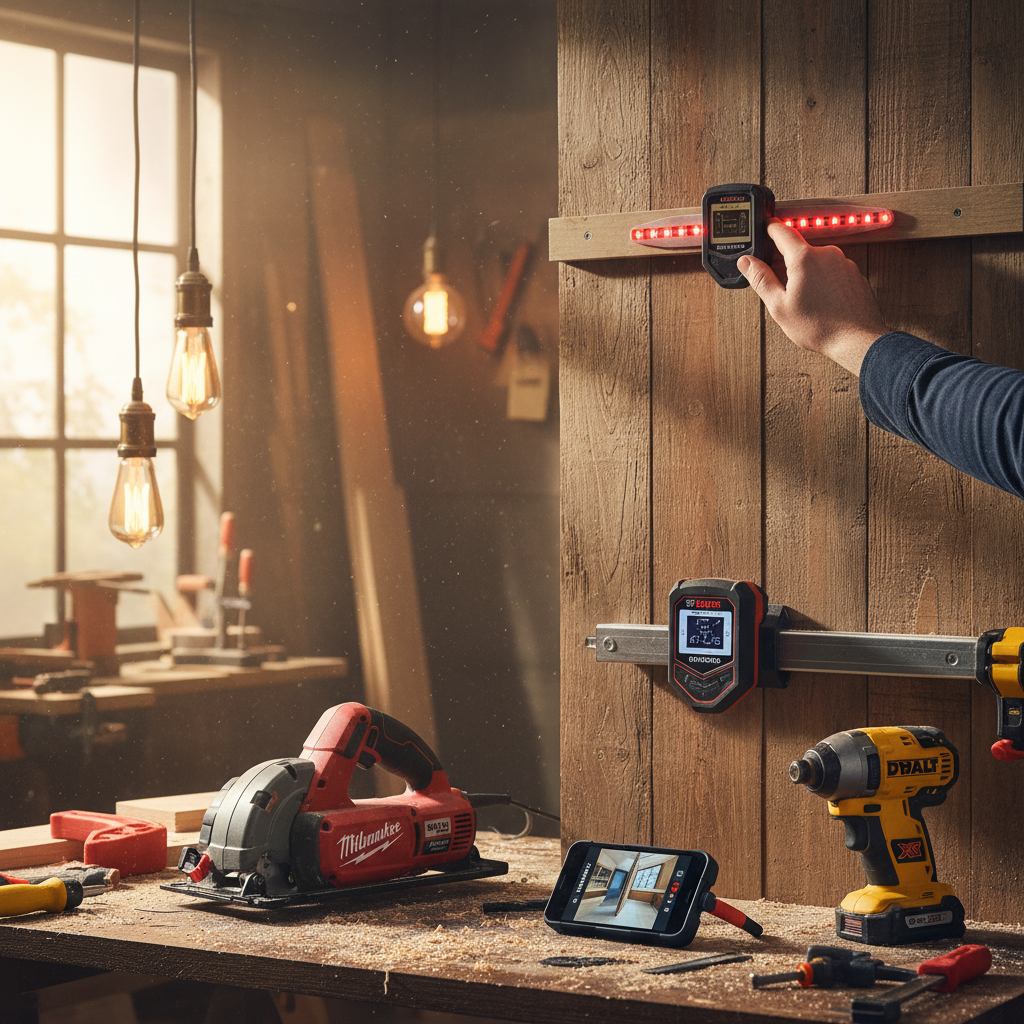
A stud finder is an electronic device that detects the location of wood studs, metal pipes, and electrical wiring hidden behind drywall and plaster. By sensing changes in wall density or using radar technology, it prevents costly mistakes when hanging shelves, TVs, and cabinets. Modern stud finders have evolved from simple magnetic tools to sophisticated multi-sensor devices that map everything behind the wall.
Key Takeaways
- A stud finder is an electronic device that detects the location of wood studs, metal pipes, and electrical wiring hidden behind drywall and plaster.
- By sensing changes in wall density or using radar technology, it prevents costly mistakes when hanging shelves, TVs, and cabinets.
- Modern stud finders have evolved from simple magnetic tools to sophisticated multi-sensor devices that map everything behind the wall.
- Stud finders are used for locating wall studs for secure mounting, finding the edges or center of studs for precise fastener placement, detecting electrical wiring before drilling, locating metal pipes in walls, finding joists in ceilings, and mapping the internal structure of walls before remodeling or cutting.
- Detection depth (3/4 to 1-1/2 inches for studs, deeper for wiring), stud edge vs center detection, AC wire detection, metal detection, display type (LED, LCD screen, or audible), auto-calibration, marking groove for pencil, wall type compatibility (drywall, plaster, concrete), and multi-scan modes.
What It's Used For
Stud finders are used for locating wall studs for secure mounting, finding the edges or center of studs for precise fastener placement, detecting electrical wiring before drilling, locating metal pipes in walls, finding joists in ceilings, and mapping the internal structure of walls before remodeling or cutting.
Types & Variations
Magnetic (simple, finds nails/screws in studs), Edge-Detect Electronic (signals stud edges), Center-Find Electronic (signals stud center), Multi-Scanner (detects studs, wiring, metal, and pipes), Radar/Full-Wall Scanner (maps complete wall structure — Walabot, Franklin), and Combination (multiple modes in one unit).
Key Features to Look For
- Detection depth (3/4 to 1-1/2 inches for studs
- deeper for wiring)
- stud edge vs center detection
- AC wire detection
- metal detection
- display type (LED
- LCD screen
- or audible)
- auto-calibration
- marking groove for pencil
- wall type compatibility (drywall
- plaster
- concrete)
- and multi-scan modes.
How to Use
1) Place the stud finder flat against the wall, away from any known stud. 2) Press the power/calibration button and wait for it to calibrate. 3) Slide the unit slowly and steadily across the wall in a horizontal direction. 4) When it signals a stud edge, mark it with a pencil. 5) Continue past the stud until it signals the other edge. 6) The stud center is between the two marks. 7) Verify by checking that studs are at 16 or 24-inch intervals. 8) Always scan in both directions to confirm readings.
⚠️ Safety Tips
Always use the AC wire detection mode before drilling into any wall. Do not rely solely on a stud finder for wire detection — turn off power to the area if possible. Mark both edges of the stud and drill in the center to avoid missed studs. Verify stud locations by driving a small finish nail before committing to large anchors. Be cautious in older homes with plaster and lath walls — stud finders can be less reliable.
Maintenance
Replace batteries when the low-battery indicator appears — weak batteries cause false readings. Keep the scanning surface clean and flat. Store in a dry location. Recalibrate by starting on a section of wall with no studs. Clean the LCD screen with a soft cloth. Do not drop — impacts can damage sensors.
Price Range & Recommendations
Price Range: $10-$25 for basic magnetic or edge-detect, $25-$50 for center-find electronic, $40-$80 for multi-scanner, $100-$200 for radar/full-wall scanners, $150-$300+ for professional radar scanners.
Beginners should get the Zircon StudSensor e50 ($25) for reliable edge detection, or the Franklin Sensors ProSensor 710 ($50) for instant full-stud-width detection with no calibration needed. The Franklin is the easiest stud finder to use. Pros will appreciate the Bosch GMS120 multi-scanner for detecting studs, wiring, and metal, or the Walabot for smartphone-connected radar imaging that shows everything behind the wall.
Top Brands
Related Tools
Frequently Asked Questions
Related Guides
Chalk Line
Snap perfect straight lines with a chalk line reel. Compare Tajima, Irwin & Stanley models. Chalk ty
Read guideCombination Square
Master the combination square for precise layout and marking. Compare Starrett, iGaging & Empire mod
Read guideFraming Square
Use a framing square like a master carpenter. Compare Swanson, Stanley & Johnson models. Rafter tabl
Read guideLaser Level
Find the perfect laser level for your project. Compare Bosch, DeWalt & Huepar self-leveling laser le
Read guide