How to Install Wood Siding (2026)
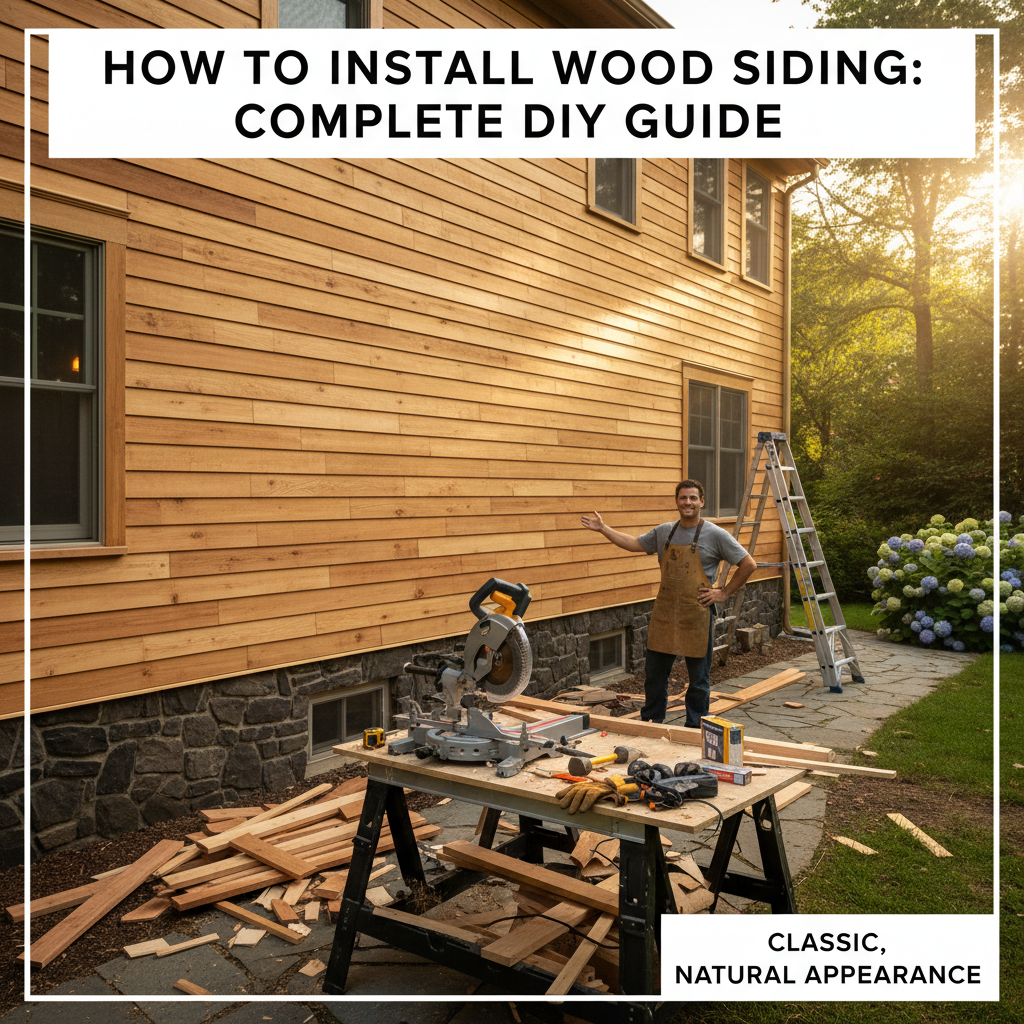
Wood siding gives your home a classic, natural appearance that no synthetic material can match. Installation requires careful attention to weather barriers, flashing, and proper overlap to protect your home from moisture intrusion. This is an advanced project that demands precision and an understanding of building envelope science, but the results are stunning and long-lasting.
Key Takeaways
- Wood siding gives your home a classic, natural appearance that no synthetic material can match.
- Installation requires careful attention to weather barriers, flashing, and proper overlap to protect your home from moisture intrusion.
- This is an advanced project that demands precision and an understanding of building envelope science, but the results are stunning and long-lasting.
- Always back-prime siding before installation to prevent moisture absorption from behind.
- Use stainless steel or hot-dipped galvanized nails to prevent rust stains.
Tools Needed
Materials List
Recommended Species
Recommended Sizes
Pro Tips
Frequently Asked Questions
Related Guides
How to Build a Backyard Pergola: Complete DIY Guide
Build a beautiful backyard pergola with our detailed guide. Includes plans, lumber sizes, decorative
Read guideHow to Build a Boat Dock: Complete DIY Guide
Build a sturdy boat dock with our advanced guide. Covers pile driving, floating vs fixed designs, de
Read guideHow to Build a Gazebo: Complete DIY Guide
Build an elegant gazebo with our advanced guide. Covers octagonal and rectangular designs, hip roof
Read guideHow to Build a Home Sauna: Complete DIY Guide
Build a home sauna with our advanced guide. Covers framing, insulation, vapor barriers, cedar tongue
Read guide