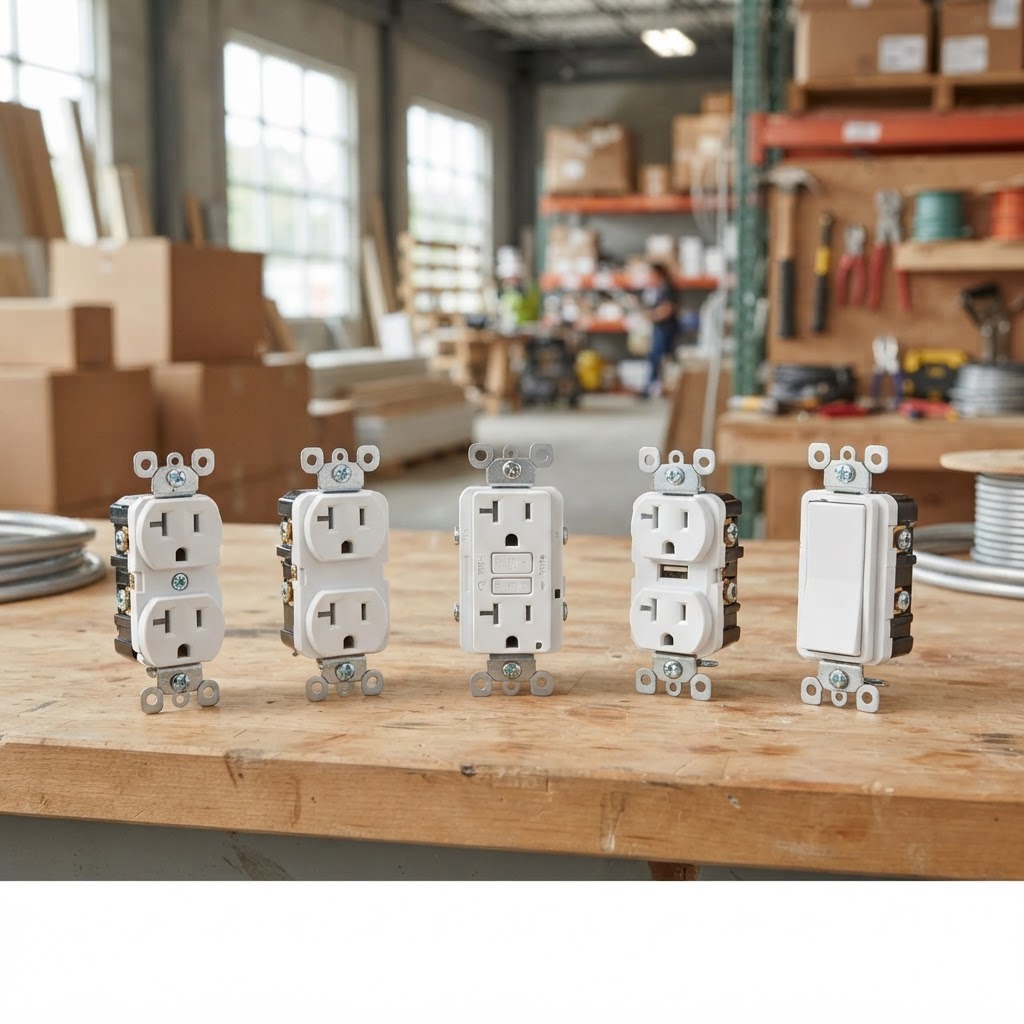
Electrical Outlets & Receptacles (2026)
Electrical outlets are the connection points for plugging in appliances and devices throughout your home. Modern outlets feature tamper-resistant shutters required by code for child safety and are available in 15-amp and 20-amp ratings. USB-equipped and smart outlet options add convenience for charging devices.
Key Features
- Tamper-resistant shutters
- Available in 15A and 20A ratings
- Self-grounding design
- USB charging options
- Multiple color options
Specifications
Applications
- General-purpose outlets
- Kitchen countertop circuits
- Bathroom circuits
- Bedroom outlets
- Outdoor locations (with weatherproof cover)
Installation Overview
Turn off circuit breaker. Connect hot (black) wire to brass screw, neutral (white) wire to silver screw, and ground (bare) wire to green screw. Secure in box and install cover plate.
Pros & Cons
Pros
- ✓ Tamper-resistant for child safety
- ✓ Easy to replace
- ✓ Multiple configuration options
- ✓ Inexpensive to upgrade
Cons
- ✗ Must match amperage to circuit
- ✗ Back-wire connections less reliable
- ✗ USB outlets may become outdated
- ✗ Quality varies by manufacturer
Top Brands
Code Requirements
NEC requires tamper-resistant receptacles in all new residential construction. 20-amp outlets required for kitchen, bathroom, and laundry circuits. GFCI protection required in wet areas. Outlets required every 12 feet along walls.
Buying Tips
Buy tamper-resistant outlets to meet current code. Use 20-amp rated outlets for kitchen and bathroom circuits. Side-wire connections are more reliable than back-stab connections.
Frequently Asked Questions
Related Guides
Electrical Basics Guide: Wiring, Panels & Common Upgrades
Understand home electrical systems from wiring to panel upgrades and safety.
Read articleElectrical Guide: Common Issues, Cost & Safety
Understand your home's electrical system with this guide.
Read articleHot Tub Guide: Types, Cost & What to Know Before You Buy
Find the perfect hot tub for your home with this guide.
Read article