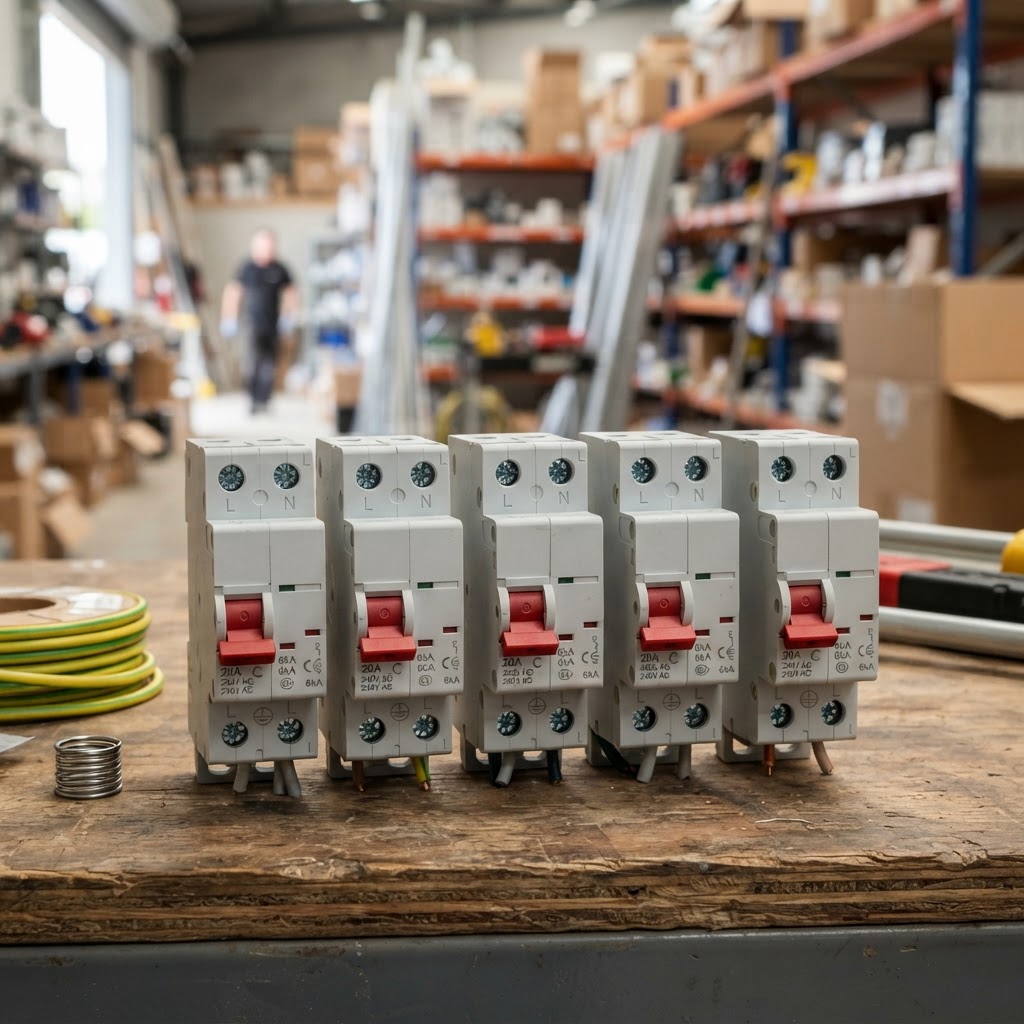
Circuit Breakers (2026)
Circuit breakers are safety devices that automatically disconnect electrical circuits when they detect overloads or short circuits, preventing fires and equipment damage. Available in single-pole (120V) and double-pole (240V) configurations with amperage ratings from 15 to 200 amps. Must be matched to your specific electrical panel brand.
Key Features
- Automatic overload protection
- Available in 15-50 amp ratings
- Single-pole and double-pole options
- AFCI and GFCI combination types
- Brand-specific panel compatibility
Specifications
Applications
- Main electrical panels
- Sub-panels
- Circuit protection
- Dedicated appliance circuits
- Arc-fault protection
Installation Overview
Turn off main breaker. Snap new breaker onto the bus bar and into the panel rail. Connect the circuit hot wire to the breaker terminal. Label the circuit on the panel directory. Restore power and test.
Pros & Cons
Pros
- ✓ Essential safety protection
- ✓ Easy to replace
- ✓ Multiple amperage options
- ✓ AFCI/GFCI types add protection
Cons
- ✗ Must match panel brand exactly
- ✗ AFCI breakers are expensive
- ✗ Can trip nuisance faults
- ✗ Panel space may be limited
Top Brands
Code Requirements
NEC requires AFCI protection for most living areas in new construction. GFCI breakers required for wet locations. Breaker amperage must match wire gauge. Panel must not exceed rated number of circuits.
Buying Tips
Always match the breaker to your panel brand. Write down your panel model number before shopping. AFCI breakers cost more but are required by code for most living spaces in new construction.
Frequently Asked Questions
Related Guides
Electrical Basics Guide: Wiring, Panels & Common Upgrades
Understand home electrical systems from wiring to panel upgrades and safety.
Read articleElectrical Guide: Common Issues, Cost & Safety
Understand your home's electrical system with this guide.
Read articleHot Tub Guide: Types, Cost & What to Know Before You Buy
Find the perfect hot tub for your home with this guide.
Read article