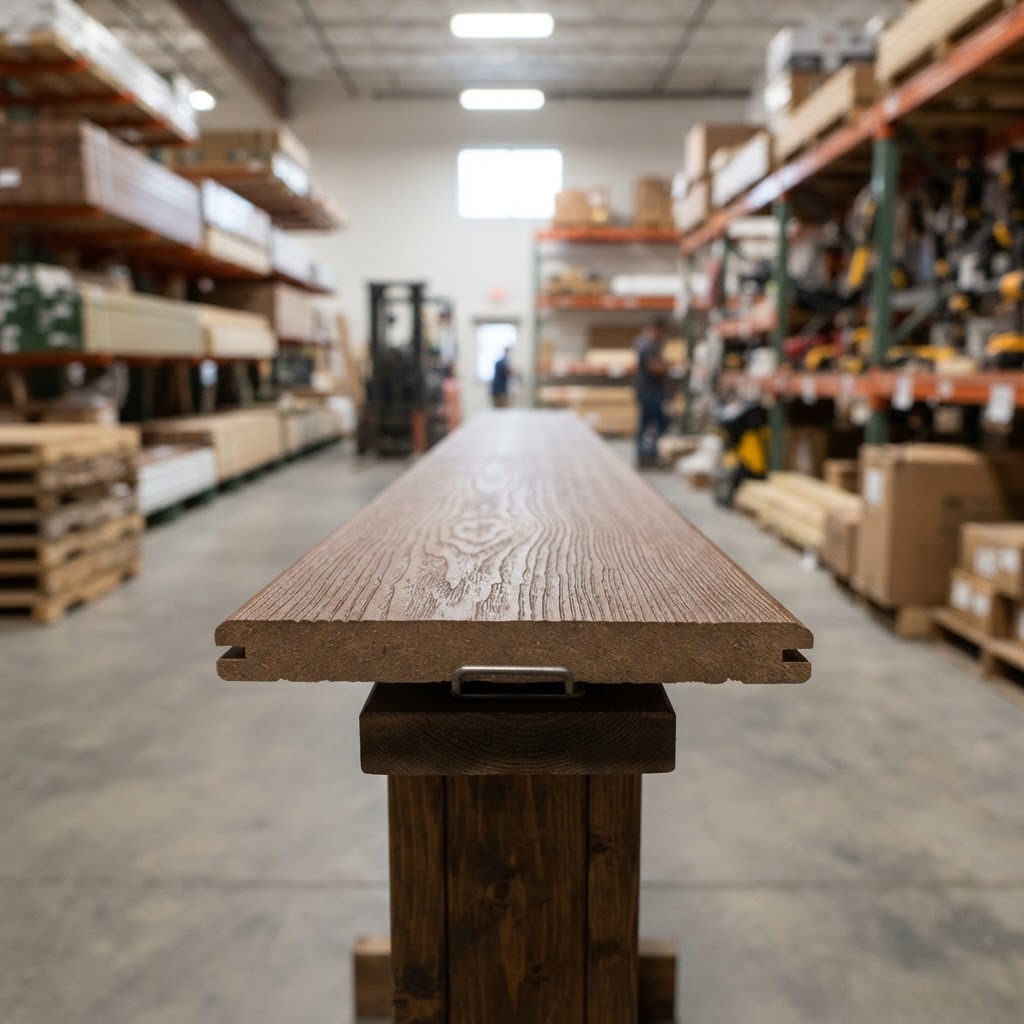
Composite Fascia Board: Rot-Proof Roof Edge Trim (2026)
Composite fascia board is an engineered exterior trim material that replaces traditional wood fascia at roof edges. Made from PVC, cellular PVC, or composite materials, it resists rot, insects, and moisture that commonly destroy wood fascia boards. It accepts paint and can be worked with standard carpentry tools.
Key Features
- Rot
- insect
- and moisture proof; Paintable surface; Works with standard tools; Multiple material options; Long-lasting trim solution
Specifications
Applications
- Roof fascia boards; Soffit nailers; Exterior trim; Window and door surrounds; Column wraps
Installation Overview
Cut with standard wood-working tools (use fine-tooth blade). Fasten with stainless steel or composite-compatible screws or nails. Leave expansion gaps per manufacturer spec for PVC products. Prime and paint if desired. Pre-drill near edges to prevent splitting.
Pros & Cons
Pros
- ✓ Will not rot or decay; Insect proof; Moisture resistant; Paintable; Works with standard tools
Cons
- ✗ More expensive than wood; PVC expands and contracts more; Some types require painting; Heavier than some wood species; May not accept all fasteners
Top Brands
Code Requirements
Must meet applicable ASTM standards for the material type. Installation per manufacturer specs. Fascia must support gutter attachment loads. Fire spread requirements apply in WUI zones.
Buying Tips
Cellular PVC like Azek is the premium choice for zero-maintenance fascia. Expansion joints are critical for PVC in long runs. Buy matching corner and transition pieces for a professional look.
Frequently Asked Questions
Related Guides
Heat Pump Guide: Types, Cost & How They Work
Heat and cool your home efficiently with one system.
Read articleAir Conditioning Guide: Types, Cost & Efficiency
Stay cool and save money on cooling.
Read articleWater Heater Guide: Types, Cost & Replacement
Choose the best water heater for your home.
Read article