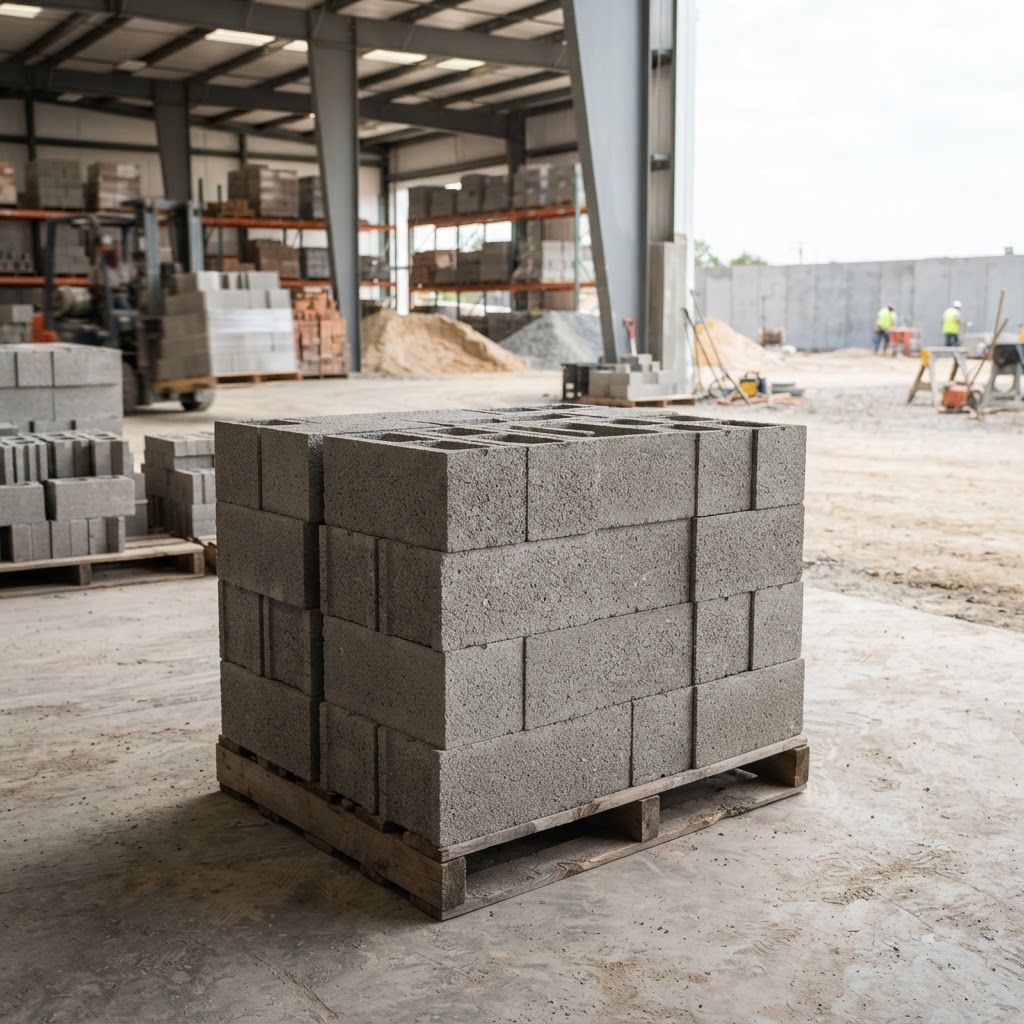
Concrete Blocks (CMU): Sizes, Types & Uses (2026)
Concrete masonry units are precast rectangular building units for walls, foundations, and structural applications. They come in standard and lightweight varieties with hollow or solid cores. CMUs offer excellent compressive strength, fire resistance, and sound dampening properties.
Key Features
- Standard 8x8x16 inch size; Hollow or solid core options; Fire-resistant up to 4 hours; Sound dampening; Stackable modular design
Specifications
Applications
- Foundation walls; Retaining walls; Garden walls; Utility buildings; Fire-rated partitions
Installation Overview
Lay blocks on a level footing with Type S mortar. Apply mortar to face shells, butter end joints, and check level and plumb every course. Fill cores with grout and rebar where required by code.
Pros & Cons
Pros
- ✓ Very strong in compression; Excellent fire rating; Low maintenance; Pest and rot proof; Affordable
Cons
- ✗ Heavy to handle; Requires mortar skills; Poor insulation value alone; Can crack from settlement; Plain appearance without finishing
Top Brands
Code Requirements
Must meet ASTM C90 for load-bearing units. Reinforcement and grouting per IRC R606. Minimum footing width per IRC R403.
Buying Tips
Order 5-10% extra for cuts and breakage. Choose lightweight blocks for above-grade walls to reduce labor fatigue. Verify your code allows lightweight for your application.
Frequently Asked Questions
Related Guides
Heat Pump Guide: Types, Cost & How They Work
Heat and cool your home efficiently with one system.
Read articleAir Conditioning Guide: Types, Cost & Efficiency
Stay cool and save money on cooling.
Read articleWater Heater Guide: Types, Cost & Replacement
Choose the best water heater for your home.
Read article