Vinyl Siding Buying Guide: Styles, Thickness, and Costs (2026)
Vinyl siding remains the most popular exterior cladding in North America thanks to its low maintenance, affordable price, and wide variety of styles and colors. Modern vinyl siding has improved dramatically in appearance and durability. This guide helps you navigate thickness grades, style options, and the features that separate premium from budget vinyl.
Key Takeaways
- Vinyl siding remains the most popular exterior cladding in North America thanks to its low maintenance, affordable price, and wide variety of styles and colors.
- Modern vinyl siding has improved dramatically in appearance and durability.
- This guide helps you navigate thickness grades, style options, and the features that separate premium from budget vinyl.
- Thickness is the most important quality indicator — budget panels are 0.040 inch, mid-range is 0.042-0.044, and premium is 0.046-0.050 inch.
- Thicker panels resist impact better, hang straighter, and look more like real wood.
Types Overview
Standard horizontal lap siding is the most common style, available in 4-inch, 5-inch, and 8-inch exposure widths. Dutch lap features a decorative concave profile for a shadow line. Board and batten vertical siding creates a farmhouse or modern aesthetic. Vinyl shake and scallop panels mimic cedar shake and Victorian scallop details. Insulated vinyl siding has a contoured foam backing for improved insulation, impact resistance, and a more solid feel. Soffit and fascia panels complete the exterior trim package.
Selection Criteria
Thickness is the most important quality indicator — budget panels are 0.040 inch, mid-range is 0.042-0.044, and premium is 0.046-0.050 inch. Thicker panels resist impact better, hang straighter, and look more like real wood. Wind speed rating should match your local code requirements — look for 110 mph or higher. Insulated siding adds R-2 to R-5 and dramatically improves rigidity. Choose a brand with a comprehensive color-match trim system.
Installation Guide
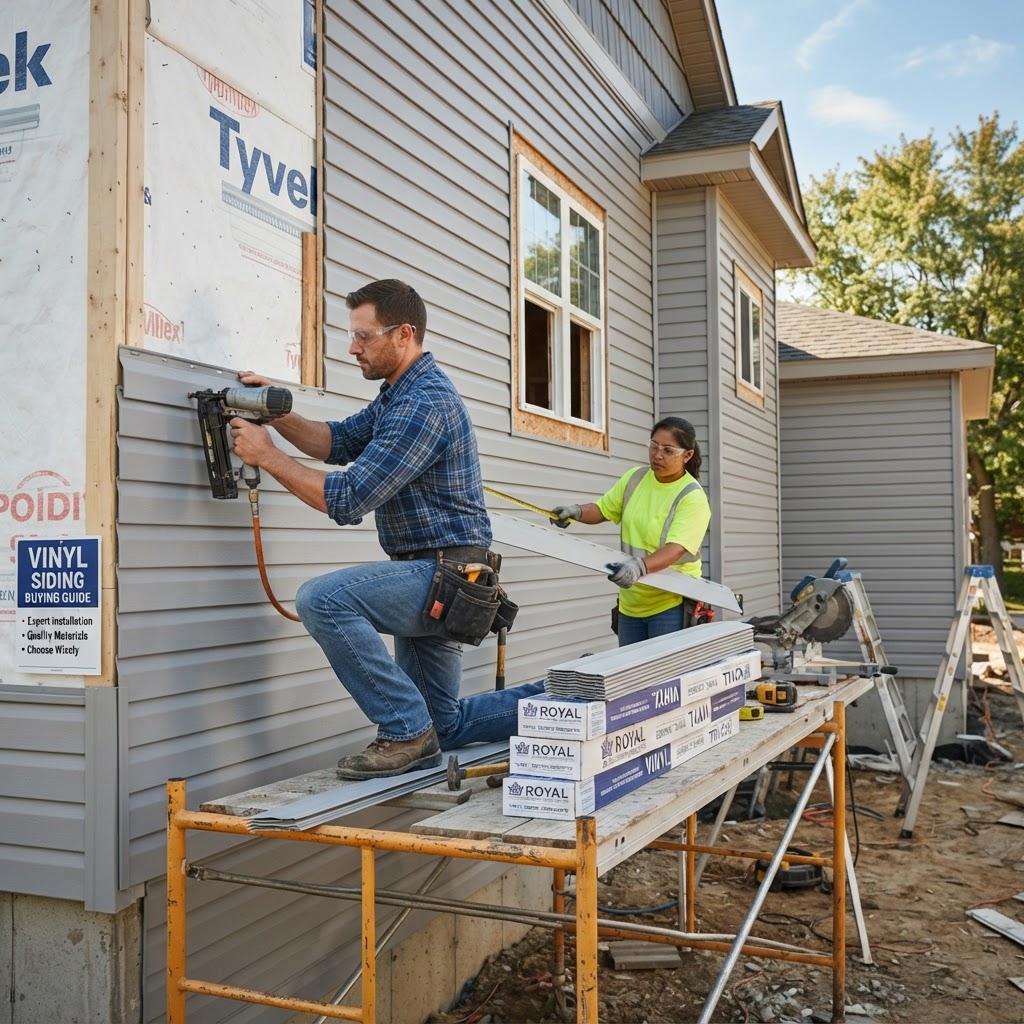
Install over a flat, smooth surface with WRB already in place. Start with a starter strip at the bottom, leveled precisely. Lock each panel into the one below and nail loosely in the center of the nailing slot — never nail tight, as vinyl must slide for thermal expansion. Leave 1/4-inch gap at all trim channels for expansion. Install J-channel around windows, doors, and where siding meets other surfaces. Use utility trim at the top course under soffits.
Code Requirements
Vinyl siding must comply with ASTM D3679. Wind resistance testing per ASTM D3679 — most building codes require rated for local design wind speed. WRB is required behind vinyl siding per IRC R703.2. In high-wind zones (above 110 mph), enhanced fastening and foam-backed panels may be required. Vinyl siding is not rated as a structural bracing material.
Cost Breakdown
Budget vinyl (0.040 inch): $2.50-$4.00 per square foot material. Mid-range (0.044 inch): $4.00-$6.00 per square foot. Premium (0.046+ inch): $5.00-$8.00 per square foot. Insulated vinyl: $6.00-$12.00 per square foot. Professional installation labor: $3.00-$6.00 per square foot. Complete vinyl siding job on average home: $8,000-$18,000 installed including trim.
DIY vs Professional
Vinyl siding is one of the more DIY-friendly exterior cladding options. Straight walls with standard windows are manageable for handy homeowners. Specialty cuts around dormers, bay windows, and complex trim require more skill. Rent a vinyl siding brake for clean, professional-looking cuts and bends. Professional installation is recommended for two-story homes and complex exterior geometry.
Common Mistakes to Avoid
Nailing panels tight prevents thermal expansion and causes buckling and waviness in hot weather. Not locking panels fully into the previous course allows wind to catch and pull panels off. Failing to maintain expansion gaps at trim channels causes buckling. Using face nails instead of nailing through slots creates permanent visible damage when panels expand. Not installing WRB underneath invites moisture damage.