Roofing Shingles Buying Guide: Types, Costs, and Ratings (2026)
Roofing shingles protect your home from the elements and account for a significant portion of curb appeal. With options ranging from basic 3-tab to luxury designer styles, choosing the right shingle involves balancing cost, durability, and aesthetics. This guide compares every major shingle type to help you make the best decision.
Key Takeaways
- Roofing shingles protect your home from the elements and account for a significant portion of curb appeal.
- With options ranging from basic 3-tab to luxury designer styles, choosing the right shingle involves balancing cost, durability, and aesthetics.
- This guide compares every major shingle type to help you make the best decision.
- Consider your climate zone for wind and hail ratings.
- Check local HOA requirements for approved colors and styles.
Types Overview
3-tab asphalt shingles are the most affordable option with a flat, uniform appearance and 20-25 year warranties. Architectural (dimensional) shingles provide a layered, textured look with 30-50 year warranties and better wind resistance. Premium designer shingles mimic the look of slate or cedar shake at a fraction of the weight and cost. Impact-resistant shingles (Class 4) are rated for hail protection and may qualify for insurance discounts. Cool roof shingles reflect solar energy to reduce cooling costs in hot climates.
Selection Criteria
Consider your climate zone for wind and hail ratings. Check local HOA requirements for approved colors and styles. Match the warranty length to how long you plan to own the home. Compare wind speed ratings — architectural shingles typically handle 110-130 mph. Factor in the roof pitch since some shingles have minimum slope requirements. Review insurance discount eligibility for impact-resistant options.
Installation Guide
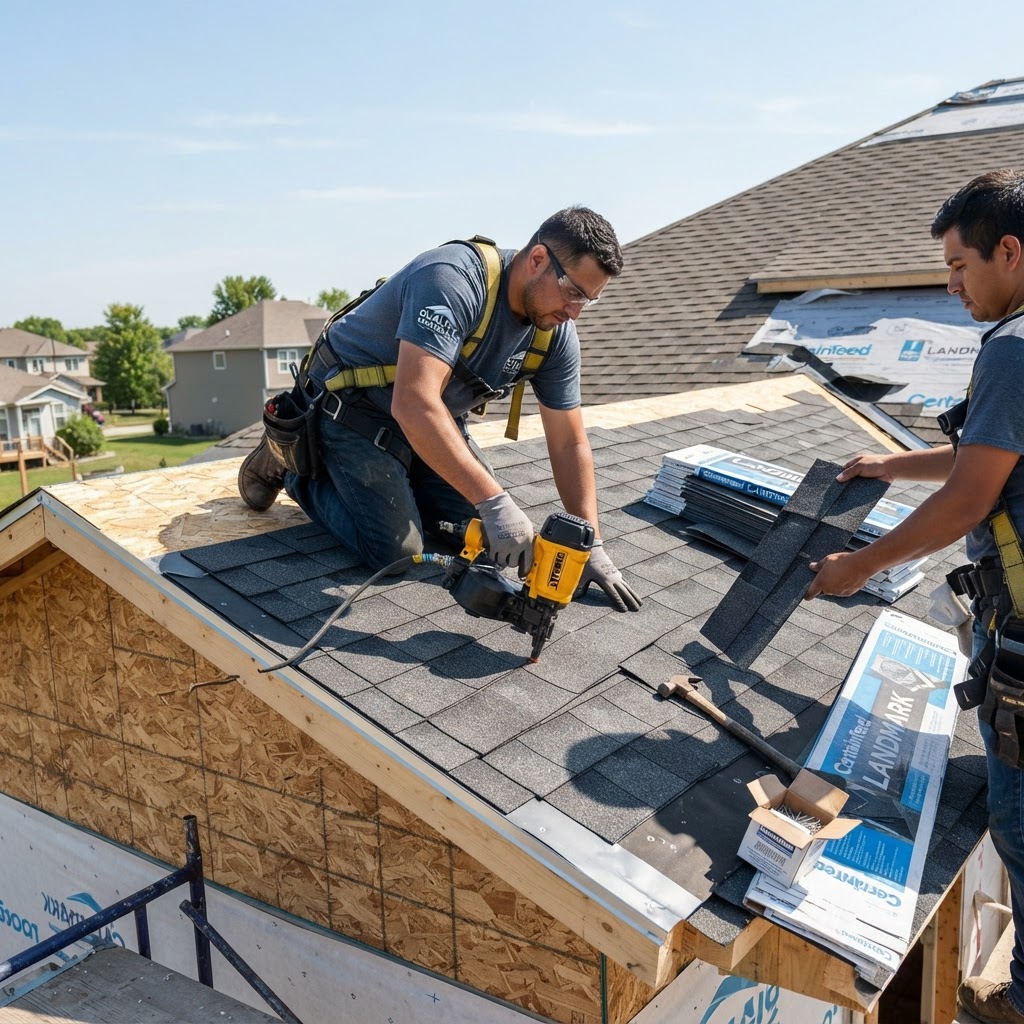
Install over a clean, solid roof deck with proper underlayment. Apply ice and water shield in valleys, at eaves, and around penetrations. Use starter strip shingles along eaves and rakes. Follow manufacturer nailing patterns — typically 4-6 nails per shingle in the designated nailing zone. Maintain proper exposure based on shingle type. Install ridge cap shingles at all hips and ridges.
Code Requirements
IRC requires minimum Class A fire rating for residential roofing. Underlayment is required — single layer of ASTM D226 Type I or synthetic equivalent. Ice barrier is required in areas where average January temperature is 25°F or below, extending 24 inches past the interior wall line. Wind speed requirements per local code determine fastening patterns. Two layers maximum on most residential structures.
Cost Breakdown
3-tab shingles: $70-$100 per square (100 sq ft). Architectural shingles: $100-$175 per square. Premium designer shingles: $200-$500 per square. Impact-resistant upgrade: add $25-$60 per square. Professional installation: $250-$500 per square including tearoff. Complete reroof on average home (20-25 squares): $8,000-$18,000 installed.
DIY vs Professional
Roofing is physically demanding and involves serious fall risks. DIY is only recommended for small, low-slope sections for experienced homeowners. Professional installation is strongly recommended for full roof replacements — most manufacturer warranties require certified installer application. Improper installation voids warranties and causes leaks.
Common Mistakes to Avoid
Incorrect nailing — too high, too few, or overdriven nails are the leading cause of shingle failure. Skipping ice and water shield in required areas leads to ice dam leaks. Poor attic ventilation cuts shingle life in half. Installing over more than one existing layer traps moisture and adds excessive weight. Not sealing around penetrations properly invites leaks.