Metal Roofing: Installation Guide, Types, and Cost Comparison (2026)
Metal roofing has surged in popularity thanks to its 50+ year lifespan, energy efficiency, and modern aesthetic options. From standing seam panels to metal shingles that mimic traditional materials, there is a metal roof for every style and budget. This guide covers material options, installation requirements, and total cost of ownership.
Key Takeaways
- Metal roofing has surged in popularity thanks to its 50+ year lifespan, energy efficiency, and modern aesthetic options.
- From standing seam panels to metal shingles that mimic traditional materials, there is a metal roof for every style and budget.
- This guide covers material options, installation requirements, and total cost of ownership.
- Standing seam is best for low-slope roofs (minimum 3:12 pitch) and maximum weather protection.
- Corrugated panels work well on steeper pitches and outbuildings.
Types Overview
Standing seam panels feature raised interlocking seams for a sleek, modern look and superior weather protection. Corrugated metal panels are the most affordable metal option, common in agricultural and rustic applications. Metal shingles mimic the appearance of asphalt, slate, or wood shake with the durability of metal. Stone-coated steel panels combine the toughness of steel with a granulated surface for traditional aesthetics. Copper and zinc panels are premium architectural options that develop a natural patina over time.
Selection Criteria
Standing seam is best for low-slope roofs (minimum 3:12 pitch) and maximum weather protection. Corrugated panels work well on steeper pitches and outbuildings. Consider gauge thickness — 26 gauge is standard residential, 24 gauge offers superior hail resistance. Choose Galvalume or galvanized steel for best corrosion resistance. Paint finish quality (Kynar/PVDF) determines color retention over decades. Factor in thermal expansion requirements for panel length.
Installation Guide
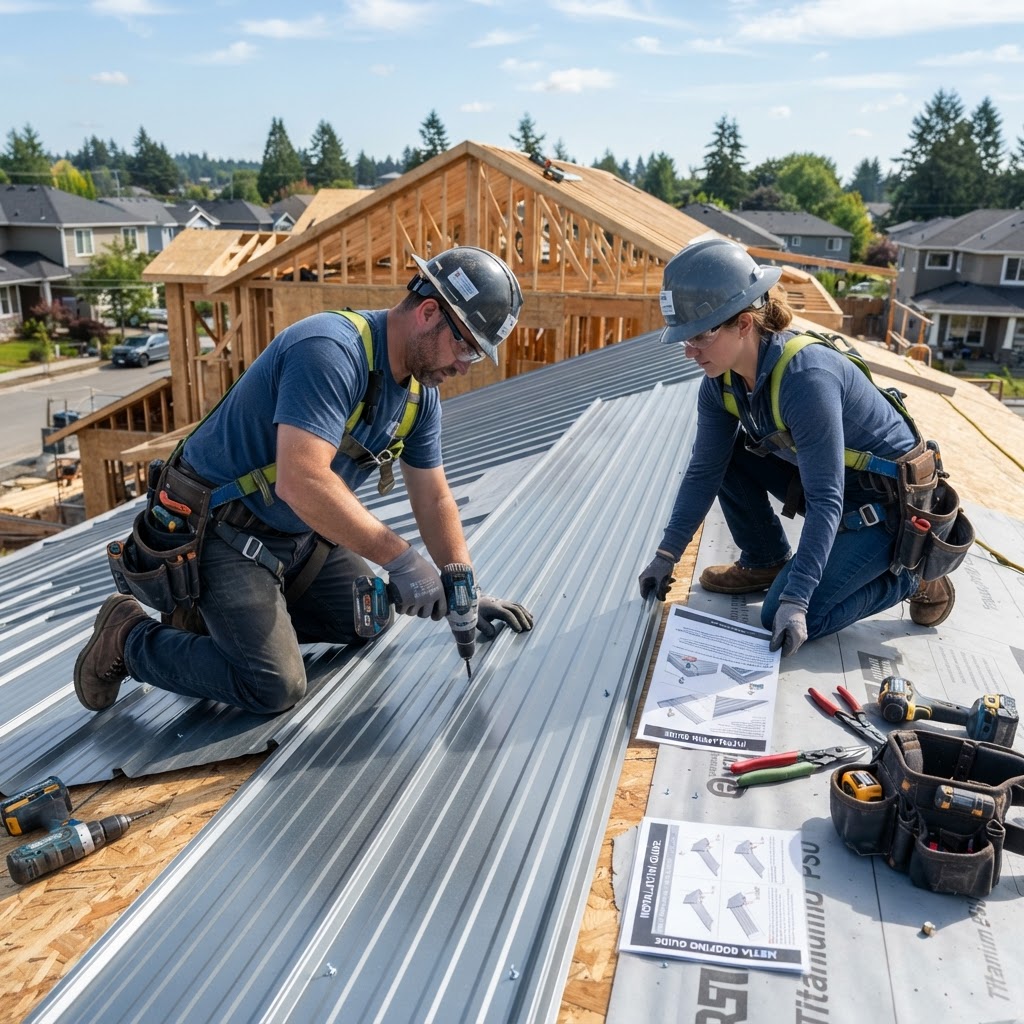
Install over solid deck with synthetic underlayment, or over purlins spaced per panel manufacturer specs. Use proper closure strips at eaves and ridges to prevent moisture and pest entry. Pre-drill screw holes in exposed fastener panels. Standing seam clips allow thermal movement. Maintain minimum recommended end laps and side laps. Flash all penetrations, walls, and valleys with compatible metal trim. Use foam closure strips at ridge and eave.
Code Requirements
Metal roofing must meet UL 2218 for impact resistance ratings and UL 790 for fire classification. Minimum slope requirements vary by panel type — standing seam at 1/4:12, exposed fastener at 3:12. Wind uplift resistance per ASTM E1592. Proper grounding may be required per local electrical code. Some jurisdictions require engineered connections in high-wind zones.
Cost Breakdown
Corrugated steel panels: $3-$5 per square foot material. Standing seam steel: $7-$14 per square foot material. Metal shingles: $7-$10 per square foot material. Stone-coated steel: $8-$12 per square foot. Copper: $20-$40 per square foot. Professional installation: $4-$12 per square foot labor. Complete standing seam roof on average home: $18,000-$35,000 installed.
DIY vs Professional
Exposed fastener corrugated panels on simple structures are a feasible DIY project. Standing seam installation requires specialized tools (seamers, notchers) and experience with flashing details. Professional installation is strongly recommended for standing seam and any complex roof geometry. Manufacturer warranties typically require certified installer.
Common Mistakes to Avoid
Using incompatible metals causes galvanic corrosion — never mix aluminum and steel components. Over-tightening exposed fastener screws crushes washers and causes leaks. Not allowing for thermal expansion causes panel buckling and fastener pullout. Cutting with abrasive blades damages the protective coating and creates rust points — use metal shears or nibblers. Inadequate underlayment leads to condensation issues.