Complete Guide to Concrete Types and Mixing Ratios (2026)
Concrete is the backbone of nearly every construction project, from foundations to driveways. Understanding the right mix design and PSI rating ensures structural integrity and longevity. This guide walks you through every concrete type, proper mixing ratios, and when to choose ready-mix versus bagged options.
Key Takeaways
- Concrete is the backbone of nearly every construction project, from foundations to driveways.
- Understanding the right mix design and PSI rating ensures structural integrity and longevity.
- This guide walks you through every concrete type, proper mixing ratios, and when to choose ready-mix versus bagged options.
- Choose based on PSI requirement for the application, cure time needed, exposure to freeze-thaw cycles, whether the pour is structural or decorative, and total volume needed.
- For volumes over 1 cubic yard, ready-mix delivery is more cost-effective than bagged concrete.
Types Overview
Standard concrete (2,500-3,000 PSI) handles most residential work including sidewalks and patios. High-strength concrete (4,000-6,000 PSI) is required for structural footings and load-bearing applications. Fast-setting concrete cures in 20-40 minutes, ideal for setting fence posts and small repairs. Fiber-reinforced concrete includes synthetic or steel fibers for crack resistance. Self-leveling concrete flows into place for floor overlays and leveling uneven surfaces. Lightweight concrete uses expanded aggregite for reduced dead loads on elevated decks and roofs.
Selection Criteria
Choose based on PSI requirement for the application, cure time needed, exposure to freeze-thaw cycles, whether the pour is structural or decorative, and total volume needed. For volumes over 1 cubic yard, ready-mix delivery is more cost-effective than bagged concrete.
Installation Guide
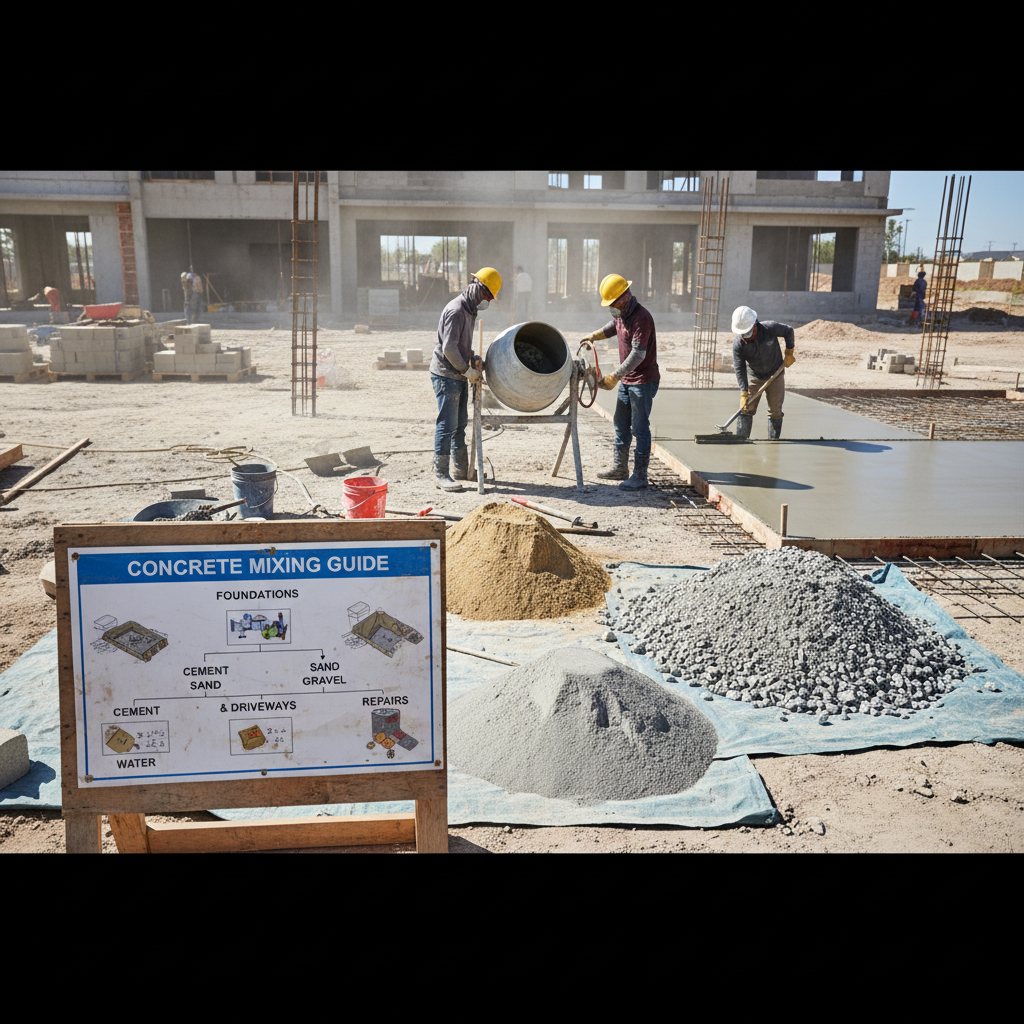
Prepare a compacted gravel sub-base at minimum 4 inches deep. Set forms with proper grade and slope for drainage. Mix bagged concrete with water per manufacturer instructions — typically 3 quarts per 80 lb bag. Pour, spread, and screed level. Bull-float the surface, then finish with a hand float or broom finish. Apply curing compound or keep moist for 7 days minimum.
Code Requirements
IRC requires minimum 2,500 PSI for residential foundations. Footings must extend below frost line per local code. Minimum slab thickness is 3.5 inches for residential, 4 inches recommended. Air entrainment of 5-7% is required in freeze-thaw zones. Reinforcement per structural engineer specifications.
Cost Breakdown
80 lb bag of standard concrete: $5-$7. Ready-mix delivery: $125-$175 per cubic yard with typical minimum order of 1 yard. High-strength bags: $7-$10 each. Fast-setting bags: $8-$12 each. Fiber-reinforced mix: $9-$14 per bag. Delivery short-load fees can add $50-$100 for orders under minimum.
DIY vs Professional
DIY is feasible for small pours under 1 cubic yard — fence posts, small pads, and repairs. Hire a professional for foundation work, large slabs, stamped or decorative concrete, and any structural application. Professional finishing makes a significant quality difference on visible surfaces.
Common Mistakes to Avoid
Adding too much water to the mix weakens the final strength significantly. Failing to compact the sub-base leads to settling and cracking. Not using control joints at 8-12 foot intervals causes random cracking. Pouring in extreme heat without shade or wind protection causes rapid surface drying. Skipping curing reduces final strength by up to 50%.