When to Use Treated Lumber vs Untreated: The Definitive Application Guide
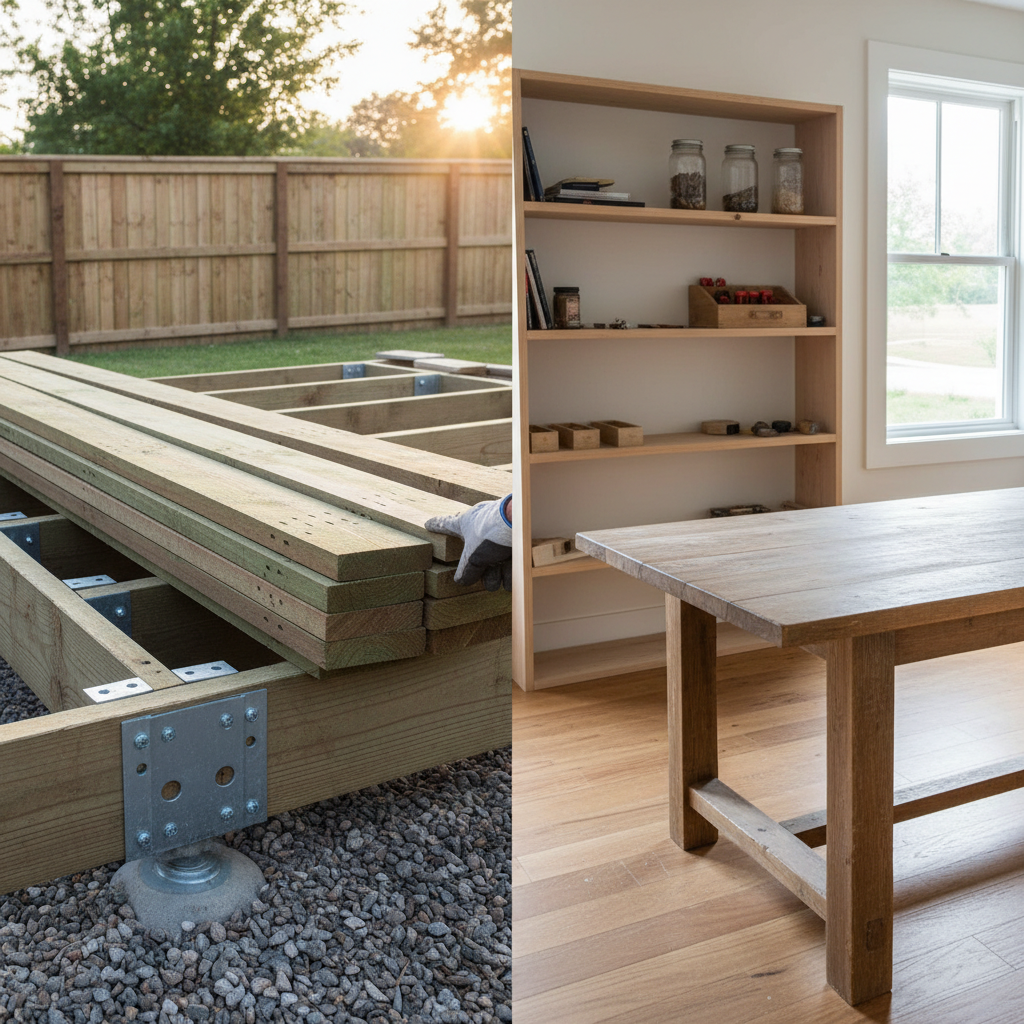
When to Use Treated Lumber vs Untreated: The Definitive Guide
Pressure-treated lumber isn't just better lumber — it's a specific tool for specific applications. Understanding when it's required (by code and by common sense) and when it's unnecessary helps you make smart decisions on every project.
How Pressure Treatment Works
Modern pressure-treated lumber uses copper-based preservatives (ACQ, CA, or MCA) forced into the wood cells under pressure. The copper compounds are toxic to the fungi and insects that cause wood decay. Treatment levels are measured in pounds of preservative per cubic foot (pcf) of wood and categorized into Use Categories (UC).
Use Category Reference Chart
| Use Category | Application | Typical Treatment Level | Example |
|-------------|-------------|------------------------|--------|
| UC1 | Dry interior, no insect concern | Very low | Interior trim |
| UC2 | Damp interior, no weather exposure | Low | Interior framing in damp areas |
| UC3A | Above ground, protected (coated) | 0.06-0.10 pcf | Above-grade deck boards |
| UC3B | Above ground, exposed to weather | 0.15 pcf | Deck boards, railings, fascia |
| UC4A | Ground contact, general | 0.20 pcf | Fence posts, deck posts |
| UC4B | Ground contact, heavy duty | 0.40 pcf | Permanent structures, critical posts |
| UC4C | Ground contact, extreme hazard | 0.60 pcf | Salt water splash zones |
| UC5A | Marine (fresh water) | Higher | Dock framing |
| UC5B | Marine (salt water) | Highest | Marine pilings |
When Treated Lumber Is REQUIRED by Code
1. Wood in Contact with Concrete or Masonry
Application: Bottom plates on concrete slabs (basements, garages, crawl spaces)
Reason: Concrete wicks moisture from the ground. Any wood touching it will eventually rot.
Specification: UC2 or UC3A minimum; UC4A better in moist conditions
2. Wood in Contact with Soil or Fill
Application: Fence posts, deck posts, retaining wall timbers
Reason: Soil contains moisture, fungi, and often insects
Specification: UC4A for general use; UC4B in heavy-insect or high-moisture areas
3. Deck Framing
Application: Ledger boards, joists, beams, rim joists in outdoor decks
Reason: Exposed to weather and often close to grade
Specification: UC3B minimum for above-grade; UC4A for any framing within 6" of grade
4. Exterior Structural Posts
Application: Porch columns set in the ground, carport posts, pergola posts
Specification: UC4A minimum
5. Within 18 Inches of Ground (IRC Rule)
Application: Any structural wood in a crawl space within 18" of grade
Reason: IRC Section R317 requires it for decay-resistant species or PT lumber
6. Exterior Stairs and Landings
Application: Stringers, treads, framing of exterior stairs
Specification: UC3B
When Treated Lumber Is RECOMMENDED (Not Always Required)
Garage Wall Bottom Plates
Technically required by code if on a concrete slab (it is). Not optional — this one is actually required but commonly skipped by shortcuts. Use UC2 or UC3A.
Exterior Sill Plates on Stem Walls
Requires PT where wood contacts masonry. The sill plate (mudsill) must be pressure-treated or a naturally durable species.
Basement Framing Bottom Plate
Required where wood contacts concrete. Many homeowners skip this — then wonder why the studs are rotting 10 years later.
When Treated Lumber Is NOT Needed (and NOT Recommended)
Interior Framing (Away from Moisture)
Standard SPF or HEM-FIR lumber is the right choice for:
- Interior wall studs (above the concrete slab)
- Interior floor joists in climate-controlled spaces
- Interior partition walls
- Ceiling joists
Why not PT? Pressure-treated lumber:
- Costs 60-100% more than standard dimensional lumber
- Contains copper compounds that, while considered safe when cured, represent unnecessary exposure in completely dry interior environments
- Corrodes standard zinc-plated fasteners (must use stainless or hot-dipped galvanized)
- Is often wetter than standard lumber, leading to more nail pops in drywall if used for interior walls
Interior Furniture
Pressure-treated wood is never appropriate for furniture, especially items with skin or food contact. Use standard hardwoods or naturally durable species.
Cutting Boards and Food Contact Items
Never use PT lumber. Use food-safe hardwoods: hard maple, cherry, walnut, teak.
Children's Playsets and Sandbox Borders
Historically, arsenic-based treatments (CCA lumber) were common here — these are now banned for residential use. Modern ACQ treatments are considered significantly safer, but many parents prefer naturally durable cedar or naturally rot-resistant black locust for children's direct-contact applications.
PT Lumber Handling Safety
- Modern ACQ/CA/MCA treated lumber is significantly safer than old CCA (chromated copper arsenate) treatment, which was phased out for residential use in
- 2
- 0
- 0
- Current treatments are considered safe once cured, but during handling and cutting:
- Wear gloves when handling
- Wear an N95 mask when cutting (to avoid inhaling sawdust)
- Do not burn treated lumber — burning concentrates and releases the copper compounds
- Wash hands after handling
- Use appropriate (corrosion-resistant) fasteners
Frequently Asked Questions
Sarah Chen
Wood Scientist
Contributor to Lumberama’s reference library. Read our editorial standards and source methodology.
Explore related resources
Where readers of this article usually go next.
Related Articles
Caulking Guide: Types, Application & Maintenance
Seal gaps and prevent water damage with this comprehensive caulking and sealant guide.
Grout Guide: Types, Colors & Maintenance
Choose and maintain the right grout for your tile with this comprehensive grout guide.
Deck Staining Guide: Products, Techniques & Cost
Protect and beautify your deck with this comprehensive deck staining guide.