Article
Home Improvement
Water Heater Guide: Types, Cost & Replacement
Lumberama Editorial Team, Plumbing & Water Heater Specialists Nov 30, 2026 8 min read
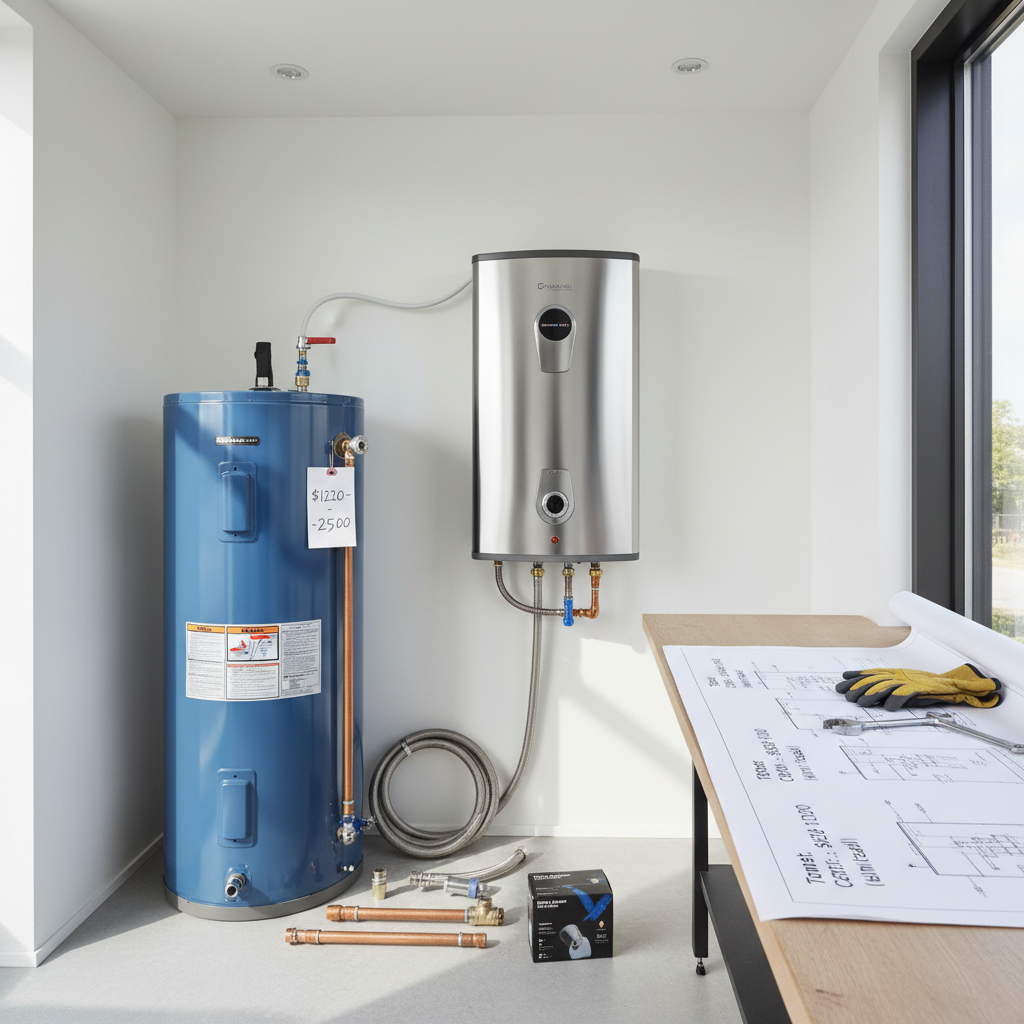
Water Heater Types
Tank (storage): Most common. Stores 30-80 gallons of hot water. Gas or electric. Cost: $800-$2,500 (installed). Lifespan: 8-12 years. Pros: affordable, simple, reliable. Cons: standby heat loss, takes up space, runs out of hot water.
Tankless (on-demand): Heats water only when needed. Gas or electric. Cost: $1,500-$4,500 (installed). Lifespan: 20+ years. Pros: endless hot water, energy-efficient, compact. Cons: higher upfront cost, limited flow rate, may need gas line or electrical upgrade.
Heat pump (hybrid): Uses electricity to move heat from air to water. 2-3x more efficient than standard electric. Cost: $2,000-$4,000 (installed). Lifespan: 12-15 years. Pros: lowest operating cost, eligible for federal tax credits. Cons: higher upfront cost, needs warm air around it, slower recovery.
Solar: Uses solar panels to heat water. Cost: $3,000-$8,000 (installed). Lifespan: 20+ years. Pros: free fuel (sunlight), tax credits. Cons: high upfront, weather-dependent, needs backup system.
Point-of-use: Small electric units at individual fixtures. Cost: $150-$500. Good for remote sinks or supplementing main heater.
Cost
Tank water heater (installed): 40-gallon electric: $800-$1,500. 50-gallon electric: $900-$1,800. 40-gallon gas: $900-$1,800. 50-gallon gas: $1,000-$2,000. 75-gallon gas: $1,500-$2,500.
Tankless (installed): Electric (whole-house): $1,000-$2,500. Gas (whole-house): $2,000-$4,500.
Heat pump (installed): $2,000-$4,000. Federal tax credit: up to 30% (through 2032).
Operating cost per year: Standard electric tank: $400-$600. Gas tank: $250-$400. Tankless gas: $200-$350. Heat pump: $150-$300.
Installation factors: Replacing like-for-like: simplest. Switching fuel type: $500-$2,000 extra (new gas line or electrical panel upgrade). Adding tankless: may need larger gas line or electrical service upgrade.
Sizing & Maintenance
Tank sizing: 1-2 people: 30-40 gallons. 3-4 people: 40-50 gallons. 5+ people: 50-80 gallons.
Tankless sizing: Measured in GPM (gallons per minute). Shower: 2-2.5 GPM. Dishwasher: 1-1.5 GPM. Whole-house gas: 8-11 GPM. Whole-house electric: 3-5 GPM.
Maintenance: Flush annually (removes sediment). Check anode rod every 2-3 years (replace if corroded, $20-$50 part). Test T&P valve annually. Insulate older tanks (saves 7-16% on heating cost). Set temperature to 120°F (safety and efficiency).
Signs of replacement: Age (10+ years for tank, 20+ for tankless). Rusty water. Leaking tank. Insufficient hot water. Rising energy bills. Rumbling or banging noises.
Frequently Asked Questions
Tank (installed): electric: $800-$1,800. Gas: $900-$2,500. Tankless (installed): electric: $1,000-$2,500. Gas: $2,000-$4,500. Heat pump (installed): $2,000-$4,000. National average replacement: $1,200-$2,000 (tank). $2,500-$4,000 (tankless). Federal tax credit: heat pump water heaters qualify for up to 30% credit (through 2032). Best value: heat pump water heater (highest upfront but lowest operating cost and tax credit).
Tank: pros: lower upfront cost ($800-$2,500). Simple installation. Can supply multiple fixtures simultaneously. Cons: runs out of hot water. Standby heat loss. Larger footprint. 8-12 year lifespan. Tankless: pros: endless hot water. 20+ year lifespan. Compact. Energy savings (24-34%). Cons: higher upfront cost ($1,500-$4,500). Limited flow rate. May not supply multiple high-demand fixtures simultaneously. Recommendation: tank for budget-conscious and simple replacement. Tankless for long-term savings and endless hot water. Heat pump for lowest operating cost (if space allows).
Tank: 8-12 years (average 10). Tankless: 20+ years. Heat pump: 12-15 years. Solar: 20+ years. Factors: water quality (hard water shortens life). Maintenance (flushing and anode rod replacement extend life 2-5 years). Usage level. Installation quality. Signs of failure: age (check the label). Rusty water from hot tap. Leaks around the base. Insufficient hot water. Strange noises (rumbling, popping). Rising energy bills. Tip: if your tank water heater is 8+ years old, start planning for replacement. A catastrophic leak can cause significant water damage.
Tank sizing by household: 1-2 people: 30-40 gallons. 3-4 people: 40-50 gallons. 5+ people: 50-80 gallons. Tankless sizing: measured in GPM (gallons per minute) and temperature rise. Shower: 2-2.5 GPM. Dishwasher: 1-1.5 GPM. Washing machine: 2 GPM. Whole-house gas tankless: 8-11 GPM (can run 2-3 fixtures simultaneously). Whole-house electric tankless: 3-5 GPM (may only handle 1-2 fixtures in cold climates). Key: in cold climates, the incoming water is colder, so you need more heating capacity. Check GPM ratings at your groundwater temperature. Oversizing tip: go one size up if you take long showers or frequently run multiple hot water fixtures.
Lumberama Editorial Team
Plumbing & Water Heater Specialists
Contributor to Lumberama’s reference library. Read our editorial standards and source methodology.
Framing and structure resources
Where readers of this article usually go next.
Related Articles

Home Improvement
Heat Pump Guide: Types, Cost & How They Work
Heat and cool your home efficiently with one system.
Lumberama Editorial Team Dec 1, 2026 8 min

Home Improvement
Air Conditioning Guide: Types, Cost & Efficiency
Stay cool and save money on cooling.
Lumberama Editorial Team Dec 1, 2026 7 min

Home Improvement
HVAC Guide: Types, Cost & How to Choose
Understand heating, cooling, and ventilation for your home.
Lumberama Editorial Team Nov 30, 2026 8 min