Article
Home Improvement
Heat Pump Guide: Types, Cost & How They Work
Lumberama Editorial Team, Heat Pump & Energy Efficiency Specialists Dec 1, 2026 8 min read
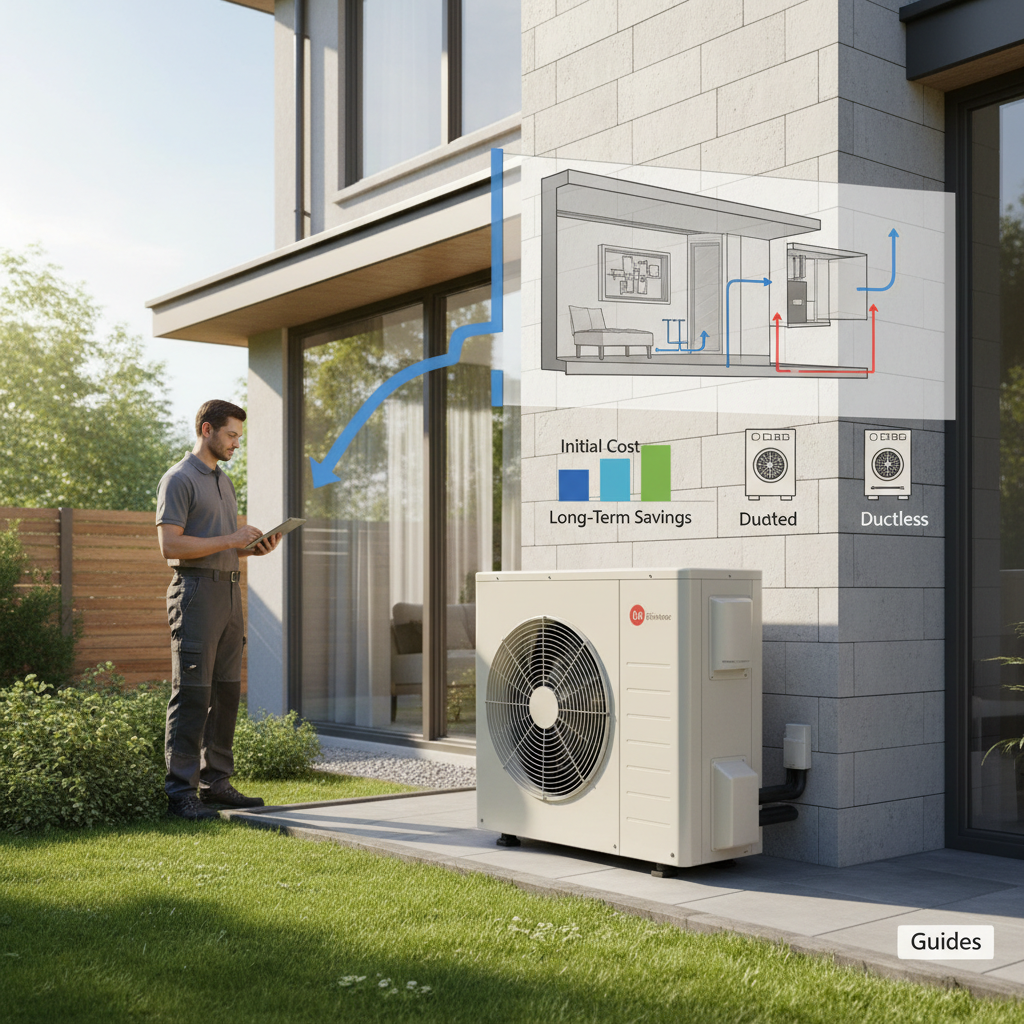
How Heat Pumps Work
The basics: A heat pump moves heat rather than generating it. In summer: moves heat OUT of your house (like an AC). In winter: moves heat INTO your house (reverses the cycle). Uses refrigerant and a compressor (same technology as a refrigerator). 2-4x more efficient than resistance heating.
Efficiency explained: A gas furnace at 95% AFUE: produces 0.95 BTU of heat per BTU of fuel. A heat pump at COP 3.0: produces 3.0 BTU of heat per 1 BTU of electricity. This means a heat pump is roughly 300% efficient in moderate conditions. Efficiency decreases as outdoor temperature drops. Modern cold-climate heat pumps maintain efficiency down to -5°F to -15°F.
Types
Air-source (ducted): Most common. Works with existing ductwork. Replaces both furnace and AC. Cost: $4,000-$10,000 (installed). Best for homes with existing ducts.
Mini-split (ductless air-source): No ductwork needed. Individual indoor units per zone. Cost: $1,500-$4,000 (single zone), $5,000-$12,000 (multi-zone). Best for homes without ducts, additions, and zone control.
Geothermal (ground-source): Uses stable ground temperature. Most efficient (400-600% effective efficiency). Cost: $15,000-$30,000+. Ground loop lasts 50+ years. Best for new construction or where long-term savings justify the cost.
Dual fuel: Heat pump + gas furnace backup. Heat pump handles moderate temps. Furnace kicks in during extreme cold. Cost: $5,000-$12,000. Best for cold climates where a heat pump alone may struggle.
Cost
Installed cost: Ducted air-source: $4,000-$10,000. Mini-split (single zone): $1,500-$4,000. Mini-split (3-4 zones): $5,000-$12,000. Geothermal: $15,000-$30,000+. Dual fuel: $5,000-$12,000.
Operating cost per year: Air-source heat pump: $800-$2,000. Geothermal: $500-$1,500. Compared to: gas furnace + AC: $1,500-$3,000. Electric furnace + AC: $2,000-$4,000.
Tax credits and rebates: Federal tax credit: 30% of cost (through 2032) for heat pumps. IRA rebates: up to $8,000 for heat pumps (income-qualified). State and utility rebates: vary. Total potential savings: $2,000-$10,000+ in credits and rebates.
Payback period: Air-source (replacing gas + AC): 5-10 years. Air-source (replacing electric heating): 3-5 years. Geothermal: 7-15 years.
Frequently Asked Questions
Installed: ducted air-source: $4,000-$10,000. Mini-split (single zone): $1,500-$4,000. Mini-split (multi-zone): $5,000-$12,000. Geothermal: $15,000-$30,000+. Dual fuel: $5,000-$12,000. National average: $5,500-$8,000 (ducted air-source). Tax credit: 30% federal (through 2032). IRA rebates: up to $8,000 (income-qualified). After incentives: a $7,000 heat pump could cost $4,000-$5,000.
Yes. Modern cold-climate heat pumps work efficiently down to -5 to -15 degrees F. Brands: Mitsubishi Hyper-Heating, Daikin, Fujitsu, Bosch. At extreme cold: efficiency drops (but they still work). Below their rated temperature: they use backup heat (electric resistance or gas furnace). Dual fuel option: heat pump + gas furnace. Heat pump handles 80-90% of heating hours. Furnace kicks in during the coldest days. This is the most cost-effective setup for very cold climates. Reality: most of the US can use heat pumps as the primary heating source. Even in Minnesota and Maine, cold-climate heat pumps handle the vast majority of heating hours.
Heat pump: one system for heating AND cooling. 2-4x more efficient than resistance heating. Qualifies for tax credits. Lower operating cost. Works best in moderate climates (but cold-climate models are improving). Cost: $4,000-$10,000. Furnace + AC: two separate systems. Gas furnace is reliable in extreme cold. AC handles summer cooling. Higher operating cost. More proven in extreme cold. Cost: $5,000-$12,000 (combined). Recommendation: for most of the US, a heat pump is the best value when you factor in operating savings and tax credits. For very cold climates, consider a dual fuel system (heat pump + gas furnace backup).
Air-source: 15-20 years. Mini-split: 20+ years. Geothermal (indoor unit): 25+ years. Geothermal (ground loop): 50+ years. Factors: maintenance (regular filter changes and annual tune-ups). Quality of installation. Usage (heating-dominant climates work the system harder). Climate. Maintenance: change filters every 1-3 months. Annual professional tune-up. Keep outdoor unit clear of debris, snow, and ice. Check defrost cycle in winter. Clean or replace indoor air handler filter. A well-maintained heat pump can exceed 20 years.
Lumberama Editorial Team
Heat Pump & Energy Efficiency Specialists
Contributor to Lumberama’s reference library. Read our editorial standards and source methodology.
Explore related resources
Where readers of this article usually go next.
Related Articles

Home Improvement
Air Conditioning Guide: Types, Cost & Efficiency
Stay cool and save money on cooling.
Lumberama Editorial Team Dec 1, 2026 7 min

Home Improvement
Water Heater Guide: Types, Cost & Replacement
Choose the best water heater for your home.
Lumberama Editorial Team Nov 30, 2026 8 min

Home Improvement
HVAC Guide: Types, Cost & How to Choose
Understand heating, cooling, and ventilation for your home.
Lumberama Editorial Team Nov 30, 2026 8 min