Understanding Lumber Grades: Select, Common, Structural & Appearance
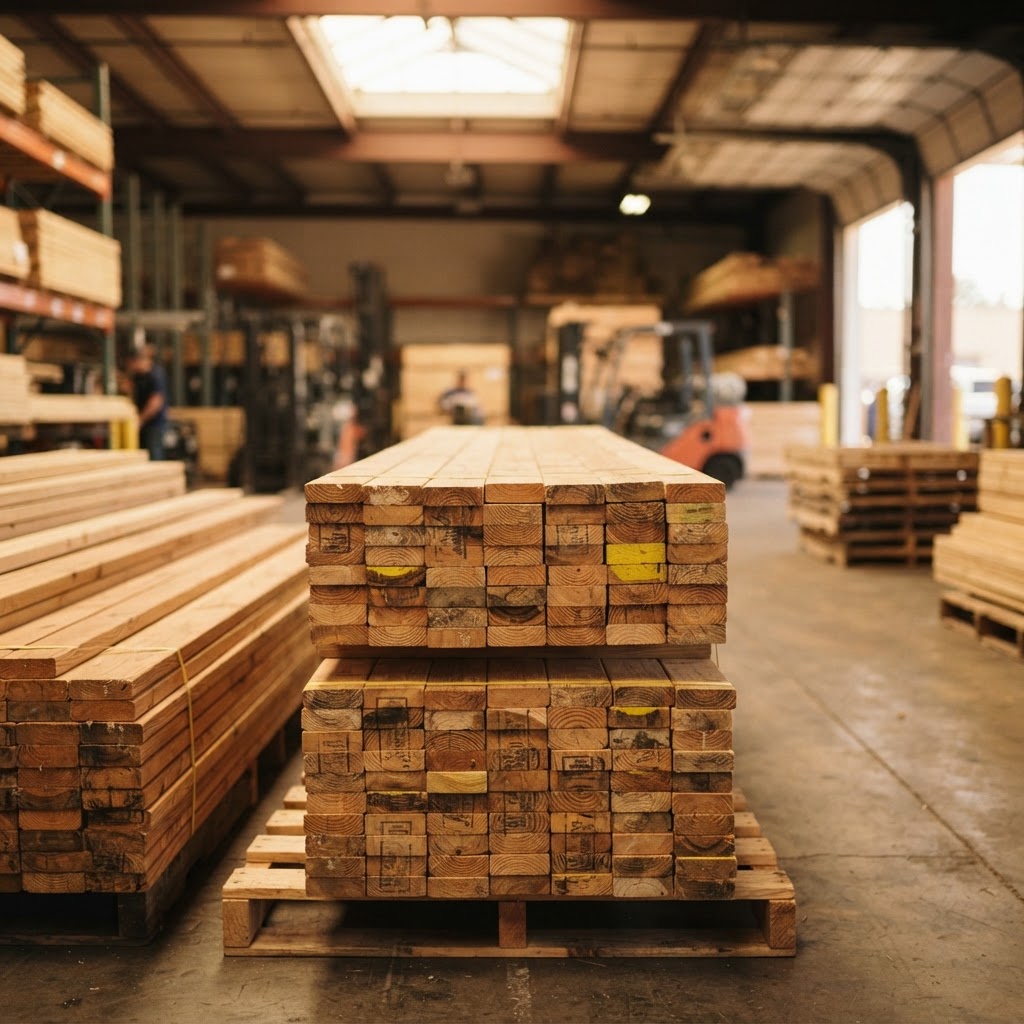
Why Lumber Grades Matter
Lumber grading is the standardized system for classifying wood by quality. Grades affect appearance (knots, defects, grain pattern), structural integrity (strength, stiffness, load-bearing capacity), and price (higher grades cost significantly more). Choosing the wrong grade wastes money — either overpaying for appearance you don't need, or getting lumber too weak for the application.
Softwood Grading (Pine, Fir, Cedar, Spruce)
Softwood grading in the U.S. follows rules established by regional grading agencies under the American Lumber Standard Committee (ALSC). There are two main classification systems: appearance grades and structural grades.
Appearance Grades (Boards)
B & Better (Supreme): The highest appearance grade. Virtually clear — no knots, minimal defects. One face is nearly perfect. Used for premium trim, molding, fine furniture, and visible architectural elements. Cost: 3-5x the price of common grades.
C Select (Choice): Minor defects allowed on one face, but the "good" face is nearly clear. The most popular grade for visible interior trim, paneling, and shelving. Excellent balance of appearance and cost. You can orient the good face outward.
D Select (Quality): More visible defects than C Select, but still presentable. Good for painted trim and molding where paint conceals minor imperfections. Costs 20-40% less than C Select.
#1 Common (Colonial): Sound, tight knots up to 2" in diameter. The workhorse grade for knotty pine paneling, shelving, rustic furniture, and any project where a natural, knotty appearance is desired. Good structural integrity. Affordable.
#2 Common (Sterling): Larger knots (up to 3"), more frequent defects. Acceptable for sheathing, subfloor, shelving in closets or garages. Tight knots are fine; loose or missing knots compromise strength.
#3 Common (Standard) and #4 Common (Utility): Significant defects including loose knots, splits, and wane (bark edge). Used for temporary construction, crating, blocking. Not suitable for visible or structural applications.
Structural Grades (Dimension Lumber: 2x4, 2x6, 2x8, etc.)
Select Structural: The highest structural grade. High strength, stiffness, and good appearance. Used for engineered trusses, headers, beams, and critical load-bearing members where both strength and appearance matter.
#1 Grade: High structural quality with minor defects allowed. Used for floor joists, rafters, headers, and general framing where strength is the priority. This is overkill for wall studs but appropriate for spans.
#2 Grade: The standard framing grade for residential construction. Adequate strength for wall studs, plates, cripples, and short-span joists. The most widely stocked grade at lumber yards and home centers. Most 2x4 studs sold are #2 or "Stud" grade.
#3 Grade: Lower strength values. Acceptable for wall plates, blocking, non-structural uses. Not appropriate for spanning applications (joists, rafters, beams).
Stud Grade: Special grade for vertical load-bearing wall studs up to 10 feet. Essentially equivalent to #2 for vertical use. Limited to wall stud applications — not rated for horizontal spanning.
Hardwood Grading (Oak, Maple, Walnut, Cherry, etc.)
Hardwood grading follows the National Hardwood Lumber Association (NHLA) system, which focuses on the percentage of clear, defect-free area in each board.
FAS (First and Seconds): The highest hardwood grade. Boards must be at least 6" wide and 8' long with 83.3% or more clear area. Used for fine furniture, architectural millwork, and visible cabinetry. Premium pricing.
FAS One Face (F1F): One face meets FAS requirements; the back face can be #1 Common. Popular for furniture and cabinets where only one face is visible. Costs 15-25% less than FAS.
Select: One face meets FAS requirements. Boards can be narrower (4" minimum) and shorter (6' minimum) than FAS. Commonly sold at retail as premium hardwood. Excellent value for smaller projects.
#1 Common: 66.7% clear area minimum. The standard grade for furniture-making. Most woodworkers find #1 Common provides plenty of clear material after cutting around defects. Significant savings over FAS — typically 30-50% less.
#2 Common: 50% clear area minimum. Good for smaller parts (drawer sides, secondary components), painted projects, and rustic furniture where character is desired. Substantial savings.
How Grade Affects Price
In softwoods, the jump from #2 Common to C Select can be 2-3x the board-foot price. In hardwoods, FAS walnut runs $12-$18/bf while #1 Common runs $8-$12/bf — and #2 Common drops to $5-$8/bf. For projects where only one face is visible, buying F1F or #1 Common and cutting around defects saves significant money with no visible compromise.
Grade Stamps
Every piece of structural lumber has a grade stamp showing: the grading agency (WWPA, SPIB, NLGA), the grade (#2, Select Structural), the species or species group (SPF, Hem-Fir, SYP), the moisture content (S-DRY, KD, S-GRN), and the mill number. Appearance-grade boards and hardwoods typically don't carry visible grade stamps — they're graded at the mill and sold by grade designation.
Frequently Asked Questions
Lumberama Editorial Team
Lumber Grading & Quality Specialists
Contributor to Lumberama’s reference library. Read our editorial standards and source methodology.
Buying and sourcing resources
Where readers of this article usually go next.
Related Articles

Wainscoting Guide: Types, Cost & Installation Ideas
Add classic charm and protection to your walls.

Trim & Baseboard Guide: Types, Cost & Installation
Finish your rooms with the perfect trim.

Crown Molding Guide: Types, Cost & Installation
Add elegance to any room with crown molding.