Article
Projects

French Drain Installation Guide: Design, Materials & Cost
Lumberama Editorial Team, Drainage & Landscaping Specialists Jul 15, 2026 12 min read
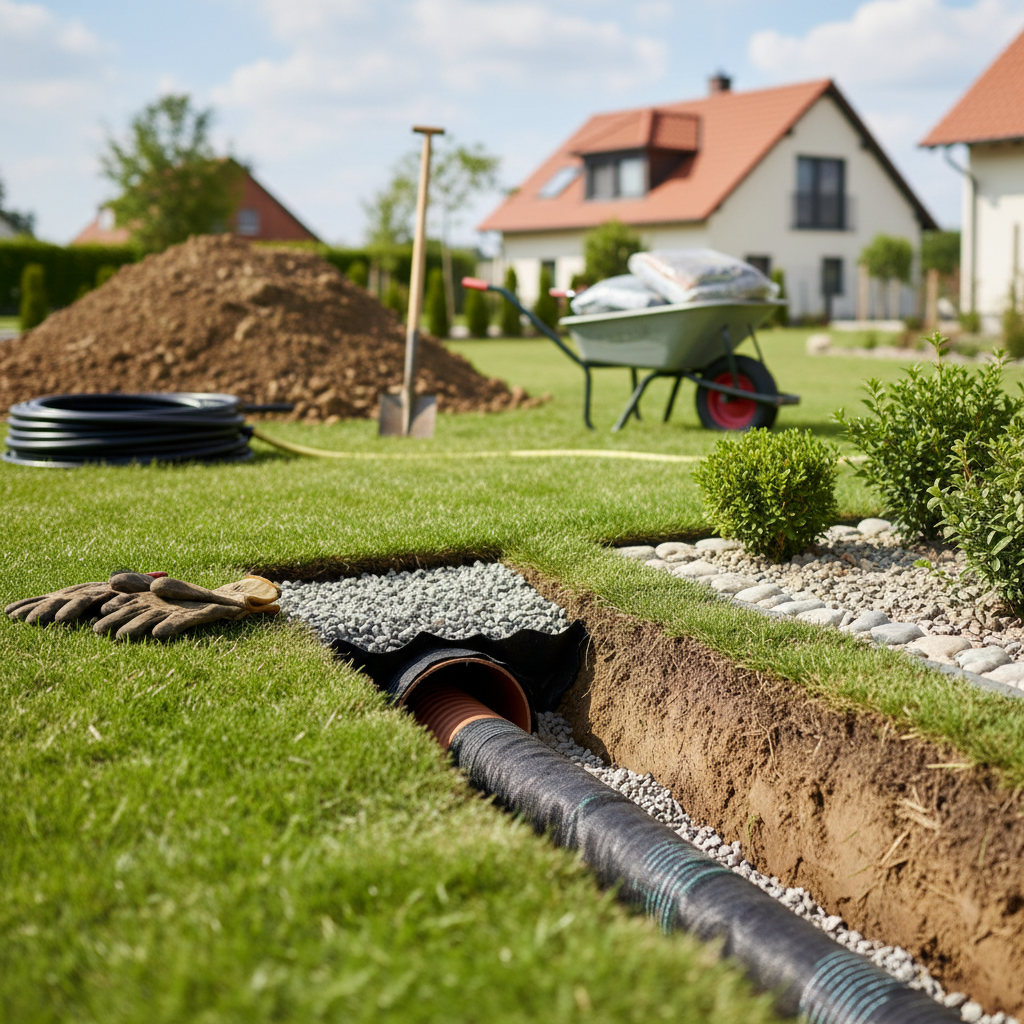
French drain trench being installed in residential yard with gravel perforated pipe and landscape fabric

What Is a French Drain

A French drain is a gravel-filled trench with a perforated pipe that redirects water away from a problem area. It works by gravity: water flows downhill into the trench, enters the perforated pipe through small holes, and is carried to a discharge point (a storm drain, dry well, or lower area of the yard). French drains solve: standing water in the yard, water pooling against the foundation, soggy areas that never dry out, and basement water intrusion (interior French drains).

Types of French Drains

Exterior/yard French drain: Installed in the yard to redirect surface water or shallow groundwater. Typically 12-24 inches deep and 6-12 inches wide. The most common type for solving soggy yard problems.
Foundation French drain (footing drain): Installed around the exterior perimeter of the foundation at footing level. Collects water before it enters the basement. Usually installed during construction or as a major retrofit (requires excavating around the foundation).
Interior French drain: Installed inside the basement along the perimeter of the foundation walls. Collects water that seeps through the walls or floor, directs it to a sump pit, and a sump pump ejects it. The most common solution for existing basement water problems (less invasive than exterior excavation).

Materials

Perforated pipe: 4-inch perforated PVC or corrugated pipe (corrugated is flexible and easier to work with; PVC is more durable and resists crushing). The pipe is laid with holes facing down (the water rises into the pipe from below).
Landscape fabric: Wraps the trench to prevent soil and sediment from clogging the gravel and pipe. Use a non-woven geotextile fabric. Critical for longevity — without fabric, the drain clogs within a few years.
Gravel: 3/4-inch washed crushed stone or river rock. Do NOT use pea gravel (too small, migrates into the pipe) or limestone (can cement over time). You need enough to fill the trench around and above the pipe (typically 1-2 tons per 50 linear feet of drain).
Fittings: End caps, couplings, 90-degree elbows (for corners), and a pop-up emitter or outlet at the discharge point.

Installation Steps

  1. Plan the route: determine where water collects (the inlet) and where it will discharge (the outlet). The drain must slope downhill at a minimum of 1% grade (1 inch of drop per 8 feet of run). Mark the trench path with spray paint or stakes.
  2. Dig the trench: 12-24 inches deep, 6-12 inches wide. Wider and deeper = more capacity. Check the slope with a level or laser level as you dig.
  3. Line the trench with landscape fabric, leaving enough excess on each side to wrap over the top later.
  4. Add 2-3 inches of gravel at the bottom of the trench.
  5. Lay the perforated pipe on the gravel (holes facing down).
  6. Fill the trench with gravel to within 2-3 inches of the surface.
  7. Fold the landscape fabric over the top of the gravel.
  8. Cover with topsoil, sod, or decorative stone.

Costs

Exterior yard drain (per linear foot, DIY): $5-$10 (pipe, gravel, fabric).
Exterior yard drain (per linear foot, professional): $25-$60.
50-foot exterior drain (DIY): $250-$500.
50-foot exterior drain (professional): $1,250-$3,000.
Foundation perimeter drain (professional): $3,000-$10,000+ (requires excavation).
Interior basement drain (professional, per linear foot): $40-$85.
Interior basement drain + sump pump (professional): $3,000-$8,000+.

Frequently Asked Questions

Lumberama Editorial Team

Drainage & Landscaping Specialists

Contributor to Lumberama’s reference library. Read our editorial standards and source methodology.

Explore related resources

Where readers of this article usually go next.