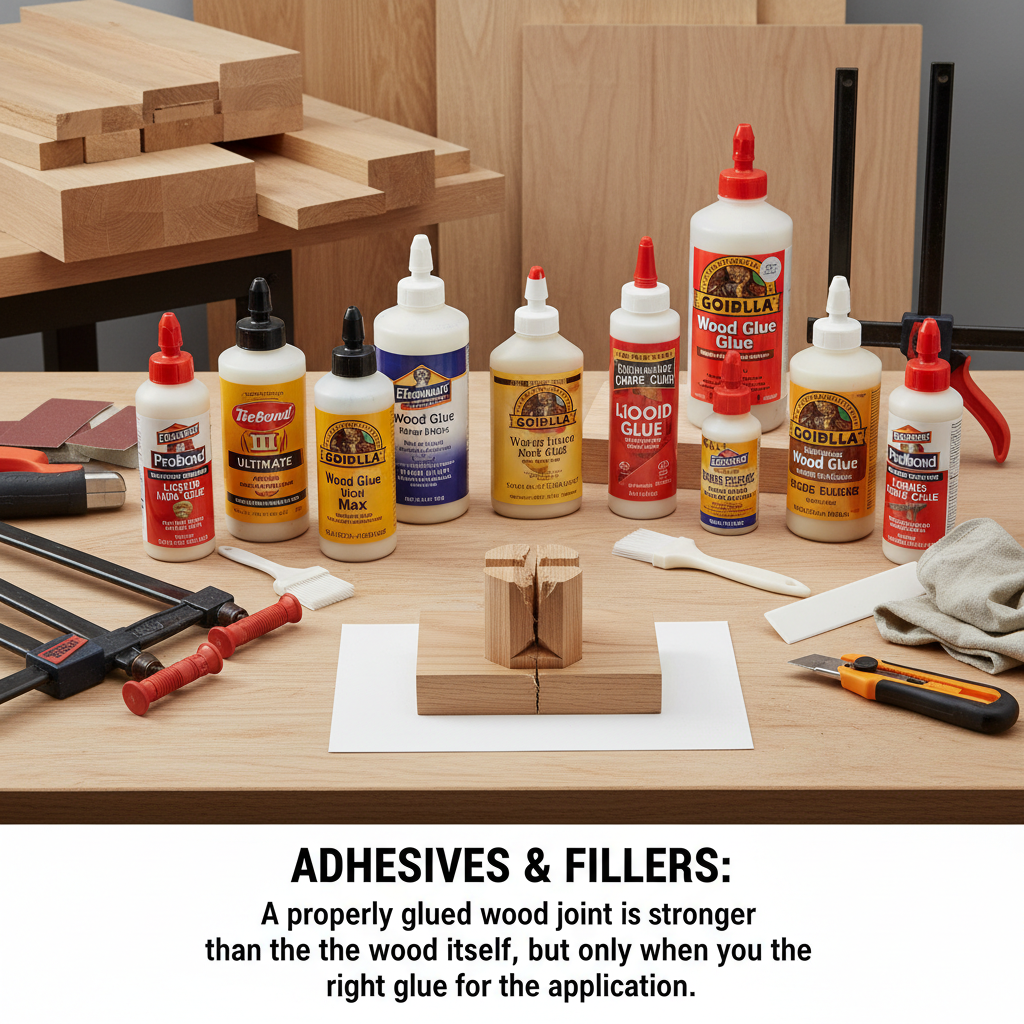
Wood Glue Buying Guide: Choose the Right Adhesive for Every Joint (2026)
A properly glued wood joint is stronger than the wood itself, but only when you use the right glue for the application. From everyday PVA yellow glue to waterproof polyurethane and gap-filling epoxy, each adhesive type has specific strengths and ideal use cases. This guide helps woodworkers and builders choose the correct glue for interior furniture, outdoor projects, structural repairs, and specialty applications.
Key Takeaways
- A properly glued wood joint is stronger than the wood itself, but only when you use the right glue for the application.
- From everyday PVA yellow glue to waterproof polyurethane and gap-filling epoxy, each adhesive type has specific strengths and ideal use cases.
- This guide helps woodworkers and builders choose the correct glue for interior furniture, outdoor projects, structural repairs, and specialty applications.
- Water resistance rating (Type I, II, or III), open time (working time before the glue sets), clamping time required, gap-filling ability, sandability and paintability, indoor vs outdoor use, bond strength on your specific wood species, temperature requirements during curing, and whether you need a reversible bond (like hide glue for furniture restoration).
- Titebond III Ultimate is the top choice for most projects — Type I waterproof, FDA-approved for indirect food contact, and sands cleanly.
What to Consider
Water resistance rating (Type I, II, or III), open time (working time before the glue sets), clamping time required, gap-filling ability, sandability and paintability, indoor vs outdoor use, bond strength on your specific wood species, temperature requirements during curing, and whether you need a reversible bond (like hide glue for furniture restoration).
Product Comparison
Titebond III Ultimate is the top choice for most projects — Type I waterproof, FDA-approved for indirect food contact, and sands cleanly. Titebond II Premium is a Type II water-resistant option at a lower price point for interior and moderate-exposure projects. Gorilla Wood Glue is a PVA with excellent initial tack. For structural and gap-filling needs, West System Epoxy provides unmatched strength on any wood species. Old Brown Glue (hide glue) is preferred for furniture restoration and instrument building due to its reversibility.
Size Selection Guide
A 16 oz bottle handles most furniture projects and small repairs. A quart is ideal for cabinet and larger furniture builds. For deck railing assembly and heavy construction use, a gallon is most economical. Epoxy comes in measured kits — a 6 oz kit handles small repairs while a quart kit is needed for larger structural work. Buy only what you will use within the shelf life (1-2 years for most PVA glues).
Installation Tips
Apply a thin, even layer to both mating surfaces for strongest bonds. Assemble within the open time (5-15 minutes for most PVA). Clamp with enough pressure to create thin, even squeeze-out along the joint line — too much pressure starves the joint. Wipe squeeze-out with a damp cloth for PVA or let it gel and slice off for cleaner results. Allow full cure time (24 hours for most PVA) before removing clamps and stressing the joint.
Common Mistakes to Avoid
Applying glue to only one surface reducing bond strength by up to 50%. Over-clamping which squeezes all glue out of the joint. Working past the open time resulting in a weak, dry joint. Using interior-grade glue on outdoor projects. Not allowing sufficient cure time before loading the joint. Spreading PVA glue residue into wood grain which blocks stain absorption.
Budget Guide
PVA wood glue costs $6-10 for 16 oz and $15-25 per quart. Polyurethane glue runs $8-15 for 8 oz. Two-part epoxy costs $15-30 for small kits and $40-80 for quart kits. Hide glue is $12-20 for 8 oz. For a typical furniture project, a $10-15 bottle of PVA is more than sufficient. Deck railing assembly might use $20-30 in waterproof PVA.
Frequently Asked Questions
Related Guides
Caulk and Sealant for Wood Guide
Choose the right caulk and sealant for wood joints, trim, siding, and decks. Compare silicone, polyu
Read guideWood Filler and Putty Guide
Choose the best wood filler or putty for holes, cracks, and repairs. Compare stainable, epoxy, and e
Read guide