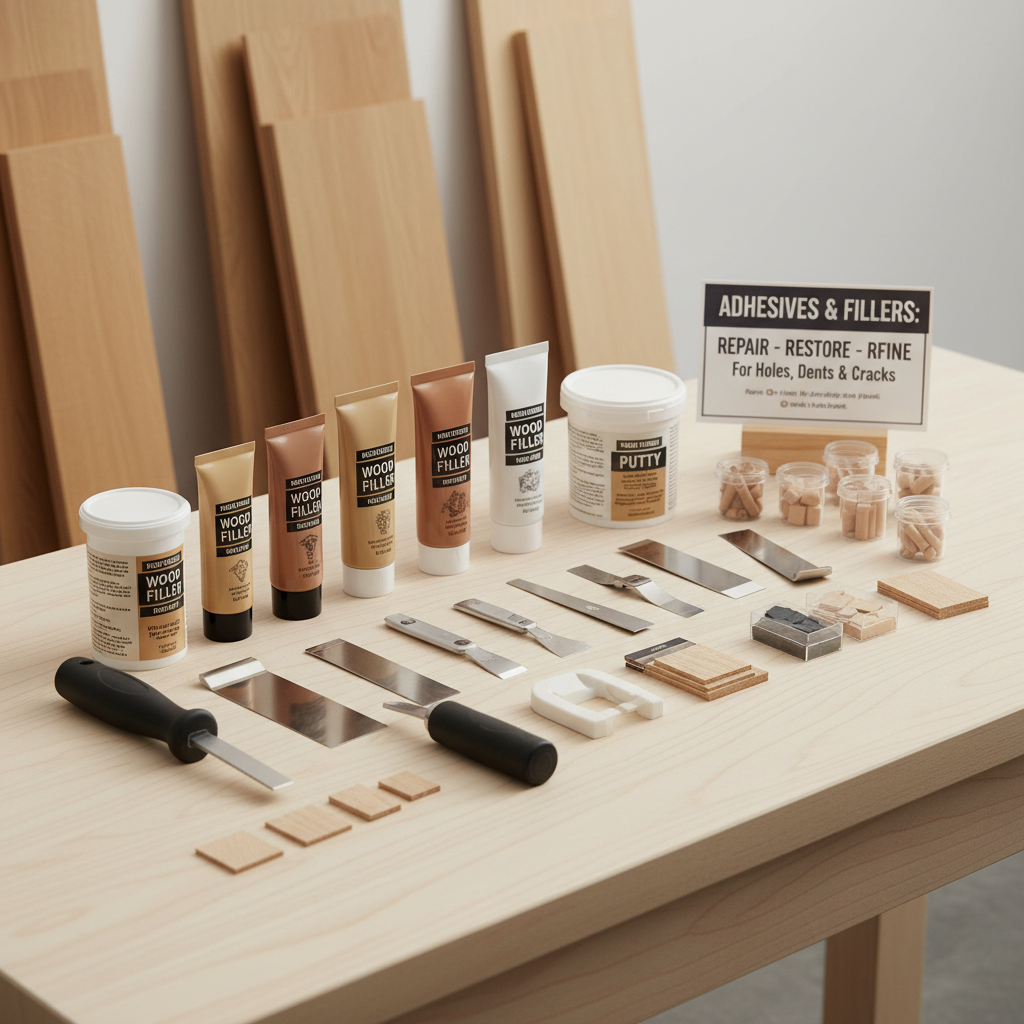
Wood Filler and Putty Guide: Repair Holes, Cracks, and Damage Like a Pro (2026)
Wood filler and putty products repair holes, dents, cracks, and damage in wood surfaces before finishing. Choosing between lightweight spackle-type fillers, stainable wood putty, two-part epoxy fillers, and exterior-grade compounds depends on the size of the repair, exposure conditions, and your planned finish. This guide helps you pick the right repair product and apply it for invisible results.
Key Takeaways
- Wood filler and putty products repair holes, dents, cracks, and damage in wood surfaces before finishing.
- Choosing between lightweight spackle-type fillers, stainable wood putty, two-part epoxy fillers, and exterior-grade compounds depends on the size of the repair, exposure conditions, and your planned finish.
- This guide helps you pick the right repair product and apply it for invisible results.
- Repair size (nail holes vs large voids vs structural damage), interior vs exterior application, whether the repair will be stained or painted, filler type (water-based, solvent-based, epoxy, or polyester), sandability and shrinkage, hardness after curing (should match the surrounding wood), color match options, and drying time.
- Minwax Stainable Wood Filler is the go-to for small repairs on stain-grade interior projects.
What to Consider
Repair size (nail holes vs large voids vs structural damage), interior vs exterior application, whether the repair will be stained or painted, filler type (water-based, solvent-based, epoxy, or polyester), sandability and shrinkage, hardness after curing (should match the surrounding wood), color match options, and drying time.
Product Comparison
Minwax Stainable Wood Filler is the go-to for small repairs on stain-grade interior projects. DAP Plastic Wood-X is an all-purpose filler with DryDex technology that indicates dryness by color change. Bondo Wood Filler (2-part polyester) handles large repairs and structural filling with no shrinkage. Abatron WoodEpox is a professional-grade two-part epoxy for exterior rot repair that can be shaped, sanded, and painted.
Size Selection Guide
Small nail holes and minor dents: use wood putty or lightweight filler in a 3.25 oz tube or 6 oz container. Cabinet and furniture repairs: an 8-16 oz container of stainable filler is sufficient. Large exterior repairs and rot restoration: Bondo or epoxy fillers come in quart and larger sizes. For color-matched repairs, Minwax and DAP offer fillers in popular wood-tone colors.
Installation Tips
Overfill repairs slightly as most fillers shrink during curing. Apply in thin layers (1/4 inch maximum per layer) for large fills to prevent cracking. Use a flexible putty knife for small repairs and a wide drywall knife for larger areas. Sand flush with the surrounding surface after full curing. For stainable fillers, test the stain color match on a sample before committing to the visible repair.
Common Mistakes to Avoid
Using non-stainable filler on a stain-grade project resulting in light spots that do not absorb color. Applying filler too thick in a single layer causing cracking and poor cure. Not allowing sufficient dry time before sanding. Using interior filler on exterior projects where it fails within one season. Expecting filler to match wood grain perfectly under transparent stain (it rarely does — for critical stain-grade work, use real wood patches).
Budget Guide
Small tubes of wood putty cost $3-6. Interior stainable fillers run $6-12 for 16 oz. Two-part polyester fillers (Bondo) cost $10-15 per quart. Professional epoxy systems (Abatron) range $25-50 per kit. A typical furniture or cabinet repair job uses $6-15 in filler. Exterior rot repair on a deck post might require $20-40 in epoxy filler.
Frequently Asked Questions
Related Guides
Caulk and Sealant for Wood Guide
Choose the right caulk and sealant for wood joints, trim, siding, and decks. Compare silicone, polyu
Read guideWood Glue Buying Guide
Find the best wood glue for your project. Compare PVA, polyurethane, epoxy, and hide glue by strengt
Read guide