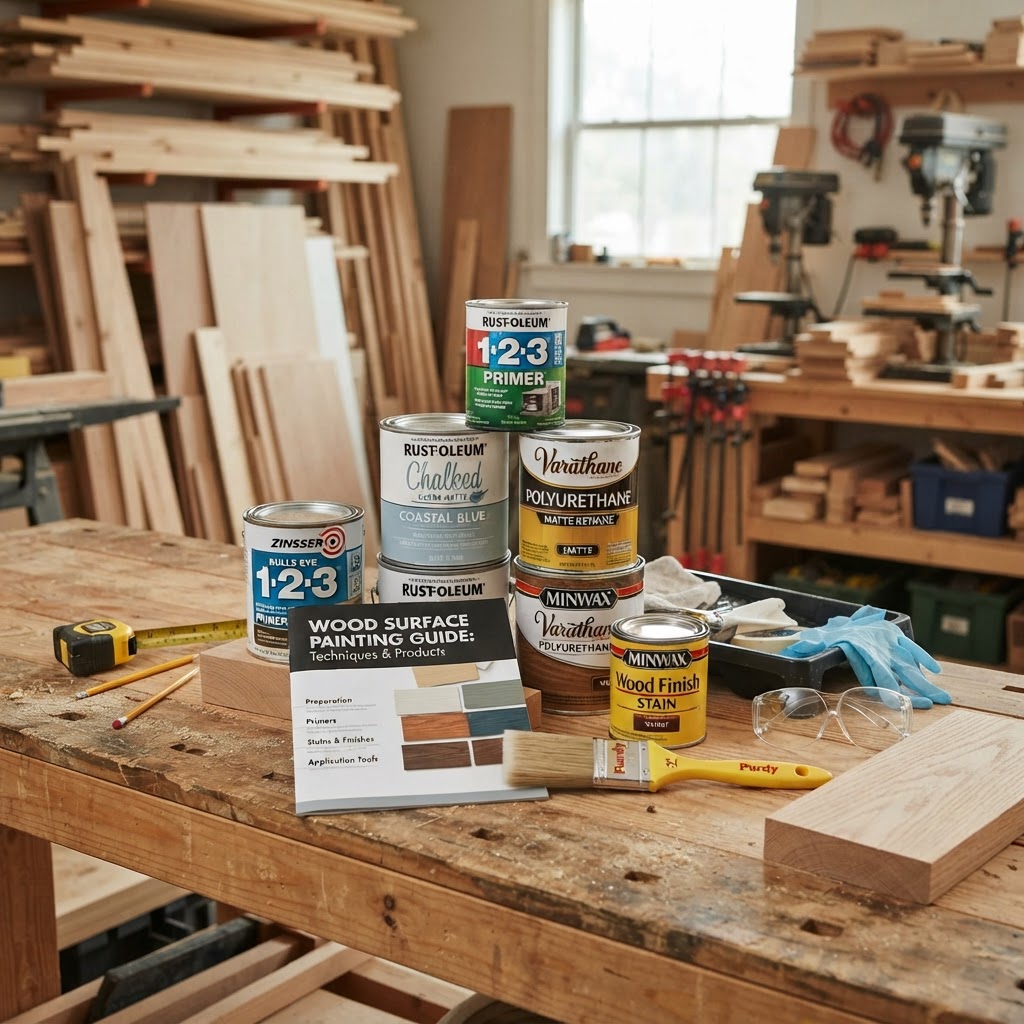
Paint for Wood Surfaces: Interior and Exterior Buying Guide (2026)
Painting wood surfaces provides the most durable and customizable finish option, with unlimited color choices and excellent protection against moisture, UV, and wear. However, painting wood correctly requires proper preparation, primer selection, and paint type matching to your specific application. This guide covers paint types, primer requirements, and application techniques for every wood surface from cabinets to siding.
Key Takeaways
- Painting wood surfaces provides the most durable and customizable finish option, with unlimited color choices and excellent protection against moisture, UV, and wear.
- However, painting wood correctly requires proper preparation, primer selection, and paint type matching to your specific application.
- This guide covers paint types, primer requirements, and application techniques for every wood surface from cabinets to siding.
- Surface type (trim, siding, cabinets, furniture, or decks), interior vs exterior exposure, paint base (latex/acrylic vs alkyd/oil), sheen level (flat, eggshell, satin, semi-gloss, or high-gloss), primer requirements (especially for bare wood, stain-blocking, or adhesion), coverage and number of coats, VOC content, and durability for high-touch surfaces.
- Benjamin Moore Advance is the premium choice for cabinets and trim — an alkyd-modified waterborne paint that flows like oil but cleans up with water.
What to Consider
Surface type (trim, siding, cabinets, furniture, or decks), interior vs exterior exposure, paint base (latex/acrylic vs alkyd/oil), sheen level (flat, eggshell, satin, semi-gloss, or high-gloss), primer requirements (especially for bare wood, stain-blocking, or adhesion), coverage and number of coats, VOC content, and durability for high-touch surfaces.
Product Comparison
Benjamin Moore Advance is the premium choice for cabinets and trim — an alkyd-modified waterborne paint that flows like oil but cleans up with water. Sherwin-Williams Duration provides exceptional exterior coverage and color retention on siding. PPG Breakthrough is a direct-to-surface paint that adheres without primer on many previously painted surfaces. Behr Marquee offers one-coat interior coverage at a consumer-friendly price point.
Size Selection Guide
One gallon covers approximately 350-400 sq ft on smooth wood surfaces. Rough-sawn or textured surfaces use 25-35% more paint. Primer coverage is similar at 300-400 sq ft per gallon. For a set of kitchen cabinets, plan on 1-2 gallons of primer and 2-3 gallons of paint. Exterior house siding typically requires 8-15 gallons depending on home size and surface texture.
Installation Tips
Sand all wood surfaces to 150-180 grit before priming. Use a stain-blocking primer on bare wood, especially softwoods that bleed tannins (cedar, redwood, pine knots). Apply primer evenly and sand lightly with 220 grit between coats. For the smoothest finish on cabinets, spray or use a foam roller and tip off with a brush. Apply two finish coats minimum for durability.
Common Mistakes to Avoid
Skipping primer on bare wood causing tannin bleed-through within weeks. Not sanding between coats resulting in poor adhesion and rough texture. Painting in direct sun or extreme heat causing the paint to dry too quickly and leave brush marks. Using flat or eggshell paint on high-touch surfaces like cabinets where semi-gloss or satin is needed. Applying paint too thickly causing drips, sags, and extended dry times.
Budget Guide
Economy latex paint costs $25-35 per gallon. Mid-range premium paints run $40-55 per gallon. Top-tier cabinet and trim paints range $55-80 per gallon. Primer costs $20-45 per gallon depending on type. A kitchen cabinet repaint runs $150-300 in materials. Exterior house painting costs $300-800 in paint and primer for an average home.
Frequently Asked Questions
Related Guides
Anti-Slip Deck Coatings Guide
Make your deck safer with anti-slip coatings and non-skid additives. Compare deck grip products, tex
Read guideExterior Wood Finish Comparison
Compare exterior wood finishes side by side — stains, sealers, paints, and oils. Learn which finish
Read guideWood Preservatives Guide
Protect wood from rot, insects, and decay with the right preservatives. Compare borate, copper-based
Read guideWood Sealer and Waterproofing Guide
Protect outdoor wood with the best sealers and waterproofing products. Compare Thompson's, Olympic,
Read guide