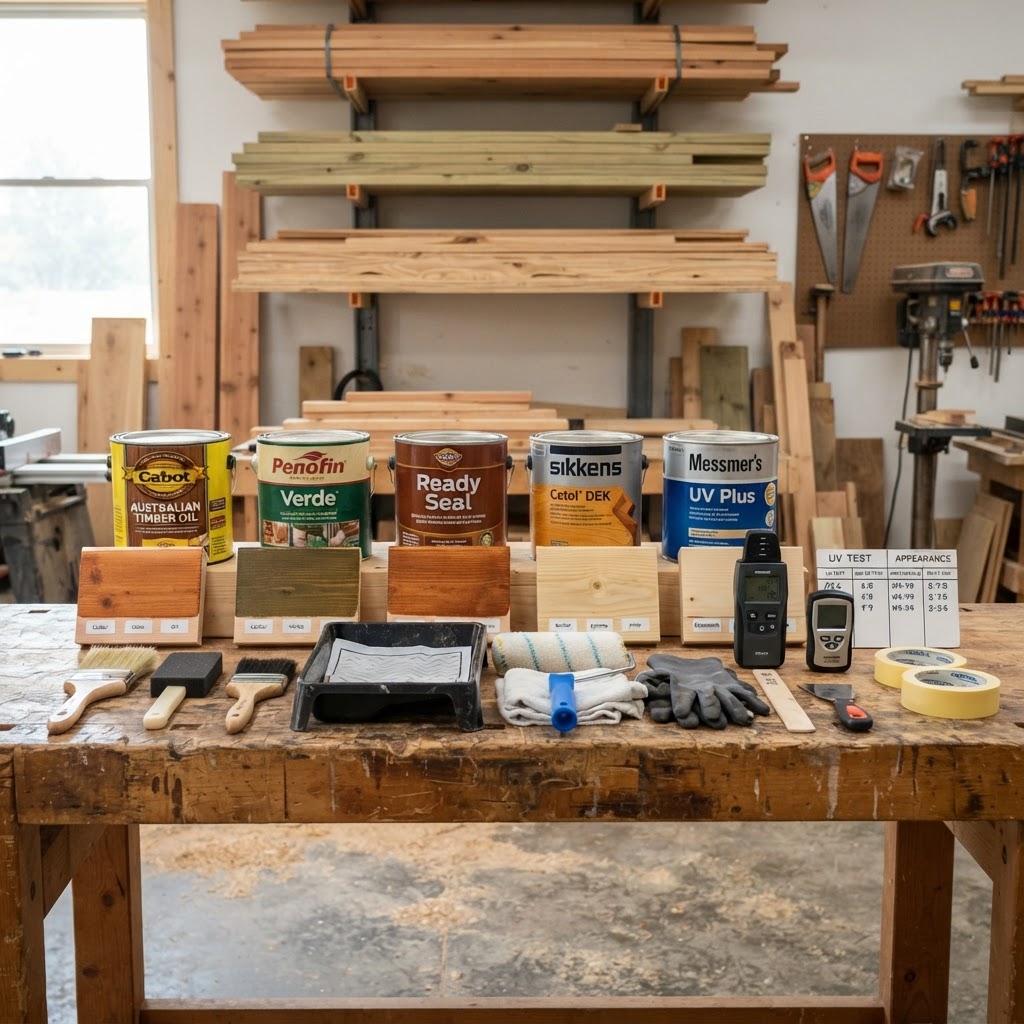
Exterior Wood Finish Comparison: Stain vs Sealer vs Paint vs Oil (2026)
Choosing between exterior stain, sealer, paint, and oil can be overwhelming with dozens of products claiming superior protection. Each finish type has distinct strengths depending on your wood species, project type, and maintenance preferences. This side-by-side comparison breaks down durability, appearance, maintenance requirements, and cost so you can pick the right finish the first time.
Key Takeaways
- Choosing between exterior stain, sealer, paint, and oil can be overwhelming with dozens of products claiming superior protection.
- Each finish type has distinct strengths depending on your wood species, project type, and maintenance preferences.
- This side-by-side comparison breaks down durability, appearance, maintenance requirements, and cost so you can pick the right finish the first time.
- Desired appearance (natural wood grain vs opaque coverage), maintenance frequency tolerance, wood species and condition, horizontal vs vertical application surface, sun exposure level, foot traffic (for decks), breathability requirements, and whether the wood has been previously finished.
- Penetrating oils (Penofin, TWP) soak into wood fibers providing natural-look protection for 1-3 years before recoating — easiest maintenance since no stripping is needed.
What to Consider
Desired appearance (natural wood grain vs opaque coverage), maintenance frequency tolerance, wood species and condition, horizontal vs vertical application surface, sun exposure level, foot traffic (for decks), breathability requirements, and whether the wood has been previously finished.
Product Comparison
Penetrating oils (Penofin, TWP) soak into wood fibers providing natural-look protection for 1-3 years before recoating — easiest maintenance since no stripping is needed. Semi-transparent stains (Cabot, Benjamin Moore Arborcoat) add color while showing grain, lasting 2-4 years. Solid stains provide paint-like coverage lasting 4-7 years but can peel on decks. Exterior paints offer maximum UV protection and 7-10 year lifespan but trap moisture and are not recommended for horizontal deck surfaces.
Size Selection Guide
Oils cover 200-350 sq ft per gallon. Semi-transparent stains cover 200-400 sq ft per gallon. Solid stains and paints cover 300-400 sq ft per gallon. Film thickness increases with opacity — transparent products are thinnest, paint is thickest. For a 300 sq ft deck, budget 1-2 gallons of oil or stain. For fencing, rough-sawn surfaces use 30-40% more product.
Installation Tips
Always test your finish on a scrap piece or hidden area before committing to the full project. Prep work determines 80% of the final result — clean thoroughly, sand smooth surfaces, and apply brightener to open wood pores. Choose weather windows with moderate temperatures and low humidity. Follow the manufacturer's recoat window exactly.
Common Mistakes to Avoid
Applying paint or solid stain on horizontal deck surfaces where foot traffic causes peeling. Using film-forming finishes on wood that is not fully dry. Expecting a transparent finish to hide imperfections in old, weathered wood. Mixing finish types (e.g., applying oil over existing latex stain). Not accounting for the specific finish requirements of different wood species.
Budget Guide
Clear sealers are cheapest at $15-35 per gallon. Penetrating oils run $35-55 per gallon. Semi-transparent stains cost $30-50 per gallon. Solid stains range $35-55 per gallon. Exterior paints cost $40-70 per gallon for premium products. Total project cost depends on coverage area and coats required — typically $150-400 for a standard deck.