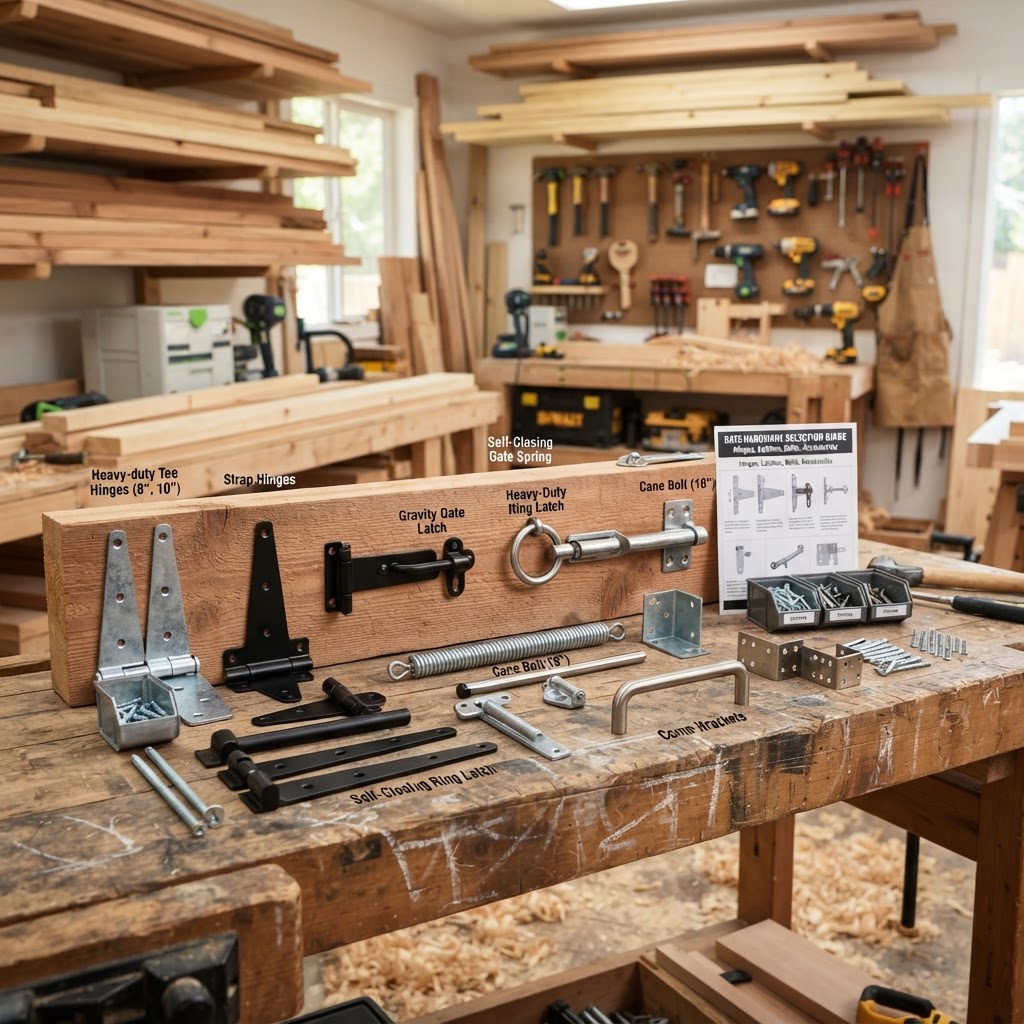
Gate Hardware Selection Guide: Hinges, Latches, and Closers That Last (2026)
Gate hardware takes more abuse than any other fence component — constant swinging, slamming, and weather exposure demand heavy-duty hinges, reliable latches, and smooth closers. The wrong hardware leads to sagging gates, misaligned latches, and frustrating daily use. This guide helps you choose the right hinges, latches, closers, and accessories for gates of every size and style.
Key Takeaways
- Gate hardware takes more abuse than any other fence component — constant swinging, slamming, and weather exposure demand heavy-duty hinges, reliable latches, and smooth closers.
- The wrong hardware leads to sagging gates, misaligned latches, and frustrating daily use.
- This guide helps you choose the right hinges, latches, closers, and accessories for gates of every size and style.
- Gate weight and dimensions (determines hinge size and type), single vs double gate, self-closing requirement (pool codes often mandate this), latch style (thumb, ring, lever, or magnetic), security needs (lockable latch or deadbolt), gate material (wood, vinyl, metal), hinge type (strap, T-hinge, barrel, or spring-loaded), and decorative style preference.
- Boerboel gate hinges feature adjustable, self-closing heavy-duty mechanisms rated for gates up to 150 lbs.
What to Consider
Gate weight and dimensions (determines hinge size and type), single vs double gate, self-closing requirement (pool codes often mandate this), latch style (thumb, ring, lever, or magnetic), security needs (lockable latch or deadbolt), gate material (wood, vinyl, metal), hinge type (strap, T-hinge, barrel, or spring-loaded), and decorative style preference.
Product Comparison
Boerboel gate hinges feature adjustable, self-closing heavy-duty mechanisms rated for gates up to 150 lbs. D&D Technologies TruClose hinges are polymer-bodied, stainless-pinned, and self-close without springs. National Hardware heavy-duty T-hinges provide traditional looks with modern strength. Snug Cottage Hardware offers premium forged iron gate hardware with artisan finishes for upscale projects.
Size Selection Guide
Light-duty hinges (up to 50 lbs): 6-8 inch strap or T-hinges for garden gates up to 3 feet wide. Medium-duty (50-100 lbs): 10-12 inch heavy-gauge hinges for 4-foot gates. Heavy-duty (100-200 lbs): ball-bearing barrel hinges or adjustable spring hinges for 5-6 foot gates. Use three hinges instead of two for gates over 5 feet tall or 75 pounds.
Installation Tips
Mount gate hinges to gate first, then attach to post with gate propped at the correct height and gap. Maintain 1/2 inch clearance at the bottom and 1/4 inch on each side for seasonal wood expansion. Use structural screws, not standard wood screws, for hinge attachment to the post. Ensure the post is plumb before mounting — a leaning post means a gate that will not close properly.
Common Mistakes to Avoid
Using undersized hinges causing gate sag within months. Mounting hinges to a post that is not plumb. Not leaving enough clearance for wood swelling causing the gate to stick in humid weather. Forgetting a cane bolt or drop rod on double gates. Installing latches at a height that is uncomfortable to reach from both sides.
Budget Guide
Basic hinge and latch sets cost $15-30 per gate. Mid-range adjustable self-closing hardware runs $40-80 per gate. Premium forged or decorative hardware costs $80-200+ per gate. Self-closing hinges add $10-30 per pair over standard hinges. Gate closers (hydraulic) cost $25-50 each. Budget an extra $20-40 for a lockable latch if security is needed.
Frequently Asked Questions
Related Guides
Deck Railing Hardware Guide
Complete guide to deck railing hardware including post mounts, baluster connectors, rail brackets, a
Read guideFence Hardware and Brackets Guide
Choose the right fence hardware including post brackets, rail connectors, panel clips, and post caps
Read guide