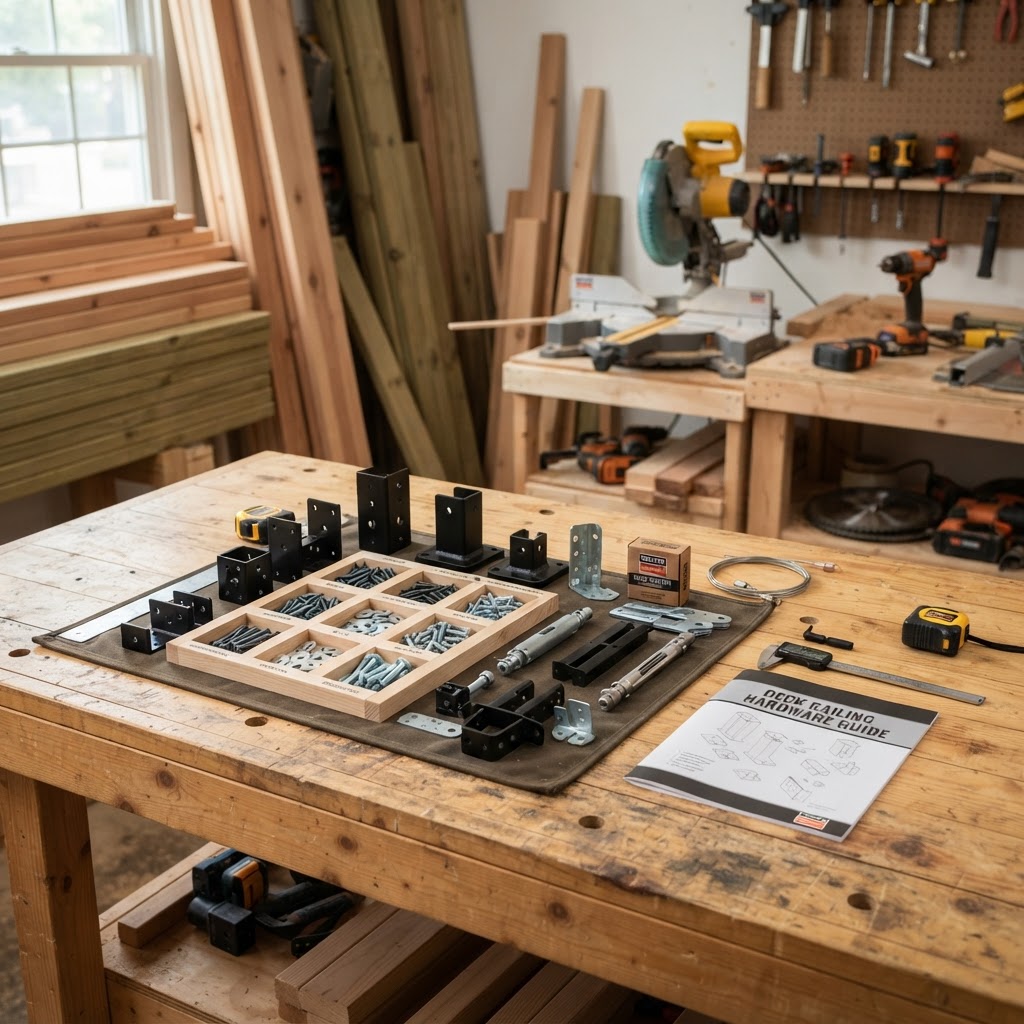
Deck Railing Hardware: Everything You Need for a Safe, Beautiful Railing (2026)
Deck railing hardware encompasses post mounts, rail connectors, baluster attachments, and infill systems that create a code-compliant safety barrier. The right hardware simplifies installation while ensuring your railing withstands the 200-pound load test required by residential building codes. This guide covers hardware options for wood, metal, cable, and glass railing systems.
Key Takeaways
- Deck railing hardware encompasses post mounts, rail connectors, baluster attachments, and infill systems that create a code-compliant safety barrier.
- The right hardware simplifies installation while ensuring your railing withstands the 200-pound load test required by residential building codes.
- This guide covers hardware options for wood, metal, cable, and glass railing systems.
- Railing style (wood, metal baluster, cable, glass panel), post mounting method (surface-mount, fascia-mount, or through-post), rail height requirements (36 inches minimum for residential decks, 42 inches for commercial), baluster spacing (max 4 inches per code), material finish and corrosion resistance, and whether you want a kit system or custom-built railing.
- Deckorators ALX Pro aluminum railing kits offer powder-coated finished sections that install in minutes.
What to Consider
Railing style (wood, metal baluster, cable, glass panel), post mounting method (surface-mount, fascia-mount, or through-post), rail height requirements (36 inches minimum for residential decks, 42 inches for commercial), baluster spacing (max 4 inches per code), material finish and corrosion resistance, and whether you want a kit system or custom-built railing.
Product Comparison
Deckorators ALX Pro aluminum railing kits offer powder-coated finished sections that install in minutes. Feeney CableRail provides stainless steel cable infill with tensioning hardware for open views. TimberTech RadianceRail Express includes all brackets and connectors in a composite system. For wood railings, Simpson Strong-Tie RTC series rail-to-post connectors handle the structural connection while allowing decorative wood choices.
Size Selection Guide
Standard residential railing height is 36 inches from deck surface to top of rail. Posts are typically 4x4 spaced no more than 6 feet apart (check local code — some require 4 feet). Balusters must be spaced so a 4-inch sphere cannot pass through. For cable railing, cables are spaced at 3-inch intervals with intermediate posts every 4 feet to minimize cable deflection.
Installation Tips
Install corner and end posts first, then string a line to align intermediate posts. Use a post level during installation. Surface-mount post brackets should be bolted through the rim joist, not just lag-screwed into the deck board. Pre-assemble rail sections on the ground before mounting. Test the 200-pound lateral load resistance before finishing.
Common Mistakes to Avoid
Notching posts for beam attachment without engineering approval, weakening the post. Using lag screws instead of through-bolts for surface-mount posts. Spacing balusters wider than 4 inches (a code violation that fails inspection). Not accounting for the post bracket height when calculating rail height. Installing cable railing with insufficient intermediate posts causing sagging.
Budget Guide
Basic wood railing with metal balusters costs $15-25 per linear foot in materials. Aluminum kit systems run $30-50 per linear foot. Cable railing systems cost $40-70 per linear foot. Glass panel systems are the most expensive at $60-100+ per linear foot. Post mounting hardware adds $15-30 per post regardless of railing type.
Frequently Asked Questions
Related Guides
Fence Hardware and Brackets Guide
Choose the right fence hardware including post brackets, rail connectors, panel clips, and post caps
Read guideGate Hardware Selection Guide
Select the right gate hardware — hinges, latches, closers, and drop rods. Compare self-closing, heav
Read guide