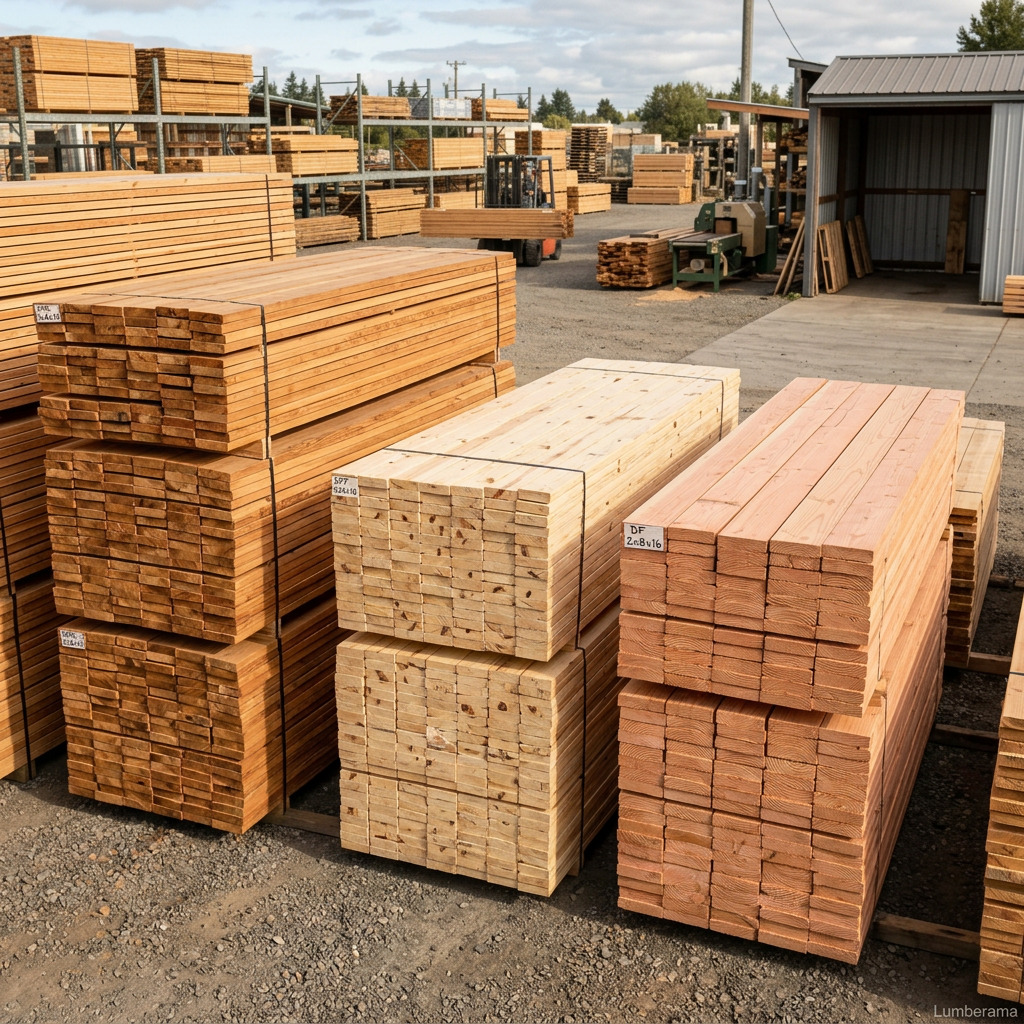
Softwood Species Guide (2026)
Affordable and versatile options for construction and decking projects
Reviewed by Lumberama's Product Team | Last updated May 26, 2026
What are Softwoods?
Softwoods come from coniferous trees like pine, fir, and cedar. Despite their name, some softwoods can be quite hard and durable. They are generally more affordable than hardwoods, easier to work with, and ideal for framing, decking, siding, and outdoor structures. Many softwoods have natural properties that provide decay resistance.
Popular Softwood Species
Western Red Cedar
Natural oils provide decay resistance, lightweight and easy to work with.
Redwood
Rich color, excellent decay resistance, premium softwood choice.
Pressure Treated Pine
Chemically treated for rot resistance, most economical choice for structural use.
Douglas Fir
Strong and versatile, ideal for framing and structural applications.
Softwood Properties
- ✓Affordability: Generally 30-70% less expensive than hardwoods
- ✓Workability: Easier to cut, nail, and screw than hardwoods
- ✓Availability: Widely available in many dimensions and grades
- ✓Versatility: Suitable for structural, decorative, and outdoor applications
- ✓Maintenance: Most require regular sealing or finishing for longevity
Natural Decay Resistance
Excellent
- • Western Red Cedar
- • Redwood
- • Eastern Red Cedar
Good (With Treatment)
- • Pressure Treated Pine
- • Pressure Treated Fir
Fair (Requires Finish)
- • Douglas Fir
- • Spruce
- • Pine (untreated)
Applications by Type
Decking & Outdoor
- • Western Red Cedar - Great value with natural resistance
- • Redwood - Premium look and performance
- • Pressure Treated Pine - Budget-friendly structural option
Framing & Structure
- • Douglas Fir - Strong and dimensionally stable
- • Pressure Treated Pine - Ground-contact applications
- • Spruce-Pine-Fir - Standard building lumber