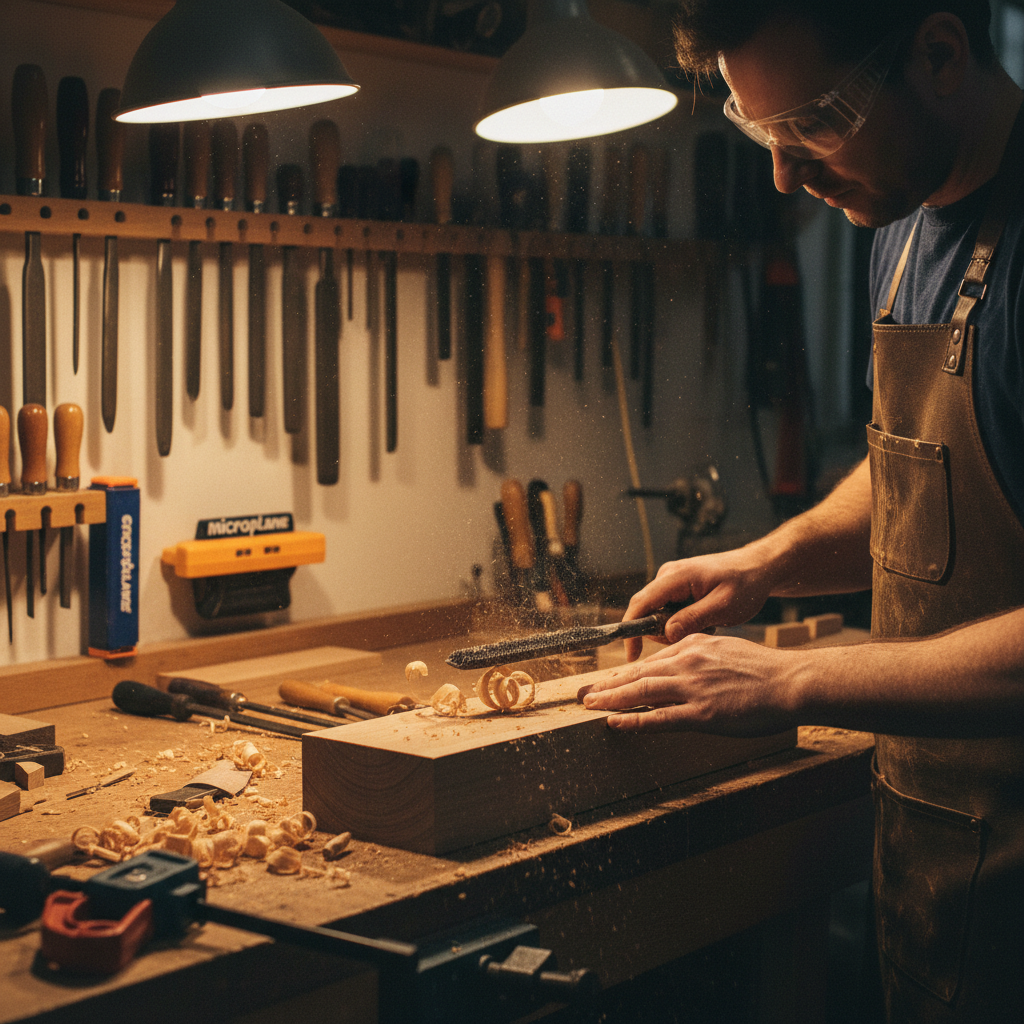
The Complete Guide to Wood Rasps (2026)
A wood rasp is a coarse hand tool with individually cut or punched teeth used for rapid shaping, sculpting, and smoothing of wood. Unlike files, which have uniform rows of teeth, rasps have randomly distributed teeth that cut aggressively without clogging. They are indispensable for shaping curves, rounding edges, fitting joints, and sculpting organic forms that power tools cannot create.
Key Takeaways
- A wood rasp is a coarse hand tool with individually cut or punched teeth used for rapid shaping, sculpting, and smoothing of wood.
- Unlike files, which have uniform rows of teeth, rasps have randomly distributed teeth that cut aggressively without clogging.
- They are indispensable for shaping curves, rounding edges, fitting joints, and sculpting organic forms that power tools cannot create.
- Wood rasps are used for shaping curved surfaces, rounding edges and corners, fitting joints where minor material removal is needed, sculpting and carving, enlarging holes, shaping handle profiles, smoothing bandsaw and jigsaw cuts, and any task requiring controlled, aggressive wood removal by hand.
- Tooth type (hand-stitched vs machine-made), cut (bastard/coarse, second cut/medium, smooth/fine), length (8-14 inches), shape (flat, half-round, round), handle comfort, tang vs built-in handle, and tooth pattern (random hand-stitched cuts are superior to machine-made rows).
What It's Used For
Wood rasps are used for shaping curved surfaces, rounding edges and corners, fitting joints where minor material removal is needed, sculpting and carving, enlarging holes, shaping handle profiles, smoothing bandsaw and jigsaw cuts, and any task requiring controlled, aggressive wood removal by hand.
Types & Variations
Flat Rasp (for convex and flat surfaces), Half-Round Rasp (flat on one side, curved on the other — most versatile), Round Rasp (for inside curves and holes), Cabinet Rasp (finer teeth for finish shaping), Patternmaker's Rasp (hand-stitched, premium), Shinto Saw Rasp (Japanese double-sided rasp/file combo), and Microplane rasps (surgical-sharp teeth).
Key Features to Look For
- Tooth type (hand-stitched vs machine-made)
- cut (bastard/coarse
- second cut/medium
- smooth/fine)
- length (8-14 inches)
- shape (flat
- half-round
- round)
- handle comfort
- tang vs built-in handle
- and tooth pattern (random hand-stitched cuts are superior to machine-made rows).
How to Use
1) Secure the workpiece in a vise or clamp. 2) Hold the rasp handle with your dominant hand and guide the tip with the other. 3) Push the rasp forward in long, even strokes — rasps cut on the push stroke. 4) Lift on the return stroke to prevent dulling. 5) Work at a slight diagonal for smoother cutting. 6) Start with a coarse rasp for shaping, then switch to finer cuts for smoothing. 7) Follow with sandpaper for final finishing.
⚠️ Safety Tips
Always use a handle on the tang — a bare tang can impale your palm. Clamp the work securely. Rasps can skip or chatter on hard grain — maintain firm, controlled strokes. Watch for sharp edges on new rasps. Wear a dust mask when shaping treated wood. Clean teeth regularly to prevent clogging.
Maintenance
Clean clogged teeth with a file card (wire brush). Store rasps separately — do not let them contact each other or other tools. Hang on a rack or store in a roll. Apply a light coat of oil to prevent rust. Do not use rasps on metal — it dulls the teeth rapidly. Hand-stitched rasps can be resharpened by specialists.
Price Range & Recommendations
Price Range: $5-$15 for basic machine-made rasps, $15-$30 for Shinto saw rasps, $20-$40 for Nicholson pattern, $40-$80 for premium Microplane, $70-$200+ for hand-stitched (Auriou, Liogier, Gramercy).
Beginners should get the Shinto Saw Rasp ($20) — it has coarse and fine sides, is easy to control, and never clogs. Add a Nicholson #49 and #50 cabinet rasp set for general shaping. Pros will appreciate hand-stitched rasps from Auriou or Liogier — their individually cut teeth produce faster, smoother results with less effort than any machine-made rasp.
Top Brands
Related Tools
Frequently Asked Questions
Related Guides
Bar Clamps
Essential guide to bar clamps for glue-ups and assembly. Compare Bessey, Jorgensen & Irwin models. F
Read guideChisel Set
Choose the best wood chisel set for joinery and mortising. Compare Narex, Stanley & Irwin sets. Stee
Read guideFinish Hammer
Find the perfect finish hammer for trim work and cabinetry. Compare Estwing, Vaughan & Dalluge model
Read guideFraming Hammer
Choose the right framing hammer for rough carpentry. Compare Estwing, Stiletto & Martinez models. St
Read guide