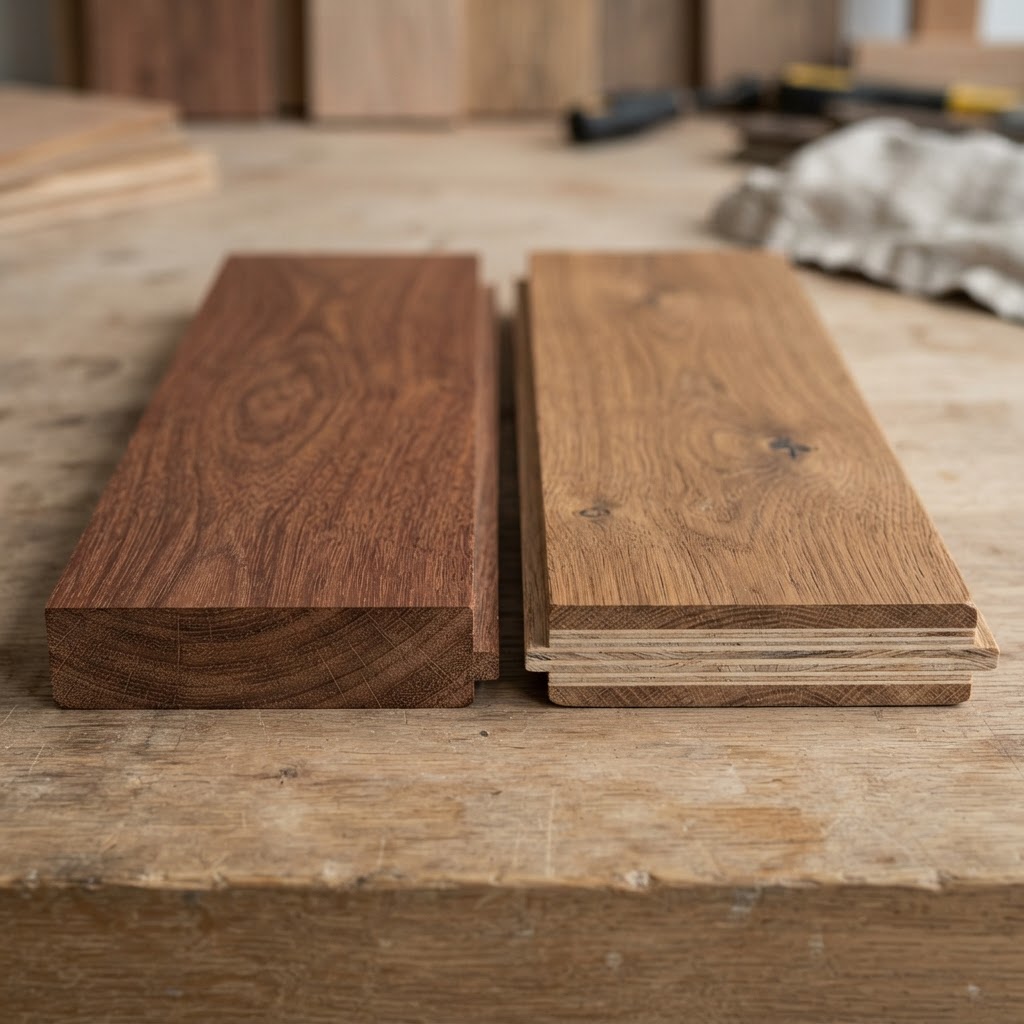
Engineered vs Solid Hardwood Flooring: Which Should You Install? (2026)
Engineered and solid hardwood both feature real wood on the walking surface, but their construction differs fundamentally. Solid hardwood is milled from a single piece of timber, while engineered hardwood bonds a real wood wear layer to a plywood or HDF core. Both have distinct advantages depending on your installation environment.
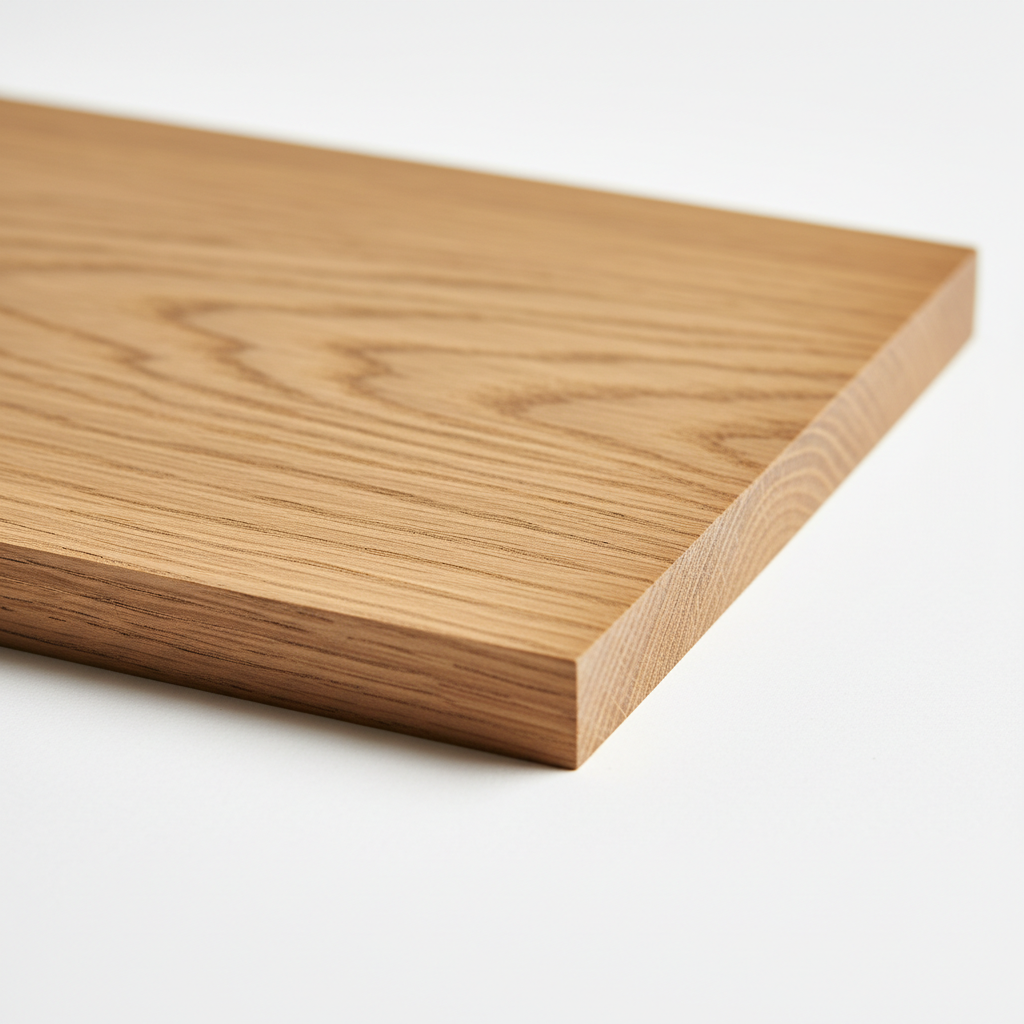
Engineered Hardwood
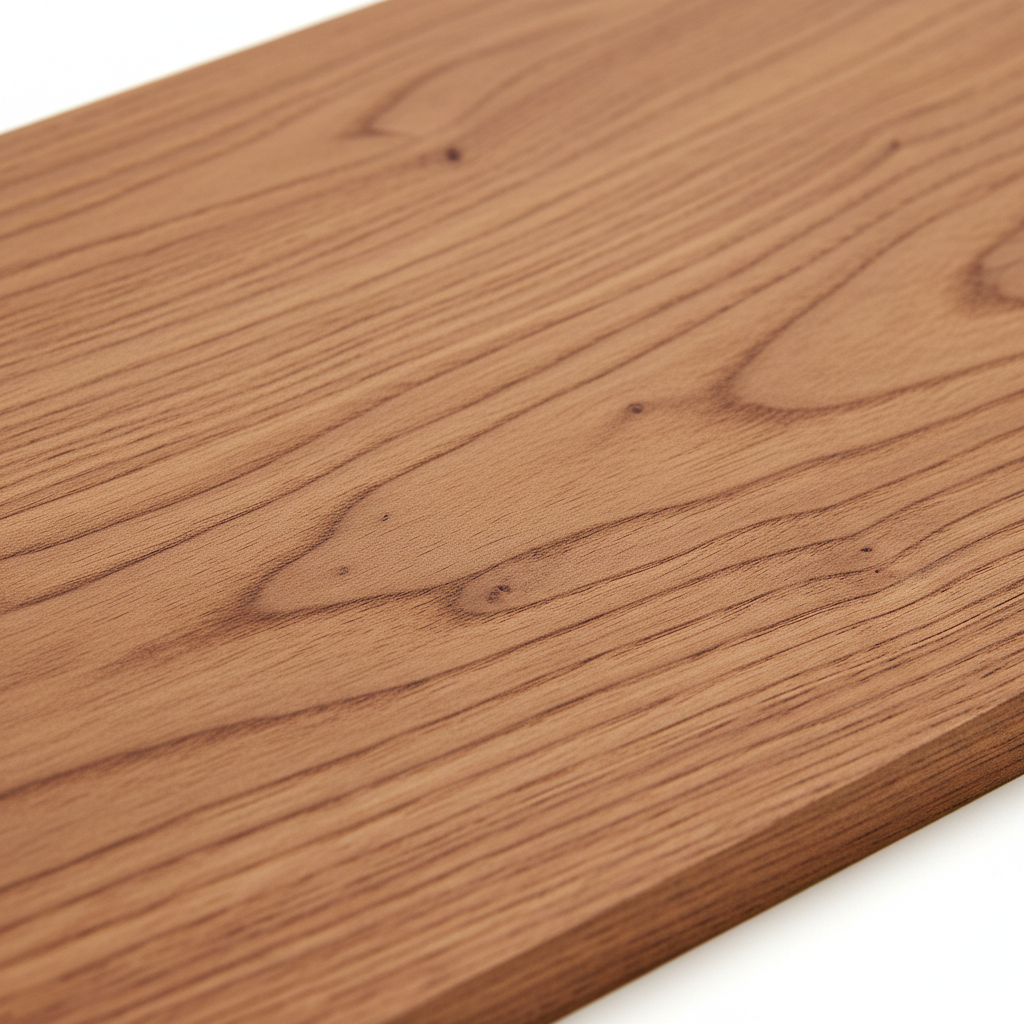
Solid Hardwood
Key Takeaways
- Engineered and solid hardwood both feature real wood on the walking surface, but their construction differs fundamentally.
- Solid hardwood is milled from a single piece of timber, while engineered hardwood bonds a real wood wear layer to a plywood or HDF core.
- Both have distinct advantages depending on your installation environment.
- Engineered hardwood is the more versatile installation option that works in more environments.
- Solid hardwood is the ultimate long-term investment for homes where subfloor conditions allow it.
| Property | Engineered Hardwood | Solid Hardwood |
|---|---|---|
| Hardness Janka | Same as species — real wood surface | Determined by species |
| Density Lbft3 | Varies | Varies by species |
| Price Range | $3.00-$10.00/sqft | $3.00-$12.00/sqft |
| Durability Class | 1-2 refinishes typical | 3-5 refinishes over lifetime |
| Color | Real wood — same as solid | Real wood — full species range |
Engineered Hardwood
Pros
- Dimensionally stable — ideal for fluctuating environments
- Can be installed over concrete and with radiant heat
- Available in wider planks with less cupping risk
- Floating or glue-down installation options
Cons
- Limited refinishing — typically 1-2 times
- Thin wear layers on budget products
- Core quality varies significantly by brand
Solid Hardwood
Pros
- Can be refinished 3-5 times over its lifespan
- Longest possible floor life — 100+ years potential
- No delamination risk
- Full-thickness real wood throughout
Cons
- Expands and contracts with humidity changes
- Cannot be installed below grade or over concrete
- Narrow widths recommended to minimize cupping
Best Use Cases
Choose engineered hardwood for below-grade spaces, concrete subfloors, radiant heat systems, and humid climates. Choose solid hardwood for long-term value, maximum refinishing potential, and wood-subfloor installations.
Verdict
Engineered hardwood is the more versatile installation option that works in more environments. Solid hardwood is the ultimate long-term investment for homes where subfloor conditions allow it.
Frequently Asked Questions
Related Comparisons
Acacia vs Oak
Acacia and oak hardwood flooring compared on cost, hardness, style, and durability. See how this exo
Read guideBrazilian Cherry (Jatoba) vs Oak
Brazilian cherry (Jatoba) vs oak flooring compared on hardness, cost, color, and maintenance. Find t
Read guideBamboo vs Hardwood
Bamboo flooring vs traditional hardwood compared on durability, cost, eco-friendliness, and style. F
Read guide