Wood Windows
2026 Wood Windows Buying Guide: Species, Styles & Performance (2026)
Wood windows offer unmatched beauty, superior insulation, and a classic aesthetic that vinyl and aluminum cannot replicate. They remain the top choice for historic restorations, high-end new construction, and homeowners who value craftsmanship. This guide covers species selection, window styles, energy ratings, and maintenance expectations so you invest wisely.
Key Takeaways
- Wood windows offer unmatched beauty, superior insulation, and a classic aesthetic that vinyl and aluminum cannot replicate.
- They remain the top choice for historic restorations, high-end new construction, and homeowners who value craftsmanship.
- This guide covers species selection, window styles, energy ratings, and maintenance expectations so you invest wisely.
- Frame species: Pine, Douglas fir, mahogany, or alder based on finish plans
- Cladding: Aluminum, fiberglass, or all-wood exterior for maintenance considerations
What to Look For
- Frame species: Pine, Douglas fir, mahogany, or alder based on finish plans
- Cladding: Aluminum, fiberglass, or all-wood exterior for maintenance considerations
- Energy rating: U-factor, SHGC, and ENERGY STAR certification
- Glass: Double-pane with low-E coating minimum; triple-pane for cold climates
- Operation style: Double-hung, casement, awning, fixed, or sliding
Species Comparison
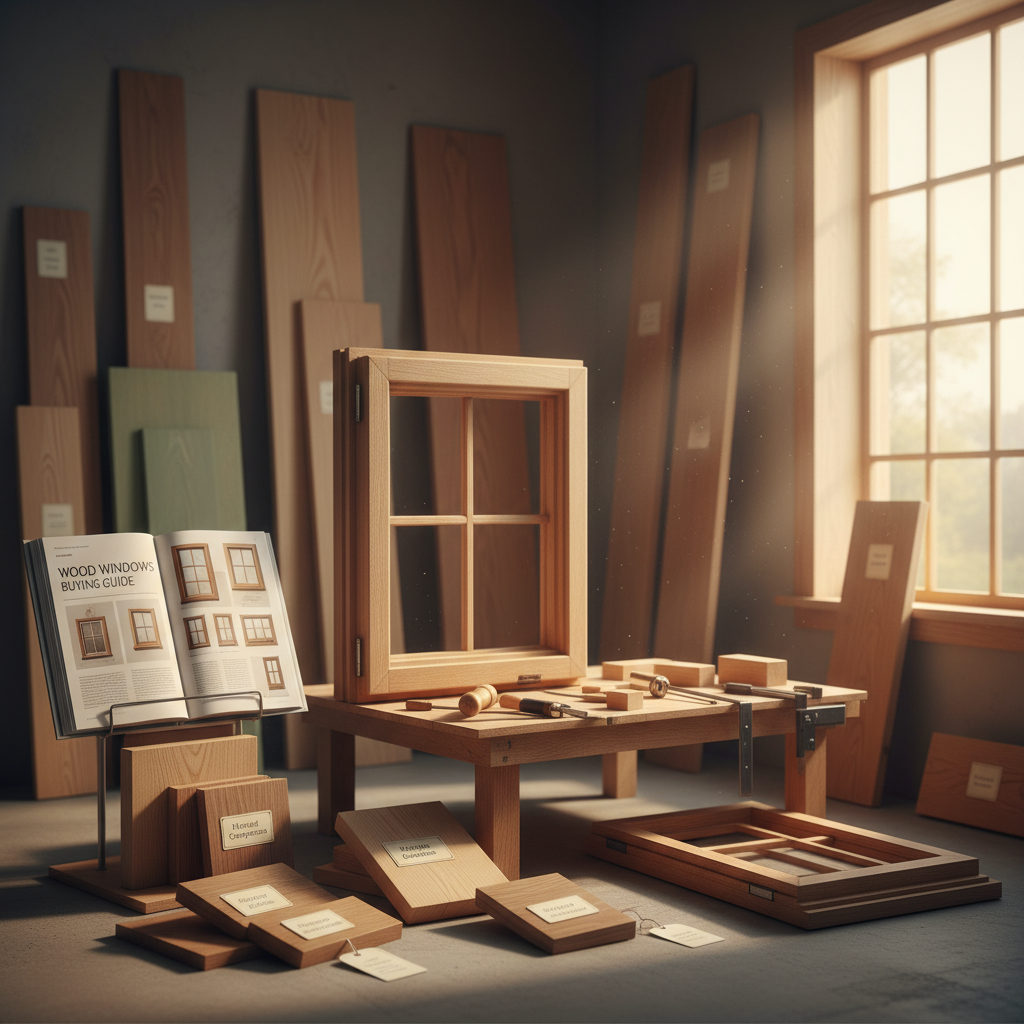
Pine is the most common and affordable wood window material. Douglas fir offers greater stability and a finer grain for clear finishes. Mahogany is the premium choice — naturally rot-resistant, dimensionally stable, and beautiful. Alder provides a mid-range option with good workability. For exterior durability, clad windows wrap the exterior frame in aluminum or fiberglass while keeping a wood interior. All-wood windows offer the purest aesthetic but require more maintenance.
Size Guide
Standard window sizes follow modular openings: widths from 24" to 72", heights from 36" to 72". Common double-hung sizes: 28×54", 32×60", 36×72". Casement widths: 20"–36" per sash. Picture windows can exceed 72" wide. Custom sizes are available from most manufacturers at 15–30% premium. Always measure rough openings — allow 1/2" clearance on each side for shimming.
Grade Guide
Window-grade lumber must be kiln-dried, clear of defects, and stable. Premium windows use vertical-grain (VG) Douglas fir or clear pine with no visible knots. Standard windows may use finger-jointed pine or engineered cores with hardwood veneer. Hardware-grade aluminum cladding comes in standard and premium finishes (anodized, powder-coated, or fluoropolymer). AAMA/WDMA/CSA 101/I.S.2/A440 certification ensures performance testing.
Budget Breakdown
Budget: Unclad pine windows at $300–$500 per unit. Mid-range: Aluminum-clad pine or fir windows at $500–$900 per unit. Premium: All-wood mahogany or clad Douglas fir with triple-pane glass at $900–$2,000+ per unit. Installation adds $150–$400 per window depending on size and accessibility.
Common Mistakes to Avoid
- Choosing all-wood exteriors in harsh climates without committing to regular painting/staining
- Ignoring energy ratings — a beautiful window that leaks heat costs more over its lifetime
- Not ordering windows early enough — custom wood windows have 6–12 week lead times
- Assuming wood windows are high-maintenance — modern clad designs need minimal exterior upkeep
- Selecting single-pane or clear glass where low-E coatings and argon fill would dramatically improve comfort
Pre-Purchase Checklist
- Measure rough openings precisely (width, height, depth)
- Choose clad vs. unclad based on maintenance tolerance
- Verify ENERGY STAR certification for your climate zone
- Select operation style for ventilation and egress needs
- Order 8–12 weeks ahead for custom sizes
- Plan interior finish: paint or clear coat the wood interior
Frequently Asked Questions
Wood is a natural insulator and generally has lower conductivity than vinyl. Combined with quality glazing, wood windows can match or exceed vinyl in energy performance.
Clad wood windows need minimal exterior maintenance — inspect caulking annually. Unclad wood exteriors should be painted or stained every 3–5 years. Interior wood surfaces need refinishing less frequently.
Yes. Many manufacturers offer historically accurate profiles that meet preservation standards while incorporating modern energy-efficient glazing.
Well-maintained wood windows can last 50–100+ years. Many historic homes still have original wood windows that outlasted multiple generations of replacement materials.