Stains & Finishes
Wood Stain and Finish Buying Guide: Interior and Exterior Options (2026)
The right stain and finish protect your wood investment, enhance its natural beauty, and determine how much maintenance you'll face over the years. With hundreds of products on the market — from traditional oil-based stains to modern water-based polyurethanes — choosing can feel daunting. This guide cuts through the confusion and matches you with the right finish for every application.
Key Takeaways
- The right stain and finish protect your wood investment, enhance its natural beauty, and determine how much maintenance you'll face over the years.
- With hundreds of products on the market — from traditional oil-based stains to modern water-based polyurethanes — choosing can feel daunting.
- This guide cuts through the confusion and matches you with the right finish for every application.
- exterior formulation — exterior finishes need UV blockers and flexible film to handle weather.
- water-based — oil penetrates deeper and enriches grain; water-based dries faster and has lower VOCs.
What to Look For
- Interior vs. exterior formulation — exterior finishes need UV blockers and flexible film to handle weather.
- Oil-based vs. water-based — oil penetrates deeper and enriches grain; water-based dries faster and has lower VOCs.
- Transparency level — transparent, semi-transparent, semi-solid, and solid stains offer increasing color and UV protection.
- Sheen level — flat, satin, semi-gloss, and gloss affect appearance and maintenance visibility.
- Application method — brush, spray, wipe, or roller application suits different products and project scales.
- Recoat and cure times — factor these into your project schedule, especially for floors and outdoor projects.
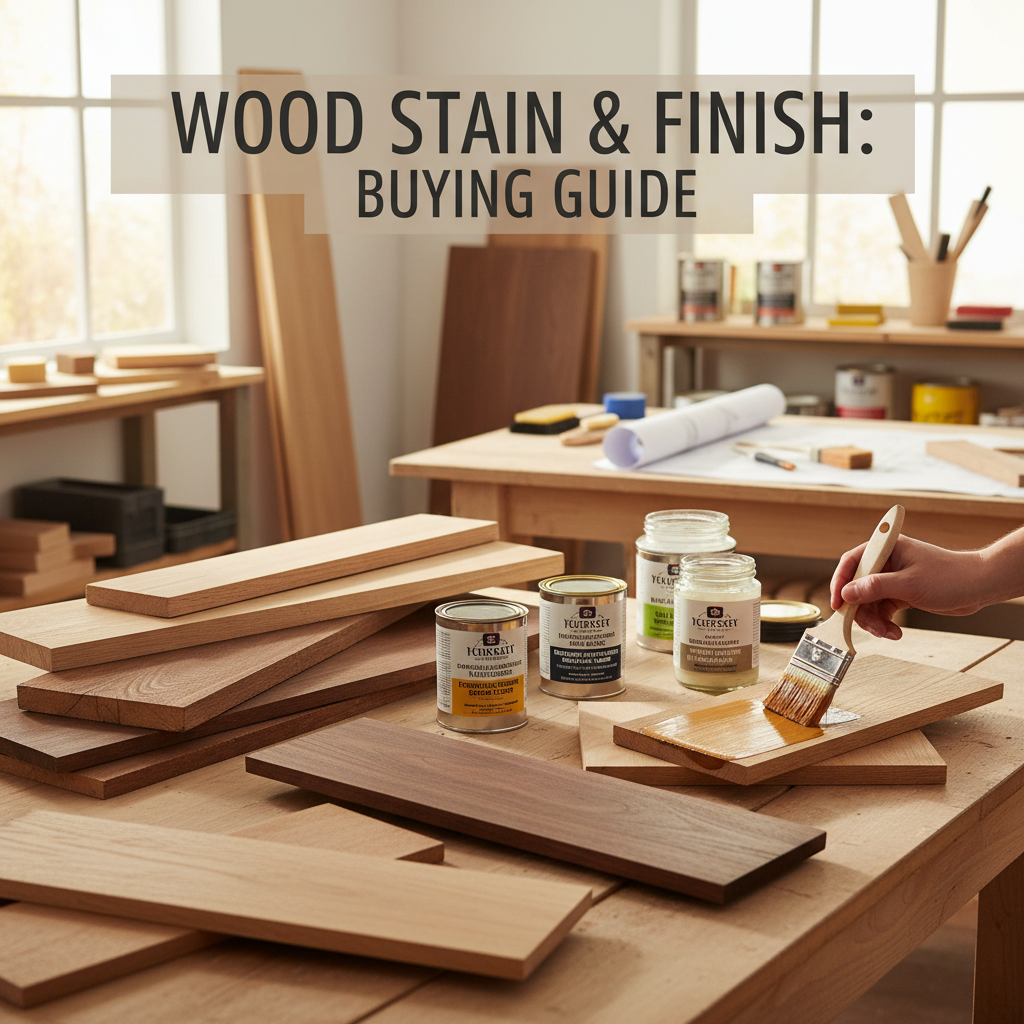
Species Comparison
Oak with stain: Absorbs stain unevenly due to open pores. Use pre-stain conditioner or gel stain for even color.
Pine with stain: Notorious for blotching. Pre-stain conditioner is essential. Gel stains work best.
Walnut with finish: Natural color is beautiful — often needs only clear coat. Oil finish enhances depth.
Cedar with exterior stain: Semi-transparent stain shows grain while providing UV protection. Ideal match.
Maple with finish: Tight grain resists penetrating stains. Dye stains or gel stains give the most even results.
Size Guide
Coverage rates (approximate per gallon):
Penetrating oil stain: 200-400 sq ft per gallon depending on wood porosity.
Solid stain: 150-300 sq ft per gallon.
Polyurethane: 400-600 sq ft per gallon per coat (typically 3 coats needed).
Deck stain: 150-300 sq ft per gallon for first coat on bare wood.
Exterior paint: 250-400 sq ft per gallon.
Buy in quarts for small projects and samples; gallons for full rooms; 5-gallon pails for decks and large exteriors.
Grade Guide
Premium/professional grade: Higher solids content, better coverage, longer durability. Worth the price difference for exterior applications.
Standard/DIY grade: Adequate for interior projects and lower-traffic areas. More affordable.
Sample sizes: Always buy small test quantities first to verify color on your specific wood species.
Note: Finish quality matters more for exterior applications where the product faces UV, rain, and temperature extremes.
Budget Breakdown
Interior water-based polyurethane (gallon): $30–$55.
Interior oil-based stain (quart): $12–$20.
Exterior semi-transparent deck stain (gallon): $35–$60.
Exterior solid stain (gallon): $40–$65.
Marine-grade varnish (quart): $25–$45.
Hardwax oil finish (liter): $40–$70.
Average deck refinish (materials only): $150–$300 for a 300 sq ft deck.
Common Mistakes to Avoid
- Skipping test samples — stain color looks completely different on the actual species than on the can or store display.
- Applying too much stain — thick coats peel and flake. Penetrating stains should be wiped back to a thin, even film.
- Not sanding between finish coats — each coat needs a light scuff sand (220 grit) for proper adhesion.
- Using interior finish outdoors — interior finishes crack and peel rapidly under UV and weather exposure.
- Applying finish in direct sunlight or extreme temperatures — causes bubbles, lap marks, and poor adhesion.
Pre-Purchase Checklist
- Test stain color on scrap wood of the same species
- Prepare the surface (sand, clean, and dry) before any application
- Verify temperature and humidity are within product specifications
- Use pre-stain conditioner on softwoods and blotch-prone species
- Apply thin coats and wipe excess for penetrating products
- Sand lightly between coats of film-building finishes
- Allow full cure time before placing furniture or exposing to weather
Frequently Asked Questions
Oil-based stains penetrate deeper and enhance grain but have higher VOCs and slower dry times. Water-based stains dry faster, clean up with water, and have lower odor. Performance is now comparable in premium products.
Semi-transparent stain needs refreshing every 2-3 years. Solid stain lasts 4-6 years. Oil finishes need annual reapplication on horizontal surfaces.
Peeling or failing finish must be removed. If the old finish is sound and the same type, you can often recoat after cleaning and light sanding.
Hardwax oil provides a natural feel with good protection. Conversion varnish is the most durable professional option. Water-based polyurethane is a good DIY choice.