Wood Paneling
2026 Wood Paneling Buying Guide: Shiplap, Wainscoting & More (2026)
Wood paneling has made a major comeback, moving far beyond the dark plywood sheets of the 1970s. Today's options include shiplap, tongue-and-groove, wainscoting, and board-and-batten in dozens of species and finishes. This guide helps you pick the right profile, species, and grade for accent walls, full rooms, and exterior applications.
Key Takeaways
- Wood paneling has made a major comeback, moving far beyond the dark plywood sheets of the 1970s.
- Today's options include shiplap, tongue-and-groove, wainscoting, and board-and-batten in dozens of species and finishes.
- This guide helps you pick the right profile, species, and grade for accent walls, full rooms, and exterior applications.
- Profile type: Shiplap, tongue-and-groove, V-groove, nickel-gap, or board-and-batten
- Width: Narrow boards (3.5") for traditional, wide planks (6"–8") for modern looks
What to Look For
- Profile type: Shiplap, tongue-and-groove, V-groove, nickel-gap, or board-and-batten
- Width: Narrow boards (3.5") for traditional, wide planks (6"–8") for modern looks
- Thickness: 1/2" to 3/4" for interior; 3/4" to 1" for exterior
- Prefinished vs. unfinished: Prefinished saves labor; unfinished allows custom color
- Moisture content: 8–12% for interior installations
Species Comparison
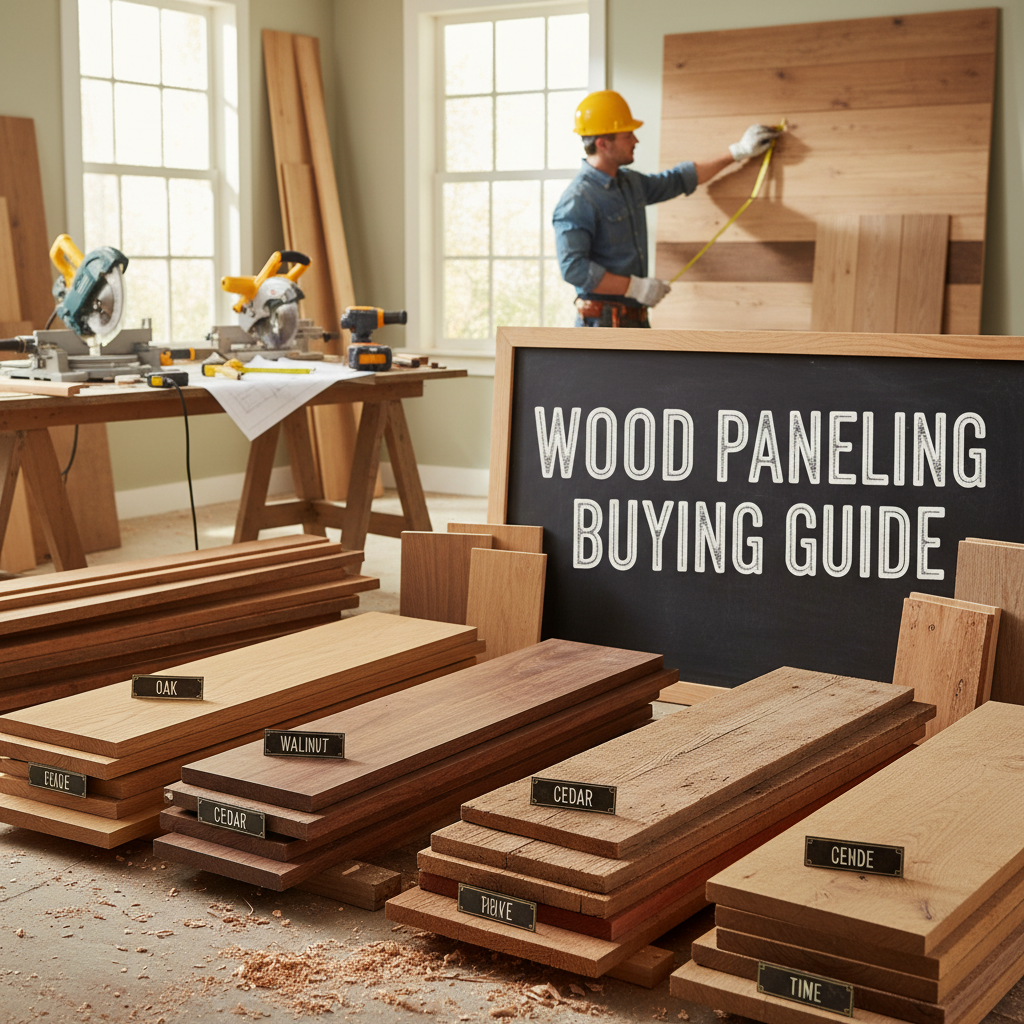
Pine (eastern white pine or knotty pine) is the most popular and affordable option. Cedar adds natural aroma and rot resistance for bathrooms and covered porches. Poplar takes paint beautifully and is ideal for painted wainscoting. White oak shiplap offers a premium modern farmhouse look. Reclaimed barn wood provides authentic character but requires sourcing from reputable dealers to avoid contaminants.
Size Guide
Standard widths: 3-1/2", 5-1/4", and 7-1/4" (nominal 1×4, 1×6, 1×8). Lengths: 8', 10', 12', and 16' for minimal seams. Thickness: 1/2" and 3/4" for interior, 3/4" for exterior. Wainscoting panels: 32" and 48" heights are standard. Beadboard: Available in 4×8 sheets or individual planks.
Grade Guide
Clear or Select grade: No knots, ideal for painted or light-stain wainscoting. #2 Common (knotty): Tight knots add rustic character for shiplap and accent walls. D-grade or cabin-grade: Larger knots, color variation, and occasional holes — most affordable and popular for farmhouse looks. STK (select tight knot) cedar: A middle ground with small, sound knots.
Budget Breakdown
Budget: Knotty pine tongue-and-groove at $1.50–$3.00 per sq ft. Mid-range: Cedar or prefinished shiplap at $4.00–$7.00 per sq ft. Premium: White oak, walnut, or reclaimed wood paneling at $8.00–$15.00+ per sq ft. Installation labor adds $2.00–$5.00 per sq ft depending on profile and complexity.
Common Mistakes to Avoid
- Not acclimating boards to the room's humidity for at least 48–72 hours before installation
- Nailing through the face instead of blind-nailing through the tongue, leaving visible holes
- Running paneling without a vapor barrier on exterior walls, trapping moisture
- Forgetting to account for the reveal/gap when calculating square footage needed
- Using brad nails that are too short — boards pull away from the wall over time
Pre-Purchase Checklist
- Measure wall area and add 10–15% for waste and cuts
- Choose profile and width to match your design style
- Acclimate boards in the installation room for 48–72 hours
- Plan your starting point — level the first course carefully
- Use a pneumatic nailer with appropriate nail length
- Apply finish before or after installation based on product spec
Frequently Asked Questions
Shiplap has overlapping rabbeted edges that create a shadow line. Tongue-and-groove has interlocking profiles for a tighter fit. Both can achieve similar looks depending on the reveal.
Yes, but use a moisture-resistant species like cedar or a sealed and primed product. Ensure proper ventilation and avoid direct shower splash zones.
Horizontal installation is most common for shiplap and creates a wider visual effect. Vertical is traditional for wainscoting and beadboard and makes ceilings feel taller.
Install at the midpoint of seasonal humidity, use properly dried lumber (8–12% MC), and choose tongue-and-groove profiles that accommodate minor expansion and contraction.