Siding
Your Complete Guide to Buying Wood Siding (2026)
Wood siding gives your home a timeless, natural look that no synthetic material can truly replicate. Whether you want classic clapboard, rustic board-and-batten, or modern channel siding, choosing the right lumber is critical for appearance and longevity. This guide covers the species, profiles, and grades that deliver the best results.
Key Takeaways
- Wood siding gives your home a timeless, natural look that no synthetic material can truly replicate.
- Whether you want classic clapboard, rustic board-and-batten, or modern channel siding, choosing the right lumber is critical for appearance and longevity.
- This guide covers the species, profiles, and grades that deliver the best results.
- Natural decay resistance — exterior siding faces constant weather exposure and needs durable species.
- Profile and style — lap, tongue-and-groove, board-and-batten, and shingle each create distinct looks.
What to Look For
- Natural decay resistance — exterior siding faces constant weather exposure and needs durable species.
- Profile and style — lap, tongue-and-groove, board-and-batten, and shingle each create distinct looks.
- Paint or stain compatibility — some species hold paint better than others.
- Dimensional stability — siding that cups and warps pulls away from fasteners and lets in moisture.
- Moisture content — siding should be kiln-dried to 12-15% MC for paint-grade applications.
Species Comparison
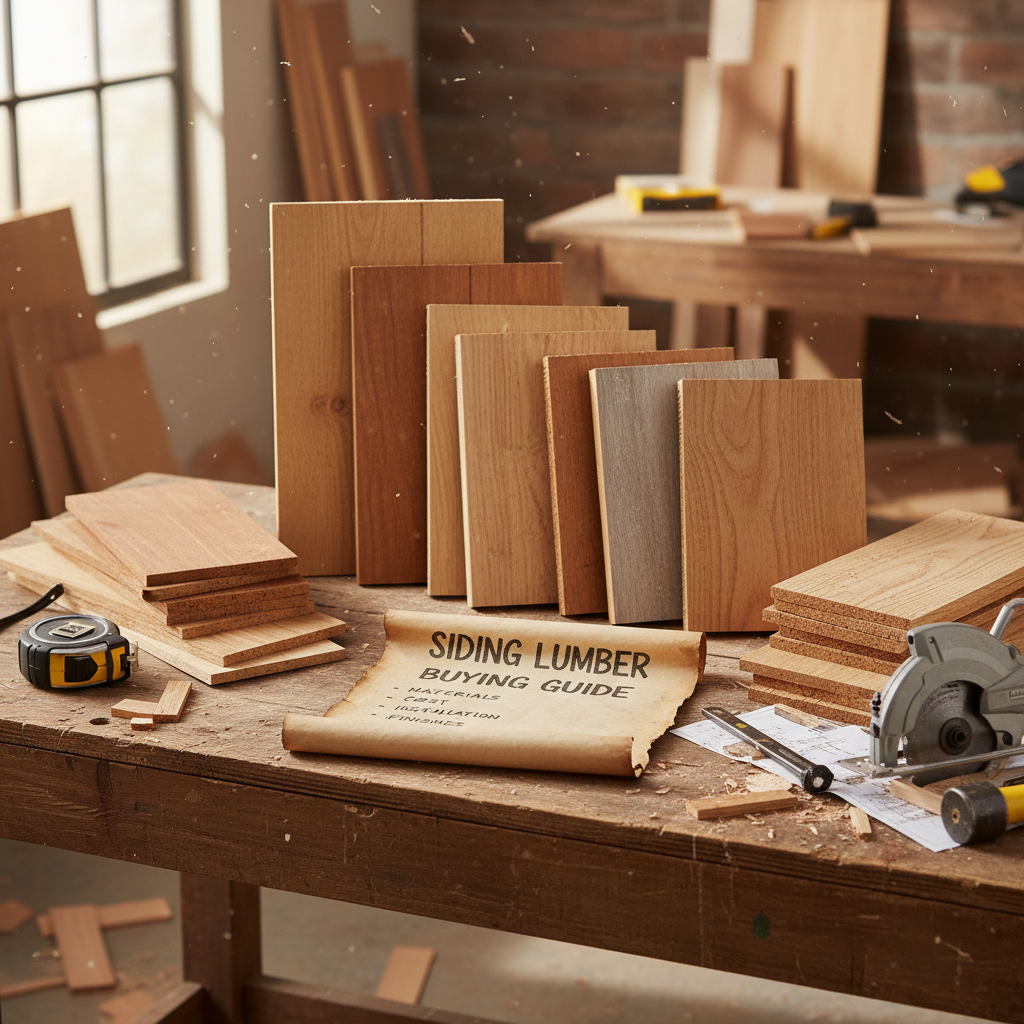
Western red cedar: Premier siding species. Naturally rot-resistant, dimensionally stable, accepts paint and stain beautifully.
Redwood: Excellent durability with rich color. Premium price point.
Eastern white pine: Affordable, paints well, but requires primer and quality paint for exterior longevity.
Cypress: Excellent rot resistance with a fine, even grain. Great for Southern and coastal climates.
Douglas fir: Strong and economical. Requires thorough priming and finishing for exterior use.
Size Guide
1x6 and 1x8 lap/bevel siding: Most common residential profile. Installs horizontally with overlapping courses.
1x8 and 1x10 board-and-batten: Vertical installation with narrow battens covering joints. Rustic to modern aesthetic.
1x6 tongue-and-groove: Tight-fitting horizontal or vertical installation. Clean appearance.
1x4 through 1x12 channel siding: Features a rabbet that creates a shadow line. Modern farmhouse look.
5/8" and 3/4" shingles: Tapered pieces installed in overlapping courses. Classic New England style.
Grade Guide
Clear/A grade: No knots, ideal for stain-grade siding where natural wood beauty is featured.
Select/B grade: Small tight knots. Good for painted or lightly stained siding.
#2/Standard: Moderate knots allowed. Fine for painted siding and budget-conscious projects.
Rustic/Knotty: Large knots and character marks. Intentional aesthetic for cabin or farmhouse styles.
Budget Breakdown
Pine lap siding: $1.50–$3.50 per sq ft for material.
Cedar bevel siding: $4–$8 per sq ft for material.
Redwood siding: $7–$12 per sq ft for material.
Cedar shingles: $5–$9 per sq ft for material.
Installation typically adds $3–$7 per sq ft.
Priming and painting adds $2–$4 per sq ft.
Common Mistakes to Avoid
- Installing siding without a proper rain screen or house wrap — trapped moisture rots siding from behind.
- Using flat-sawn boards for wide siding — they cup more than vertical-grain boards.
- Back-priming only one side — both faces and all edges need primer to prevent uneven moisture absorption.
- Face-nailing too close to board edges — this causes splitting. Pre-drill or use ring-shank nails.
- Ignoring end-grain sealing — exposed end grain wicks moisture aggressively and accelerates decay.
Pre-Purchase Checklist
- Select a species with natural rot resistance or plan for thorough priming
- Choose a profile that matches your home's architectural style
- Verify moisture content is 12-15% MC
- Back-prime all boards before installation
- Confirm housewrap and flashing are properly installed
- Order 10-15% extra for waste, cuts, and future repairs
- Seal all end-grain cuts on site during installation
Frequently Asked Questions
Cedar and redwood siding regularly last 40-60 years when properly maintained. Cypress is similarly durable in humid climates.
Either works. Paint provides maximum protection but requires more prep for recoating. Semi-transparent stain shows wood grain and is easier to refresh.
Painted siding needs recoating every 7-10 years. Stained siding needs refreshing every 3-5 years depending on exposure.
Lap and board-and-batten siding are achievable DIY projects with basic carpentry skills. Proper flashing and weather barrier installation is the most critical detail.