Pergola
Pergola Lumber Guide: Best Wood for Posts, Beams, and Rafters (2026)
A well-designed pergola transforms your outdoor space into a shaded retreat that adds beauty and value to your property. The lumber you choose determines not only how your pergola looks but how long it stands and how much maintenance it demands. This guide covers the best species, sizes, and grades for every pergola component.
Key Takeaways
- A well-designed pergola transforms your outdoor space into a shaded retreat that adds beauty and value to your property.
- The lumber you choose determines not only how your pergola looks but how long it stands and how much maintenance it demands.
- This guide covers the best species, sizes, and grades for every pergola component.
- Rot resistance — pergolas are fully exposed to weather with no roof protection.
- Structural adequacy — posts and beams must handle wind loads, snow loads, and rafter weight.
What to Look For
- Rot resistance — pergolas are fully exposed to weather with no roof protection.
- Structural adequacy — posts and beams must handle wind loads, snow loads, and rafter weight.
- Aesthetic appeal — pergolas are highly visible; choose attractive species and clean grades.
- Weight — overhead beams and rafters are heavy; consider the lift and support requirements.
- Span capability — beam and rafter sizes depend on spacing and unsupported span length.
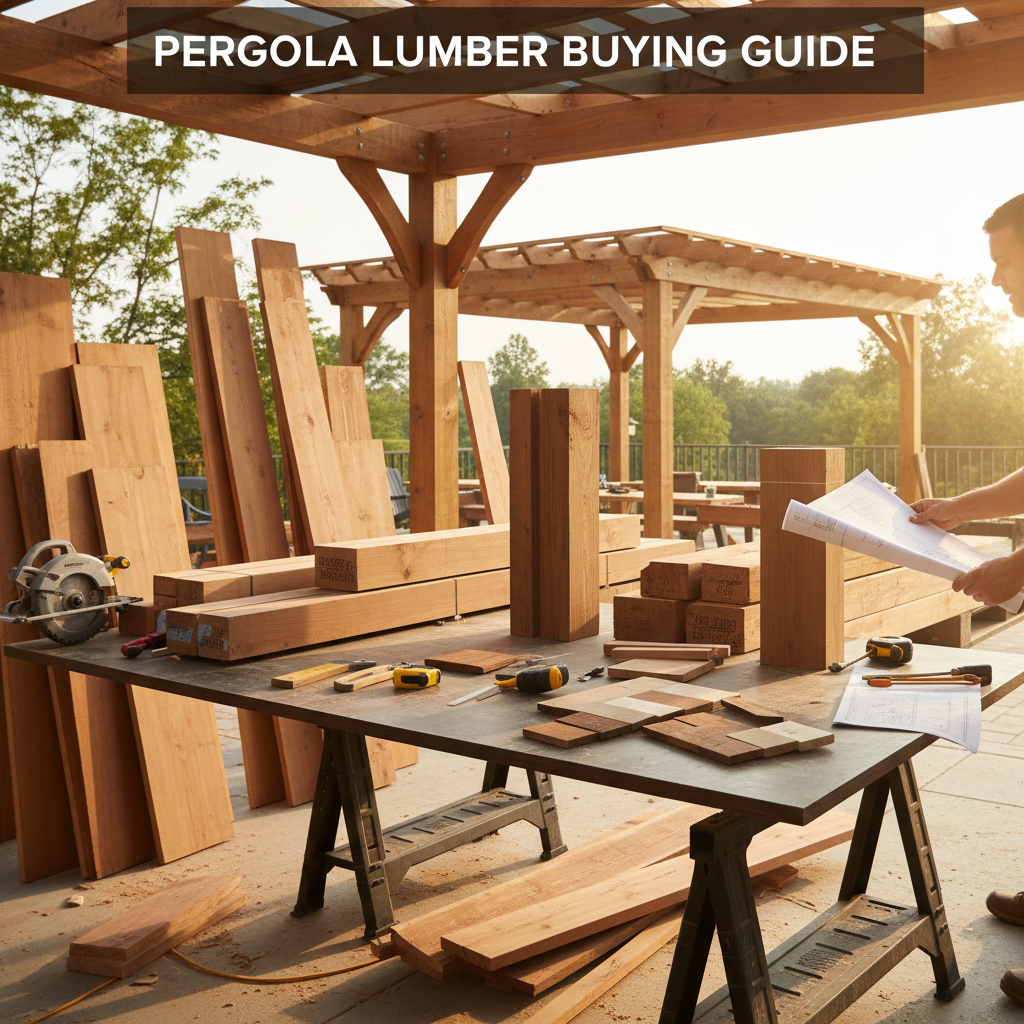
Species Comparison
Western red cedar: Most popular pergola species. Lightweight, beautiful, naturally rot-resistant. Easy to work.
Redwood: Premium appearance with excellent durability. Heavier and more expensive than cedar.
Pressure-treated SYP: Most affordable option. Requires staining for attractive appearance. Strong and widely available.
Douglas fir: Excellent strength for beams and posts. Treat or finish for outdoor durability.
Ipe: Ultra-durable exotic option for high-end pergolas. Very heavy and requires pre-drilling.
Size Guide
Posts: 6x6 minimum for most residential pergolas. 8x8 for spans over 12 feet or heavy-snow areas.
Beams: 2x8 doubled or 4x8 minimum. 2x10 or 2x12 for spans over 10 feet.
Rafters: 2x6 at 16" spacing for spans up to 10 feet. 2x8 for longer spans.
Purlins/top slats: 2x2 or 2x3 for shade lattice on top of rafters.
Standard pergola dimensions: 10x12, 12x14, and 14x16 are popular residential sizes.
Post height: 8-10 feet above finished grade is typical for comfortable headroom and proportions.
Grade Guide
Clear/Select: No visible knots. Best for stain-grade pergolas where wood beauty is featured.
Select tight knot (STK): Small sound knots. Excellent value for painted or naturally weathered pergolas.
#2 structural: Standard grade for beams and posts where strength matters most. Acceptable for rustic aesthetics.
Pressure-treated #2: Minimum acceptable grade for structural components. Stain or paint to improve appearance.
Budget Breakdown
Pressure-treated pergola (12x14): $800–$1,500 in materials.
Cedar pergola (12x14): $1,500–$3,000 in materials.
Redwood pergola (12x14): $2,500–$5,000 in materials.
Professional installation: $2,000–$6,000 depending on size and complexity.
Annual maintenance (stain/seal): $50–$150 in materials.
Common Mistakes to Avoid
- Undersizing posts for tall pergolas — a 10-foot 4x4 post is too slender and looks out of proportion.
- Not engineering beams for the actual span — a sagging beam is both dangerous and unsightly.
- Skipping post anchoring — pergola posts must be anchored to footings or embedded in concrete.
- Using butt joints for long beams — beams should be continuous over posts, not spliced in mid-span.
- Forgetting about snow load — in cold climates, wet snow on a pergola lattice can add tremendous weight.
Pre-Purchase Checklist
- Verify local building codes for pergola permits, setbacks, and structural requirements
- Size posts, beams, and rafters for your specific spans and loads
- Choose a species that matches your maintenance willingness and budget
- Confirm post anchoring method (surface mount or embedded)
- Plan end cuts and decorative details (rafter tails, notched beams)
- Order 10% extra for waste and decorative cuts
- Apply finish to all surfaces before assembly when possible
Frequently Asked Questions
Many jurisdictions require permits for pergolas, especially those attached to the house or over a certain size. Check local building codes before starting.
Cedar and redwood weather gracefully to silver-gray. Pressure-treated pine turns gray-green without stain and is less attractive.
A well-built cedar pergola lasts 15-25 years with periodic maintenance. Replacing purlins and rafters as needed can extend the structure's life significantly.
Attached pergolas tie into the house for support and are simpler structurally. Freestanding pergolas need four posts and independent footings but can go anywhere in the yard.