Pallet & Crating Lumber
2026 Pallet & Crating Lumber Buying Guide for Shipping & Industrial (2026)
Pallet and crating lumber is the backbone of global shipping and warehousing. Whether you are building standard GMA pallets, custom crates for heavy machinery, or export-compliant packaging, the right lumber specification ensures your goods arrive safely and your operation stays compliant. This guide covers species, grades, treatment requirements, and ISPM 15 regulations so you can source efficiently.
Key Takeaways
- Pallet and crating lumber is the backbone of global shipping and warehousing.
- Whether you are building standard GMA pallets, custom crates for heavy machinery, or export-compliant packaging, the right lumber specification ensures your goods arrive safely and your operation stays compliant.
- This guide covers species, grades, treatment requirements, and ISPM 15 regulations so you can source efficiently.
- Species: Hardwood for heavy loads, softwood for general pallets
- ISPM 15 compliance: Heat-treated (HT) or methyl bromide (MB) stamp for international shipping
What to Look For
- Species: Hardwood for heavy loads, softwood for general pallets
- ISPM 15 compliance: Heat-treated (HT) or methyl bromide (MB) stamp for international shipping
- Pallet type: GMA (48×40), custom, block, or stringer design
- Moisture content: Green vs. kiln-dried — affects weight and mold risk
- Grade: Pallet-grade allows defects; crating may need better stock for long-transit protection
Species Comparison
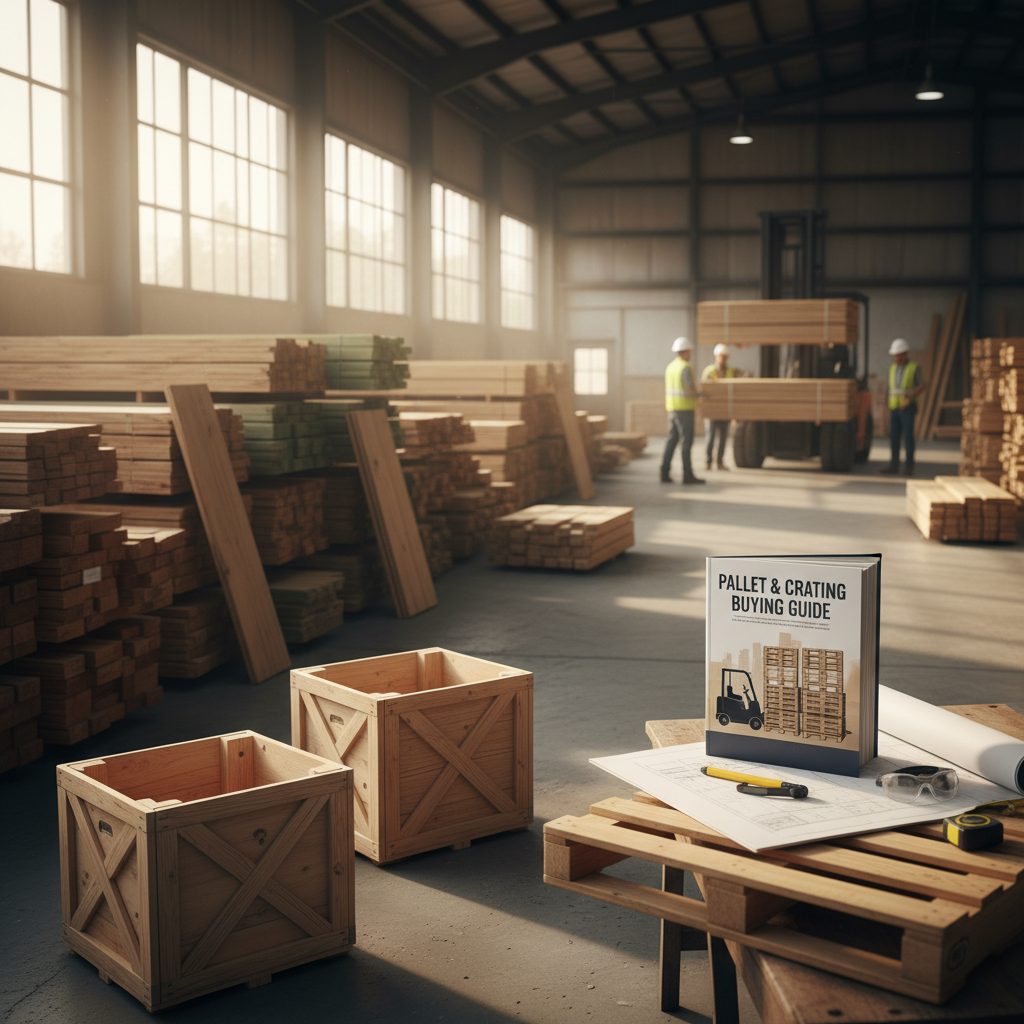
Southern yellow pine is the dominant softwood for domestic pallets — strong, available, and affordable. Mixed hardwoods (oak, poplar, maple) provide greater load capacity for heavy-duty pallets. SPF (spruce-pine-fir) is common in northern regions. For export crates, any species can be used if heat-treated to ISPM 15 standards. Tropical hardwoods are rarely used due to cost. Poplar and aspen are lightweight alternatives that reduce shipping weight for air freight.
Size Guide
Standard GMA pallet: 48" × 40". Euro pallet: 47.24" × 31.50" (1200×800 mm). Deck boards: 1×4 and 1×6 (3/4" thick). Stringers: 2×4 and 2×6. Blocks: 3-1/2" × 3-1/2" × 3-1/2". Crating lumber: 2×4, 2×6, and 2×8 for frames; 1×4 and 1×6 for sheathing. Pallet lumber lengths: 40" and 48" are standard; custom cut lengths available.
Grade Guide
Pallet-grade lumber (sometimes called cant or industrial grade) allows wane, knots, and some bark. It is not appearance-graded. Economy grade permits more defects at lower cost. #3 Common is sometimes used for better pallets. Crating lumber should be at least #3 or Standard grade for structural integrity during transit. All ISPM 15-compliant lumber must carry the certified HT or MB stamp from an approved facility. Kiln-dried (KD) lumber reduces mold risk for sensitive cargo.
Budget Breakdown
Budget: Green softwood pallet lumber (1×4 × 40") at $0.50–$1.50 per board. Mid-range: Kiln-dried or heat-treated pallet stock at $1.00–$3.00 per board. Premium: Hardwood pallet lumber or export-certified crating material at $2.00–$5.00+ per board. Complete GMA pallets: $8–$15 new (softwood), $15–$30 (hardwood). Custom crates: $50–$500+ depending on size and specs.
Common Mistakes to Avoid
- Shipping internationally without ISPM 15-compliant (heat-treated and stamped) wood packaging
- Using green (high-moisture) lumber for pallets that will carry moisture-sensitive goods
- Overloading pallets beyond their rated capacity — standard GMA pallets are rated for 2,500 lbs dynamic load
- Building crates without internal bracing or cushioning for high-value cargo
- Not sourcing from a certified heat-treatment facility, resulting in shipments being rejected or fumigated at the border
Pre-Purchase Checklist
- Determine pallet size: GMA 48×40, Euro, or custom dimensions
- Calculate load weight and select appropriate lumber species and thickness
- Verify ISPM 15 heat-treatment certification if shipping internationally
- Choose green or kiln-dried based on cargo sensitivity
- Source from a certified pallet lumber supplier with consistent supply
- Plan for pallet recycling or return programs to reduce costs
Frequently Asked Questions
ISPM 15 is an international phytosanitary standard requiring all solid wood packaging materials used in international trade to be heat-treated or fumigated to eliminate pests. Compliant wood must carry an approved stamp.
Hardwood pallets handle heavier loads and resist damage better. Softwood pallets are lighter, cheaper, and adequate for loads under 2,500 lbs. Most general-purpose pallets use softwood.
Yes. Standard GMA pallets are designed for multiple trips. Inspect for broken boards, protruding nails, and mold before reuse. Many pallet recyclers repair and resell used pallets at 40–60% of new cost.
ISPM 15 applies only to international shipping. Domestic pallets in the US do not require heat treatment, though KD pallets reduce mold risk for sensitive goods.