Outdoor Structures
2026 Outdoor Structures Buying Guide: Gazebos, Arbors & Pavilions (2026)
Outdoor structures like gazebos, arbors, pavilions, and trellises transform backyards into livable spaces and add significant property value. The right lumber choice determines whether your structure stands strong for decades or deteriorates within a few seasons. This guide covers material selection, structural sizing, and design considerations for every type of outdoor build.
Key Takeaways
- Outdoor structures like gazebos, arbors, pavilions, and trellises transform backyards into livable spaces and add significant property value.
- The right lumber choice determines whether your structure stands strong for decades or deteriorates within a few seasons.
- This guide covers material selection, structural sizing, and design considerations for every type of outdoor build.
- Lumber species: Naturally rot-resistant or pressure-treated
- Structural sizing: Post and beam dimensions matched to span and load
What to Look For
- Lumber species: Naturally rot-resistant or pressure-treated
- Structural sizing: Post and beam dimensions matched to span and load
- Hardware: Stainless steel or hot-dipped galvanized for corrosion resistance
- Foundation: Concrete piers, footings, or post anchors based on soil and frost line
- Kit vs. custom: Pre-engineered kits simplify permitting and construction
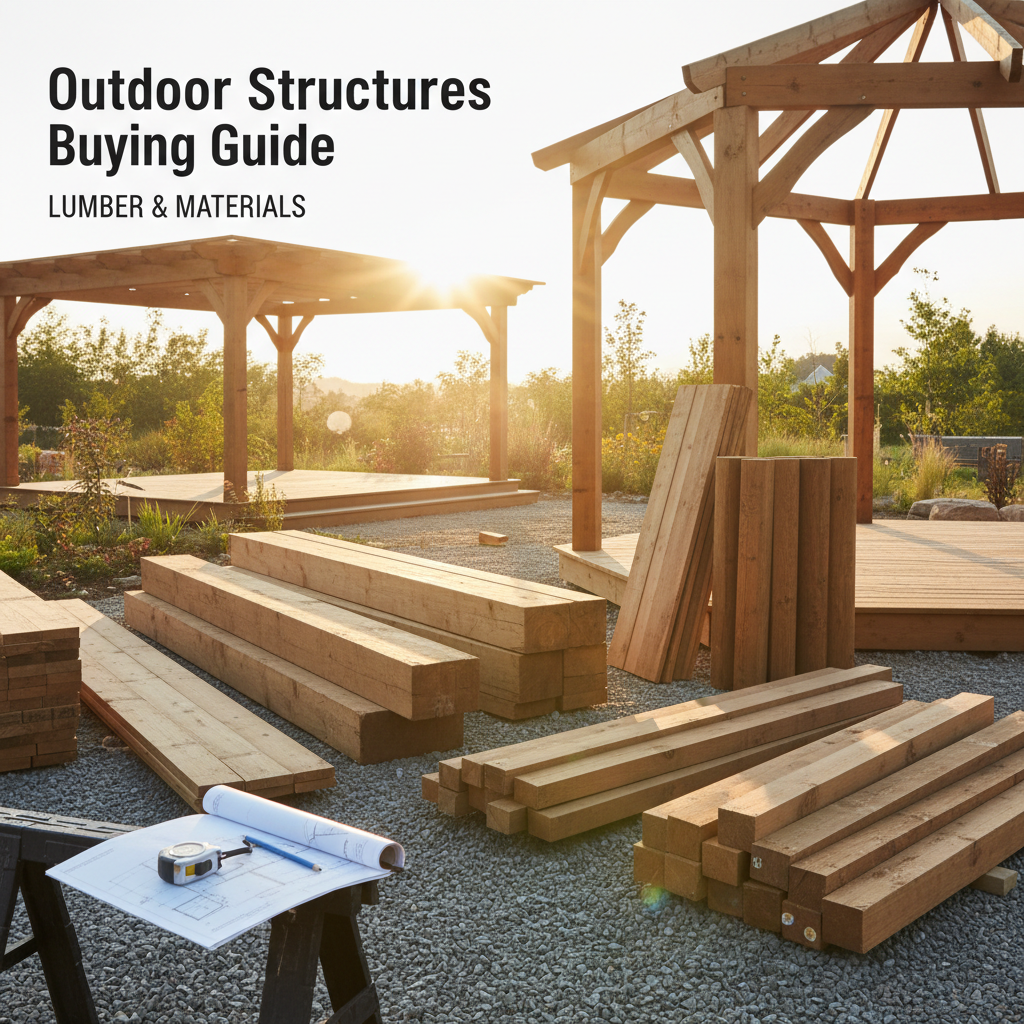
Species Comparison
Western red cedar is the classic choice — lightweight, naturally rot-resistant, and beautiful. Redwood offers similar performance with a richer color. Pressure-treated southern yellow pine provides the best value for structural posts and beams. Douglas fir delivers superior strength for heavy timber pavilions. For premium builds, ipe and cumaru offer extreme durability but require carbide tooling and pre-drilling.
Size Guide
Gazebo sizes: 8×8, 10×10, 12×12, and 12×16 ft are most popular. Arbor openings: 36"–60" wide, 7'–8' tall. Pavilion posts: 6×6 minimum; 8×8 for spans over 12 ft. Rafters: 2×6 or 2×8 depending on span and snow load. Pergola beams: 2×8 or 2×10, often doubled for longer spans.
Grade Guide
For structural posts and beams, specify #1 or Select Structural grade for maximum strength and fewer defects. #2 grade works for non-structural members like lattice frames and purlins. Appearance-grade cedar or redwood is premium-priced but knot-free for visible surfaces. Pressure-treated lumber should carry a UC4A or UC4B rating for ground contact or above-ground structural use.
Budget Breakdown
Budget: Pressure-treated pine structure, $2,000–$5,000 for a 10×12 gazebo kit. Mid-range: Western red cedar, $5,000–$12,000 for a custom 12×14 pavilion. Premium: Douglas fir timber frame or exotic hardwood, $12,000–$30,000+ for a fully engineered pavilion with roofing.
Common Mistakes to Avoid
- Undersizing posts — a 4×4 is not adequate for most gazebo or pavilion structures
- Using interior-grade hardware that corrodes within one season outdoors
- Skipping proper footings and frost-depth foundations, leading to heaving and settling
- Not applying finish before or immediately after assembly, allowing UV and moisture damage
- Ignoring local building codes and permit requirements for structures over a certain size
Pre-Purchase Checklist
- Check local zoning setback requirements and permit needs
- Determine frost depth for footing design
- Select lumber species based on budget and desired appearance
- Specify stainless or galvanized connectors and hardware
- Plan for roofing material if applicable (shingles, metal, polycarbonate)
- Budget for stain or sealer and plan recoating schedule
Frequently Asked Questions
Most jurisdictions require permits for structures over 100–200 sq ft or those attached to a house. Always check with your local building department before starting.
A well-maintained western red cedar gazebo can last 20–30 years. Regular sealing every 2–3 years extends lifespan significantly.
Kits are faster, come with pre-cut components and engineered plans, and simplify permitting. Custom builds offer unlimited design freedom but require detailed engineering and longer timelines.
Yes, but wait 3–6 months for the treatment chemicals to dry before staining. Semi-transparent stains in cedar tones can closely mimic the look.