Log Cabin & Log Home
2026 Log Cabin & Log Home Buying Guide (2026)
Building a log cabin or log home is a dream for many — but the process is fundamentally different from conventional stick-frame construction. From choosing log profiles and species to understanding settling, chinking, and energy performance, there are critical decisions that affect cost, comfort, and longevity. This guide gives you the knowledge to navigate log home packages, custom builds, and everything in between.
Key Takeaways
- Building a log cabin or log home is a dream for many — but the process is fundamentally different from conventional stick-frame construction.
- From choosing log profiles and species to understanding settling, chinking, and energy performance, there are critical decisions that affect cost, comfort, and longevity.
- This guide gives you the knowledge to navigate log home packages, custom builds, and everything in between.
- Log profile: Round (full or D-log), square, or hand-hewn
- Corner style: Saddle-notch, dovetail, butt-and-pass, or Swedish cope
What to Look For
- Log profile: Round (full or D-log), square, or hand-hewn
- Corner style: Saddle-notch, dovetail, butt-and-pass, or Swedish cope
- Species: Naturally durable softwoods with low shrinkage
- Package type: Shell-only, dry-in, or turnkey
- Energy compliance: Log diameter and R-value vs. local energy code
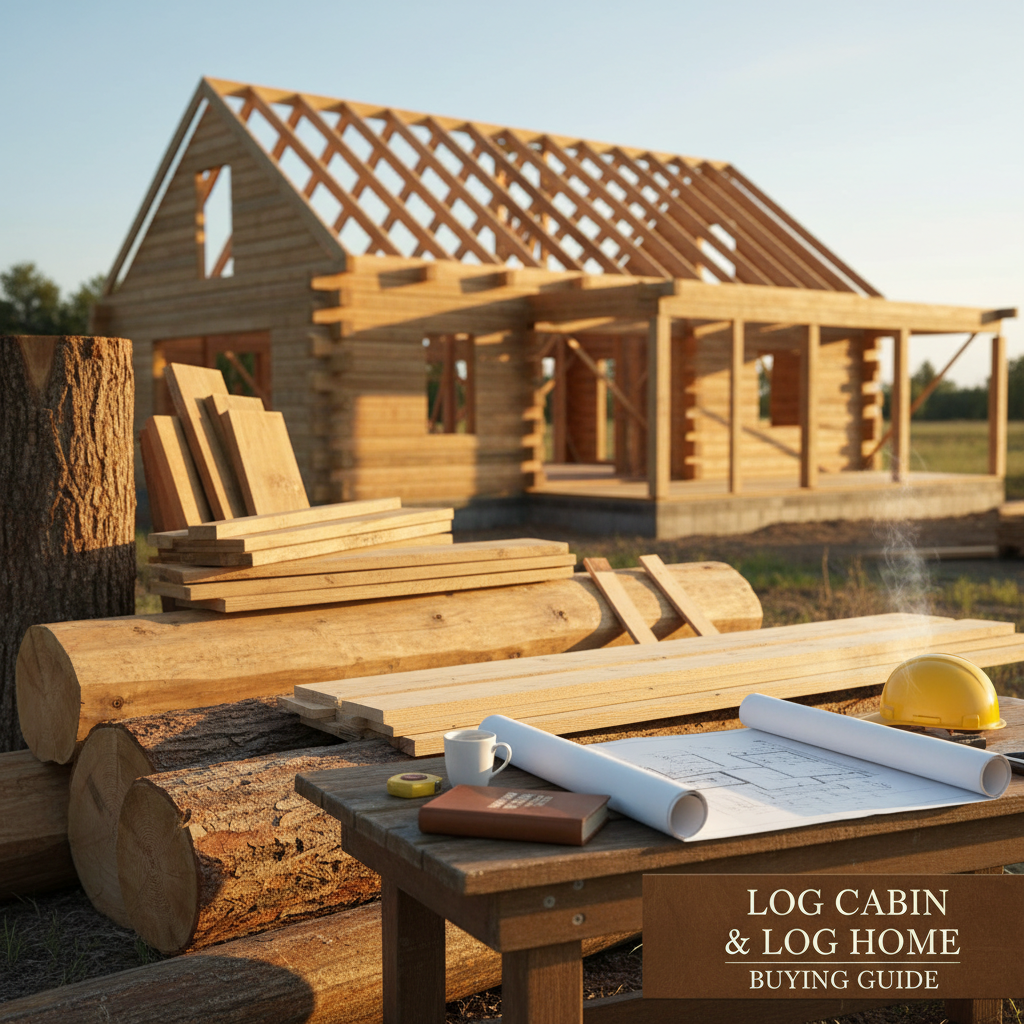
Species Comparison
Eastern white pine is the most popular log home species — lightweight, affordable, and easy to work. Western red cedar offers natural decay resistance and aromatic interior character. Douglas fir provides superior strength for large-diameter structural logs. Cypress is prized in the Southeast for its rot resistance. Northern white cedar is stable and resists insects. Engelmann spruce works well for milled log profiles. Avoid species with excessive checking and twisting, such as hemlock, unless kiln-dried.
Size Guide
Log diameters: 6"–12" for cabins, 10"–16" for full-size homes. D-logs: 6×8, 8×8, and 8×12 nominal profiles. Round logs: 8"–14" diameter. Wall height: 8'–10' standard for first floor. Most log home packages are designed for specific floor plans — standard dimensions are less relevant than total package specs. Chinking gaps: 1/2"–1" between courses for chinked styles.
Grade Guide
Log home manufacturers use proprietary grading that generally aligns with these tiers: Premium (hand-selected, minimal taper, tight grain), Standard (meets structural and appearance minimums), and Cabin grade (more character, some checking allowed). The International Log Builders Association (ILBA) and ICC 400 Standard provide guidelines. Moisture content should be below 19% for milled logs; air-dried logs start at 15–19% and continue drying after construction.
Budget Breakdown
Budget: Small cabin kit (400–800 sq ft shell) at $30,000–$60,000. Mid-range: Full log home package (1,200–2,000 sq ft shell and dry-in) at $80,000–$150,000. Premium: Custom handcrafted log home (2,000+ sq ft turnkey) at $200,000–$500,000+. Land, foundation, well, septic, and interior finishing are additional. Expect total project costs of $150–$300+ per sq ft finished.
Common Mistakes to Avoid
- Underestimating settling — log walls settle 1/2" to 3/4" per foot of wall height in the first few years
- Choosing the cheapest log package without verifying what is and is not included
- Skipping borate treatment, which is essential for insect prevention in log homes
- Not planning for energy code compliance — some jurisdictions do not accept the thermal mass exception for logs
- Building on a site without confirming access for log delivery trucks and crane equipment
Pre-Purchase Checklist
- Research and visit log home manufacturers before committing
- Confirm what is included in the package (logs, fasteners, gaskets, sealant, stain?)
- Verify local building codes accept log construction and understand energy compliance paths
- Plan for foundation, utilities, and site access before ordering
- Budget for long-term maintenance: staining every 3–5 years, chinking inspection, borate retreatment
- Hire a builder experienced specifically in log home construction
Frequently Asked Questions
A typical log home takes 8–14 months from foundation to move-in, depending on size, weather, and whether you are using a kit or custom-crafting logs on-site.
Many jurisdictions accept the ICC 400 thermal mass exception, which allows log walls to meet energy codes without additional insulation due to wood's thermal mass properties. Check your local code.
Expect to restain the exterior every 3–5 years, inspect and re-caulk chinking as needed, and retreat with borate preservative periodically. South and west-facing walls need more frequent attention.
Log home kits with pre-cut, numbered logs and detailed plans are strongly recommended for first-time builders. Custom handcrafted homes require experienced log builders and significantly higher budgets.