Lattice & Trellis
2026 Lattice & Trellis Buying Guide: Materials, Styles & Uses (2026)
Lattice panels and trellises serve both practical and aesthetic purposes — they screen deck undersides, support climbing plants, add privacy, and create decorative accents in gardens and on porches. With options ranging from classic diamond-pattern wood lattice to modern horizontal slat screens, choosing the right product depends on your intended use and desired look. This guide covers materials, patterns, and installation tips.
Key Takeaways
- Lattice panels and trellises serve both practical and aesthetic purposes — they screen deck undersides, support climbing plants, add privacy, and create decorative accents in gardens and on porches.
- With options ranging from classic diamond-pattern wood lattice to modern horizontal slat screens, choosing the right product depends on your intended use and desired look.
- This guide covers materials, patterns, and installation tips.
- Material: Wood, vinyl, composite, or metal lattice
- Pattern: Diamond (45°), square (90°), horizontal slat, or decorative panel
What to Look For
- Material: Wood, vinyl, composite, or metal lattice
- Pattern: Diamond (45°), square (90°), horizontal slat, or decorative panel
- Opening size: Tight privacy lattice (1" openings) vs. standard (2"–3" openings)
- Panel size: Standard 4×8 sheets vs. custom dimensions
- Durability: Ground contact vs. above-ground rated for outdoor wood
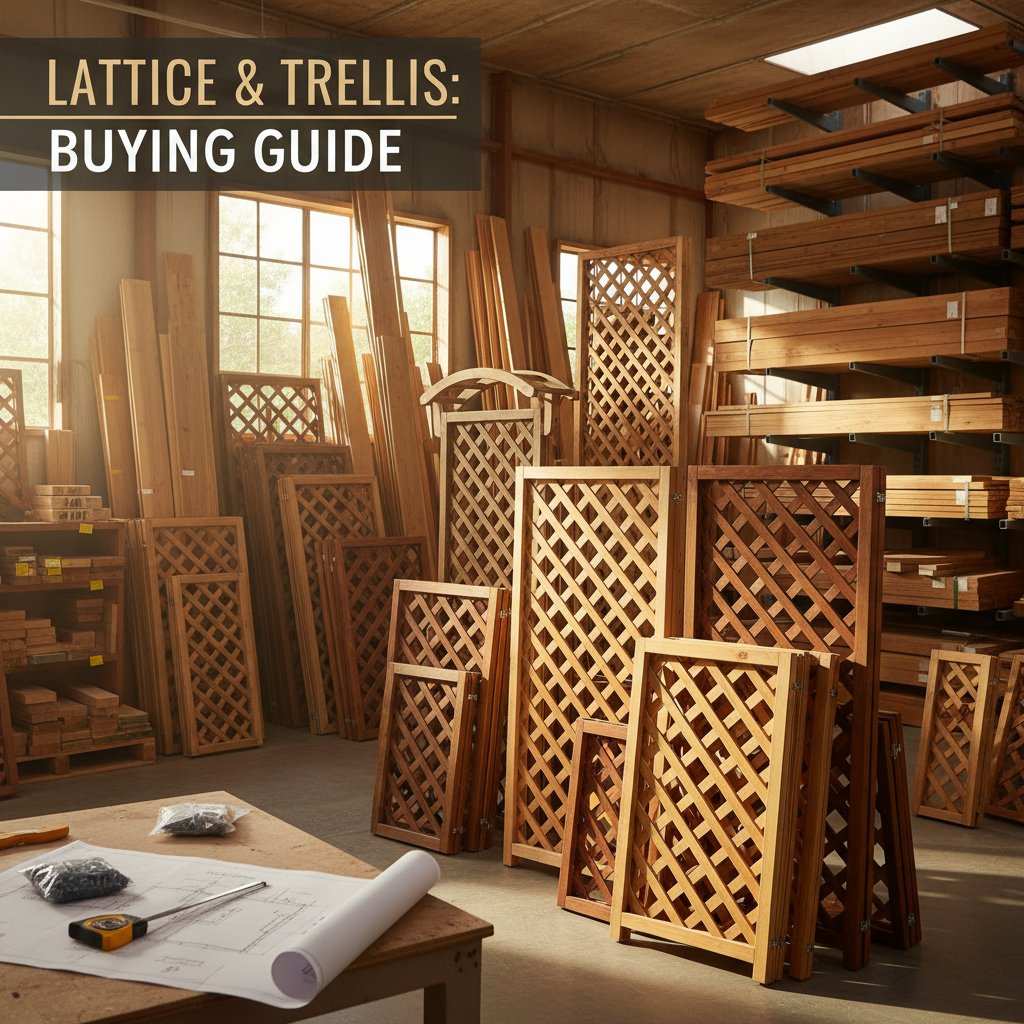
Species Comparison
Western red cedar lattice is the premium choice — naturally rot-resistant and lightweight. Pressure-treated pine lattice is the most widely available and affordable. Redwood lattice offers beautiful color but is regionally limited. For climbing plants, rough-sawn wood provides better grip than planed surfaces. Vinyl and composite lattice panels require zero maintenance but lack the natural appearance of wood. Metal (wrought iron, aluminum) trellises offer maximum durability for heavy vines.
Size Guide
Standard lattice panels: 4×8 ft, available in 1/4" (decorative) and 3/4" (structural) thicknesses. Half sheets: 2×8 ft. Privacy lattice: tighter 1" diagonal openings. Standard lattice: 2"–3" openings. Trellis panels: 2×6, 4×6, and 4×8 ft are common. Fan trellises: 24"–36" wide. Lattice strips: 1/4" × 1-1/2" for custom fabrication.
Grade Guide
Appearance-grade cedar lattice has consistent color and tight knots — ideal for visible applications. #2 cedar or standard pressure-treated lattice works for utility screening (under decks, AC enclosures). Heavy-duty or structural lattice uses 3/4"-thick slats stapled or riveted at intersections. Lightweight decorative lattice (1/4" slats) is for accents only and is not structural. Vinyl lattice does not have traditional grading but varies by thickness and UV stabilizer quality.
Budget Breakdown
Budget: Pressure-treated pine lattice panel (4×8) at $15–$25. Mid-range: Cedar or vinyl lattice panels at $25–$50. Premium: Custom cedar slat screens or composite privacy panels at $50–$100+ per panel. Trellis panels: $20–$80 depending on size and material. U-channel lattice trim adds $5–$15 per 8' length for finished edges.
Common Mistakes to Avoid
- Placing lattice directly on soil where it absorbs moisture and rots quickly
- Using lightweight 1/4" decorative lattice where structural 3/4" lattice is needed
- Not framing lattice panels in U-channel or a wood frame, leaving raw edges exposed
- Installing lattice too tightly in the frame without room for wood expansion
- Overloading a trellis with heavy vines like wisteria that can exceed the structure's capacity
Pre-Purchase Checklist
- Determine primary purpose: screening, privacy, plant support, or decoration
- Measure the area to cover and note any irregular shapes
- Choose material based on visibility and maintenance preference
- Select opening pattern and size for your use case
- Plan framing: U-channel, wood stops, or built-in grooves
- Consider airflow needs — tighter lattice restricts ventilation
Frequently Asked Questions
Build a frame of pressure-treated 2×4s or 1×4s around each panel bay. Set lattice panels inside the frame using U-channel or staples. Leave 1" ground clearance to prevent moisture wicking.
Standard lattice supports lightweight climbers like clematis and jasmine. Heavy vines like wisteria or grapes need a sturdy trellis built from 2×2 or larger stock.
Pressure-treated pine lattice lasts 8–15 years. Cedar lasts 15–20 years. Both benefit from periodic sealing. Vinyl lattice can last 20–30+ years with no maintenance.
Privacy lattice has smaller openings (typically 1" or less) arranged at a steep angle that blocks direct sight lines while still allowing airflow and filtered light.