Flooring
Everything You Need to Know Before Buying Hardwood Flooring (2026)
Hardwood floors are one of the best investments you can make in your home, adding warmth, beauty, and lasting value. But with dozens of species, multiple grades, and various widths available, the choices can feel overwhelming. This guide simplifies the decision so you get floors that look stunning and perform for generations.
Key Takeaways
- Hardwood floors are one of the best investments you can make in your home, adding warmth, beauty, and lasting value.
- But with dozens of species, multiple grades, and various widths available, the choices can feel overwhelming.
- This guide simplifies the decision so you get floors that look stunning and perform for generations.
- Janka hardness rating — higher numbers mean better dent and scratch resistance for high-traffic areas.
- Board width and length — wider and longer planks create a more modern, open look but cost more.
What to Look For
- Janka hardness rating — higher numbers mean better dent and scratch resistance for high-traffic areas.
- Board width and length — wider and longer planks create a more modern, open look but cost more.
- Solid vs. engineered — solid can be refinished many times; engineered handles humidity swings and below-grade installs.
- Finish type — prefinished boards save time; site-finished floors allow custom color matching.
- Moisture content — flooring should be acclimated to 6-9% MC before installation.
- Milling quality — check tongue-and-groove fit, end-matching precision, and surface flatness.
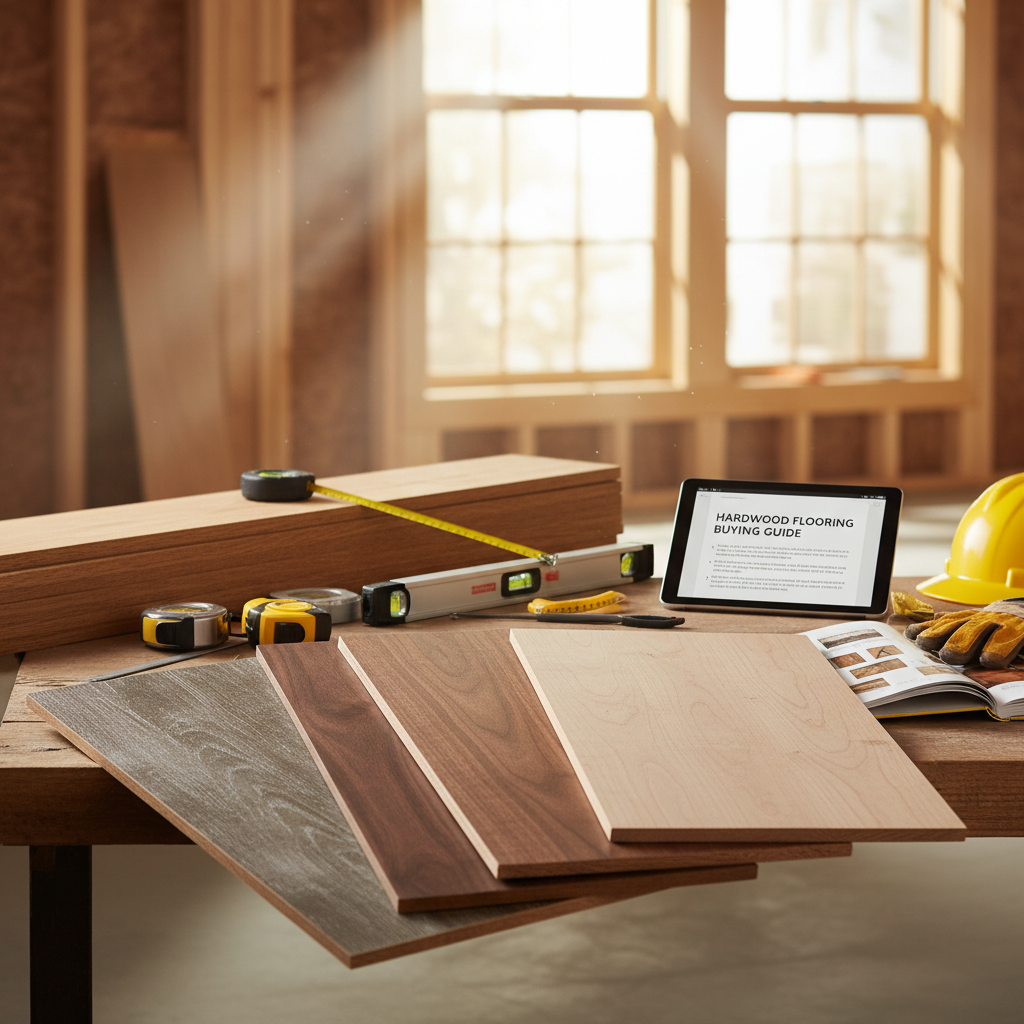
Species Comparison
Red oak: Classic American hardwood with prominent grain. Janka 1290. Most popular and affordable domestic option.
White oak: Tighter grain than red oak, more water-resistant. Janka 1360. Ideal for modern and rustic styles.
Hickory: Dramatic grain variation with exceptional hardness. Janka 1820. Best for active households.
Maple: Clean, light appearance with subtle grain. Janka 1450. Popular for contemporary interiors.
Walnut: Rich dark brown tones. Janka 1010. Softer but prized for its luxurious appearance.
Size Guide
2-1/4" width: Traditional strip flooring. Classic look, fastest to install, most forgiving on imperfect subfloors.
3-1/4" to 4" width: Transitional plank. Balances modern width with practical installation.
5" to 7" width: Wide plank. Shows more grain character, requires flatter subfloors, and is more prone to seasonal movement.
3/4" thickness (solid): Standard for nail-down installation over wood subfloors.
1/2" to 5/8" thickness (engineered): Suitable for glue-down, float, or staple installation.
Grade Guide
Select/Clear: Minimal color variation and very few knots. Cleanest, most uniform appearance.
#1 Common: Small knots and moderate color variation. Best value for most residential projects.
#2 Common (Builder grade): More knots, mineral streaks, and color variation. Rustic character at lower cost.
Character/Rustic: Maximum natural variation including knots, checks, and color range. Popular for farmhouse and cabin aesthetics.
Budget Breakdown
Domestic oak or maple (unfinished): $3–$6 per sq ft.
Domestic oak or maple (prefinished): $5–$9 per sq ft.
Exotic species (prefinished): $7–$14 per sq ft.
Wide plank premium: Add 20-40% over standard widths.
Installation: $3–$8 per sq ft depending on method and subfloor prep.
Finishing (site-finished): $2–$4 per sq ft for sand, stain, and three coats polyurethane.
Common Mistakes to Avoid
- Skipping subfloor moisture testing — excess moisture causes cupping, buckling, and finish failure.
- Not acclimating flooring — boards need 3-5 days in the room at normal temperature and humidity.
- Choosing species based only on color — hardness and grain pattern matter more for long-term satisfaction.
- Installing over radiant heat without engineered boards — solid hardwood can crack and gap.
- Buying from multiple production runs without checking lot numbers — color and dimension can vary between batches.
Pre-Purchase Checklist
- Test subfloor moisture with a reliable meter
- Measure room square footage and add 10% for waste
- Verify species hardness meets your household's traffic level
- Confirm board width is compatible with your subfloor flatness
- Acclimate flooring in the room for 3-5 days minimum
- Inspect every carton for defects before installation begins
- Confirm transition pieces and trim are ordered in matching species
Frequently Asked Questions
Solid hardwood floors last 75-100 years and can be refinished 6-8 times. Engineered hardwood lasts 30-50 years with 1-3 refinishes depending on veneer thickness.
Yes. Engineered hardwood has a real hardwood veneer (typically 2-6mm) bonded to a plywood or HDF core. It looks identical to solid wood once installed.
Kitchens are fine with proper maintenance. Bathrooms are risky due to standing water — engineered wood with waterproof finish is the safest option.
For traditional homes, 2-1/4" to 3-1/4" looks proportional. Modern and open-plan spaces benefit from 5" or wider planks.