Marine & Dock
Marine and Dock Lumber: What Survives Waterfront Conditions (2026)
Dock and marine lumber face the harshest conditions in construction — constant water exposure, wave action, UV bombardment, ice damage, and marine borers. Standard building materials fail quickly in this environment. This guide covers the species, treatments, and specifications that deliver reliable performance on the waterfront.
Key Takeaways
- Dock and marine lumber face the harshest conditions in construction — constant water exposure, wave action, UV bombardment, ice damage, and marine borers.
- Standard building materials fail quickly in this environment.
- This guide covers the species, treatments, and specifications that deliver reliable performance on the waterfront.
- Marine borer resistance — saltwater environments demand species or treatments rated against Teredo and Limnoria.
- Treatment retention level — marine applications require UC4C or UC5 rated pressure treatment.
What to Look For
- Marine borer resistance — saltwater environments demand species or treatments rated against Teredo and Limnoria.
- Treatment retention level — marine applications require UC4C or UC5 rated pressure treatment.
- Freshwater vs. saltwater — freshwater docks have less demanding requirements than saltwater.
- Structural load ratings — docks must support people, equipment, boats, and dynamic wave forces.
- Slip resistance — wet dock surfaces must provide safe footing.
- Environmental regulations — many waterways restrict chemical treatments near aquatic habitats.
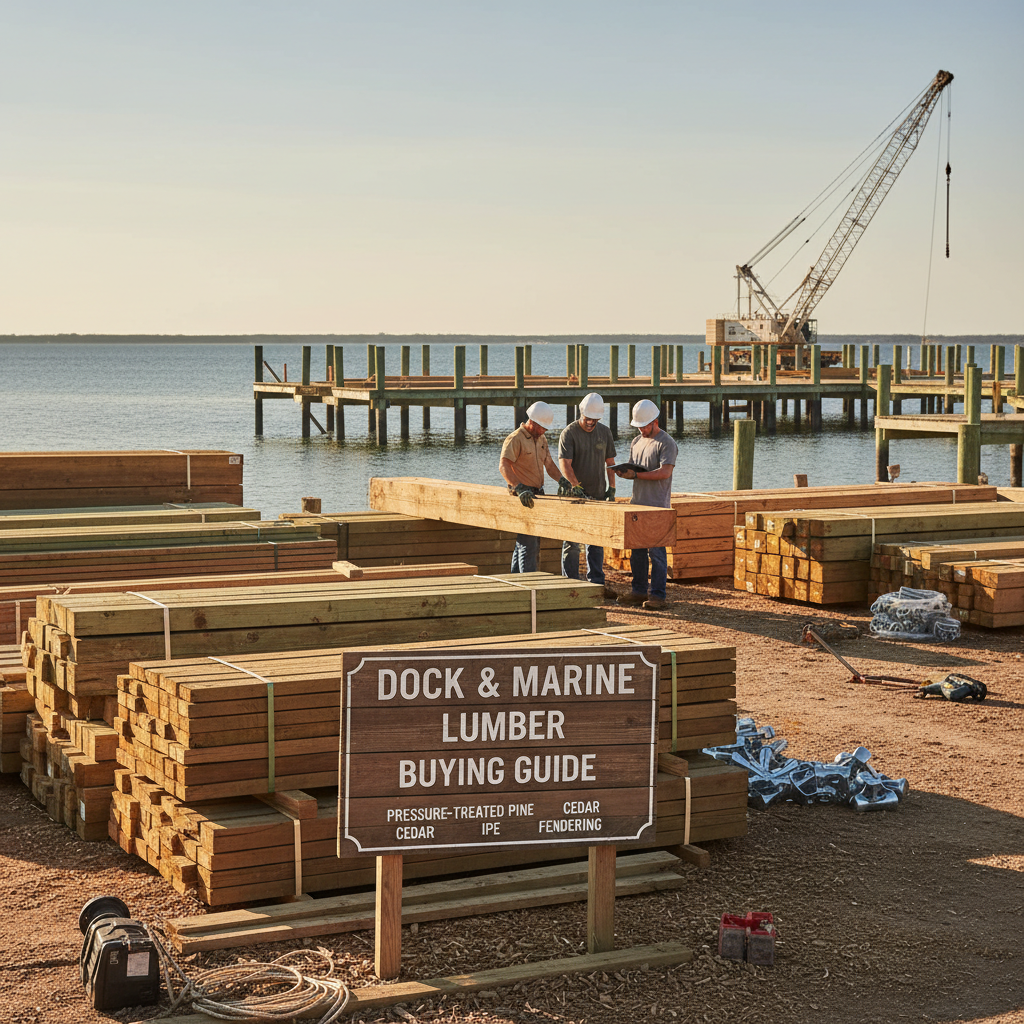
Species Comparison
Ipe: The premier marine decking wood. Naturally resistant to marine borers, rot, and UV. No chemical treatment needed.
Pressure-treated SYP (CCA or ACZA): Required for saltwater pilings and substructure. CCA is still permitted for marine/industrial use.
Cypress: Good freshwater dock species with natural rot resistance. Not suitable for saltwater borer exposure.
White oak: Traditionally used in boat building. Excellent for freshwater dock decking and framing.
Black locust: Extremely durable for freshwater dock pilings and framing. Natural rot resistance rivals tropical hardwoods.
Size Guide
Pilings: 8-12" diameter round timbers, 15-30 feet long depending on water depth and embedment.
Stringers: 2x10 or 2x12 for dock frame. Larger sizes for commercial applications.
Decking: 5/4x6 for residential docks. 2x6 for commercial and high-traffic docks.
Caps and bumpers: 6x8 or 8x8 timbers for dock edges and boat protection.
Hardware: Hot-dipped galvanized or stainless steel is mandatory for all marine fasteners and connectors.
Grade Guide
UC4C (Treated): Ground contact and freshwater immersion. Minimum for freshwater dock substructure.
UC5A (Treated): Saltwater splash zone. Required for marine structures above mean high water.
UC5B (Treated): Saltwater immersion. Required for all submerged structural members in saltwater.
CCA-treated: Chromated copper arsenate — restricted to industrial, marine, and agricultural use. Most effective against marine borers.
ACZA-treated: Ammoniacal copper zinc arsenate — used for treated Douglas fir in marine applications.
Budget Breakdown
Treated SYP dock framing (2x10): $1.50–$3 per linear foot.
Treated pilings (per foot): $8–$15 depending on diameter.
Ipe dock decking (5/4x6): $7–$12 per linear foot.
Treated 2x6 dock decking: $1.50–$3 per linear foot.
Marine-grade stainless hardware: 3-5x the cost of standard exterior hardware.
Professional dock construction: $50–$150 per square foot installed.
Common Mistakes to Avoid
- Using standard UC4A treated lumber for dock substructure — it doesn't have enough preservative for constant water exposure.
- Neglecting marine borer protection in saltwater — Teredo worms can destroy untreated pilings in months.
- Using standard galvanized hardware in saltwater — only hot-dipped galvanized or stainless survives marine environments.
- Ignoring local environmental regulations — some waterways prohibit CCA-treated lumber. Check before building.
- Not accounting for water level changes — docks must handle seasonal fluctuations, tides, and flood conditions.
Pre-Purchase Checklist
- Determine freshwater vs. saltwater exposure requirements
- Verify treatment levels meet UC4C/UC5 standards for your application
- Check local waterway regulations for permitted materials
- Specify marine-grade stainless or hot-dipped galvanized hardware
- Plan for water level fluctuations (floating vs. fixed dock design)
- Confirm piling depth meets engineering requirements
- Budget for higher material and hardware costs vs. land-based construction
Frequently Asked Questions
CCA or ACZA treated pilings for substructure, with ipe decking on top. This combination provides the best borer resistance below water and weather resistance above.
CCA-treated SYP pilings in saltwater last 20-40 years. In freshwater, properly treated pilings can last 30-50 years.
Cedar works for freshwater dock decking and above-water framing. It lacks resistance to marine borers and is not suitable for saltwater substructure.
Almost always yes. Dock construction typically requires permits from local, state, and federal agencies (Army Corps of Engineers in the US).