Decking
The Complete Guide to Buying Decking Lumber in 2026 (2026)
Choosing the right decking lumber is the single most important decision you'll make for your outdoor living space. The wrong material can warp, split, or rot within a few seasons, while the right choice delivers decades of low-maintenance enjoyment. This guide walks you through every factor that matters so you can invest wisely.
Key Takeaways
- Choosing the right decking lumber is the single most important decision you'll make for your outdoor living space.
- The wrong material can warp, split, or rot within a few seasons, while the right choice delivers decades of low-maintenance enjoyment.
- This guide walks you through every factor that matters so you can invest wisely.
- Durability and rot resistance — look for naturally resistant species or pressure-treated options rated for ground contact.
- Moisture content — kiln-dried boards (below 19% MC) minimize warping and cupping after installation.
What to Look For
- Durability and rot resistance — look for naturally resistant species or pressure-treated options rated for ground contact.
- Moisture content — kiln-dried boards (below 19% MC) minimize warping and cupping after installation.
- Grain pattern — vertical grain boards are more dimensionally stable than flat-sawn.
- Fastener compatibility — some species react with certain metals; confirm compatibility before buying.
- Intended use — foot-traffic areas need slip resistance and hardness; decorative areas can prioritize appearance.
- Maintenance expectations — exotic hardwoods weather to silver-gray without treatment, while softwoods need regular sealing.
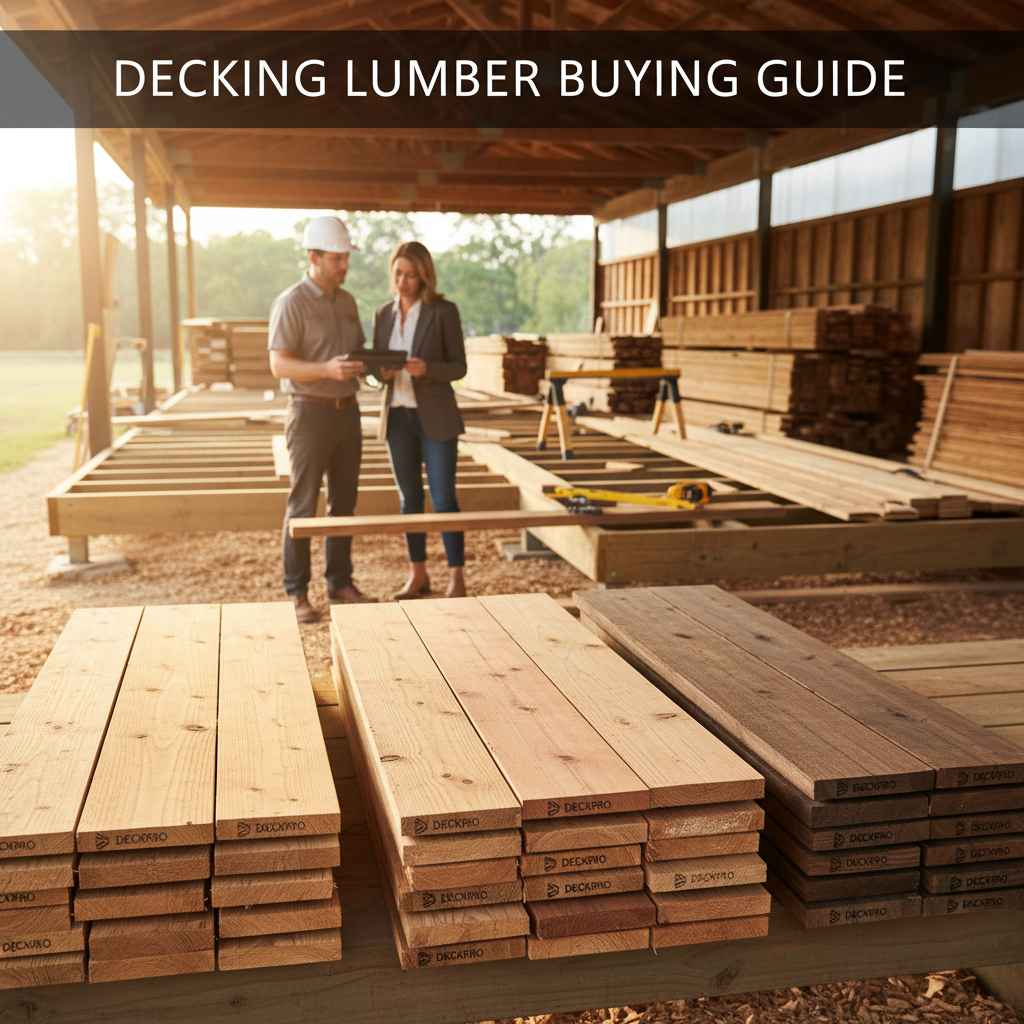
Species Comparison
Cedar: Naturally rot-resistant, lightweight, warm reddish tone. Moderate price. Best for residential decks with periodic maintenance.
Redwood: Premium softwood with rich color and excellent stability. Higher cost but beautiful aging.
Ipe: Extremely hard tropical hardwood rated 25+ years outdoors. Heavy, expensive, requires pre-drilling.
Pressure-treated pine: Most affordable option with chemical rot protection. Requires staining to look its best.
Thermowood: Heat-treated softwood with improved stability and no chemicals. Mid-range price, modern aesthetic.
Size Guide
5/4 x 6 (1" x 5.5" actual): The standard residential deck board. Provides good rigidity on 16" joist spacing.
2 x 6 (1.5" x 5.5" actual): Heavier duty, ideal for commercial or high-traffic decks. Can span up to 24" on-center.
1 x 6 (0.75" x 5.5" actual): Thinner option for lightweight applications or deck overlays.
2 x 8 and wider: Used for stair treads and bench tops. Wider boards show more wood grain but are more prone to cupping.
Grade Guide
Select or Premium: Few knots, consistent color, minimal defects. Best for visible surfaces.
#1 Grade: Small tight knots allowed. Good balance of appearance and value.
#2 Grade: More knots and some color variation. Suitable for less-visible areas or painted decks.
Construction grade: Maximum defects allowed. Use only for substructure, never for decking surface.
Budget Breakdown
Pressure-treated pine: $2–$4 per linear foot — best budget option.
Western red cedar: $4–$7 per linear foot — mid-range with natural beauty.
Redwood: $6–$10 per linear foot — premium domestic softwood.
Ipe and exotic hardwoods: $8–$15 per linear foot — highest durability and lifespan.
Factors that affect cost: board length (longer costs more per foot), grade, kiln-dried vs. green, and regional availability.
Common Mistakes to Avoid
- Buying green (wet) lumber and installing immediately — boards shrink, creating gaps and raised fasteners.
- Ignoring joist spacing requirements — thin boards on wide spans will sag and bounce.
- Choosing appearance over performance — a pretty board that rots in three years is no bargain.
- Skipping acclimation — lumber needs 2-3 days on-site to adjust to local humidity before installation.
- Not ordering 10-15% extra for waste — cuts, defects, and future repairs demand surplus material.
Pre-Purchase Checklist
- Confirm species and grade match your project requirements
- Verify moisture content is below 19% for kiln-dried boards
- Check every board for twist, bow, crook, and cup
- Ensure lengths cover your spans with minimal waste
- Confirm fastener compatibility with your chosen species
- Order 10-15% extra material for waste and future repairs
- Verify delivery access and have a dry, flat storage area ready
Frequently Asked Questions
Pressure-treated pine lasts 15-20 years with maintenance. Cedar and redwood average 20-25 years. Exotic hardwoods like ipe can exceed 40 years.
Kiln-dried is strongly recommended. It's more dimensionally stable, accepts stain immediately, and is lighter to handle.
Cedar and ipe both weather gracefully to silver-gray. Cedar is softer and more affordable; ipe is extremely durable.
Calculate your deck square footage, divide by the board face width, add 10-15% for waste, and account for stair treads and fascia boards separately.