Composite Lumber
The Complete 2026 Composite Lumber Buying Guide (2026)
Composite lumber combines wood fibers with plastic polymers to create boards that resist rot, insects, and fading without the maintenance demands of natural wood. With dozens of brands and product lines on the market, choosing the right composite for your deck, railing, or trim project requires understanding the differences in composition, performance, and warranty. This guide cuts through the marketing to help you make a smart decision.
Key Takeaways
- Composite lumber combines wood fibers with plastic polymers to create boards that resist rot, insects, and fading without the maintenance demands of natural wood.
- With dozens of brands and product lines on the market, choosing the right composite for your deck, railing, or trim project requires understanding the differences in composition, performance, and warranty.
- This guide cuts through the marketing to help you make a smart decision.
- Composition: Wood-plastic composite (WPC) vs.
- PVC (cellular or capstock)
What to Look For
- Composition: Wood-plastic composite (WPC) vs. PVC (cellular or capstock)
- Capping: Fully capped (wrapped on all four sides) offers best stain and fade resistance
- Profile: Solid vs. hollow — solid is more rigid, hollow is lighter and often cheaper
- Texture: Embossed wood grain, wire-brushed, or smooth finishes
- Warranty: Compare fade, stain, and structural warranty lengths and coverage
Species Comparison
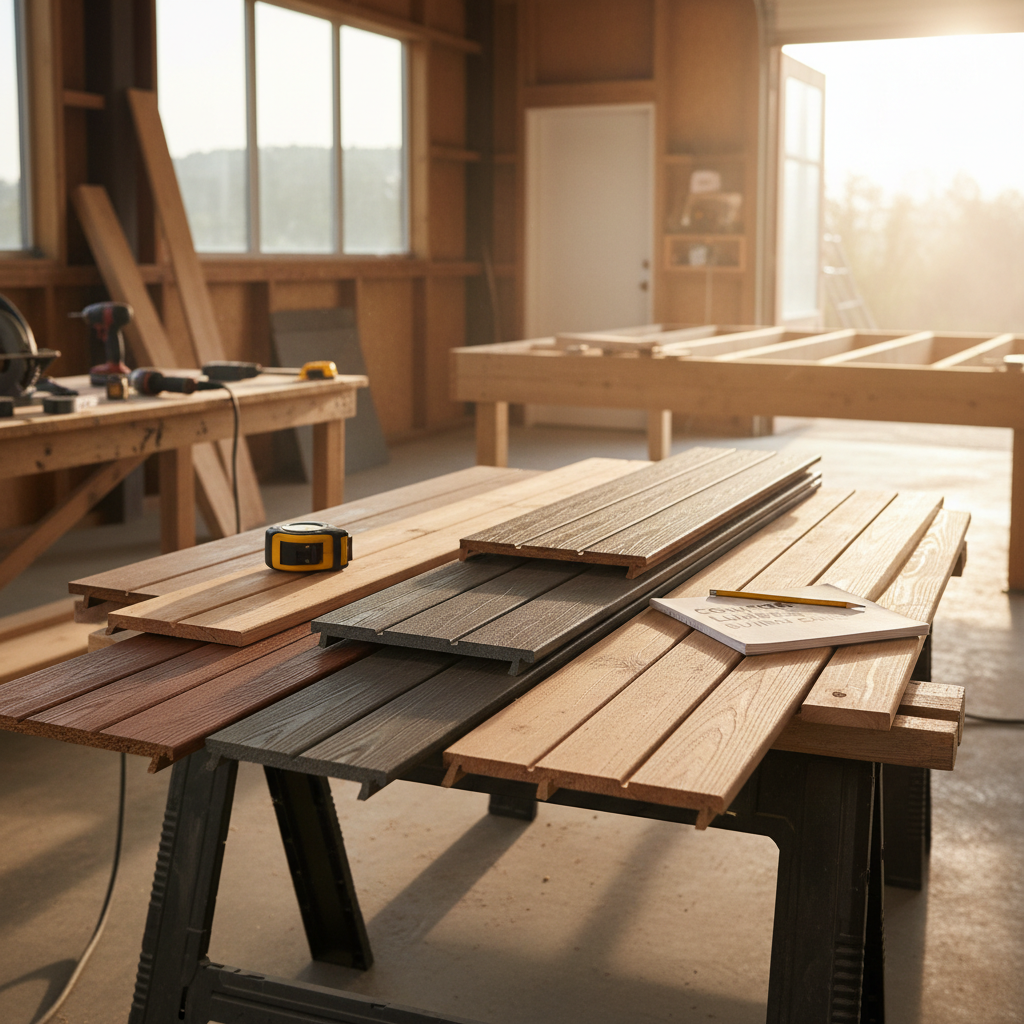
Composite lumber does not contain a single species, but uses recycled wood fibers (often from hardwood sawdust or bamboo) mixed with polyethylene or polypropylene. PVC boards use no wood fiber at all. Capstock composites wrap a protective polymer shell around a wood-plastic core. The wood fiber source affects performance — hardwood-fiber composites tend to be denser and more mold-resistant than softwood-fiber blends.
Size Guide
Deck boards: 5/4×6 (1" x 5-1/2" actual) in 12', 16', and 20' lengths. Fascia: 1/2" x 12". Trim: 1×4, 1×6, 1×8 profiles. Railing: Standard 36" and 42" heights with matching balusters. Post sleeves: 4×4 and 6×6. Most composites are slightly different from nominal lumber dimensions — always verify actual measurements before framing.
Grade Guide
Composite lumber is categorized by product tier rather than traditional lumber grades. Entry-level lines offer basic color options with limited fade warranties. Mid-tier products feature fuller capping and 25-year fade/stain warranties. Premium lines provide multi-tonal streaking, 50-year warranties, and enhanced slip resistance. ASTM D7032 compliance is the minimum performance standard for composite decking.
Budget Breakdown
Budget: Uncapped or three-side-capped composite at $2.50–$4.00 per linear ft. Mid-range: Fully capped composite with 25-year warranty at $4.00–$6.50 per linear ft. Premium: High-end capped composite or PVC with 50-year warranty at $6.50–$12.00 per linear ft. Material cost for a 300 sq ft deck ranges from roughly $1,500 to $5,000+.
Common Mistakes to Avoid
- Using standard wood joist spacing (24" o.c.) when some composites require 16" or even 12" o.c.
- Not following manufacturer gapping requirements for thermal expansion
- Cutting with a dull blade, causing chipping on capped surfaces
- Assuming all composites are the same — uncapped boards stain and mold far more than capped
- Ignoring hidden fastener compatibility — not all clips work with all board profiles
Pre-Purchase Checklist
- Verify manufacturer joist spacing requirements
- Choose capped boards for best fade and stain resistance
- Confirm hidden fastener system compatibility with your board profile
- Order 10% extra material for cuts and waste
- Check that your substructure is pressure-treated or composite-compatible
- Review the full warranty for exclusions and maintenance requirements
Frequently Asked Questions
Composite is lower maintenance and resists rot and insects, but costs more upfront. Natural wood offers a traditional feel and lower initial cost but requires periodic sealing and staining.
Yes, dark-colored composites can get significantly hotter than wood in direct sunlight. Lighter colors and PVC boards tend to stay cooler underfoot.
Most manufacturers advise against it, especially on capped products. Some offer color-matched touch-up kits. Check your warranty before applying any coating.
Quality capped composite decking lasts 25–50 years with minimal maintenance — just periodic cleaning. Uncapped products have shorter lifespans.