Acoustic
Acoustic Wood Guide: Panels, Slats, and Sound-Shaping Lumber (2026)
Wood acoustic panels and slat walls have become one of the most popular design trends in both residential and commercial spaces, combining visual warmth with genuine sound management. Whether you're building a home theater, recording studio, or a restaurant that needs noise control, the right wood selection transforms both the look and sound of your space.
Key Takeaways
- Wood acoustic panels and slat walls have become one of the most popular design trends in both residential and commercial spaces, combining visual warmth with genuine sound management.
- Whether you're building a home theater, recording studio, or a restaurant that needs noise control, the right wood selection transforms both the look and sound of your space.
- diffusion — slat panels with backing absorb sound; solid wood panels diffuse it.
- Slat dimensions and spacing — width, depth, and gap between slats determine which frequencies are targeted.
- Backing material — acoustic felt or foam behind slats is what actually absorbs sound energy.
What to Look For
- Sound absorption vs. diffusion — slat panels with backing absorb sound; solid wood panels diffuse it.
- Slat dimensions and spacing — width, depth, and gap between slats determine which frequencies are targeted.
- Backing material — acoustic felt or foam behind slats is what actually absorbs sound energy.
- Fire rating — commercial spaces often require Class A or B fire-rated materials.
- Species density — denser species reflect more sound; lighter species absorb more.
- Installation surface — acoustic performance depends on what's behind the panel and how it's mounted.
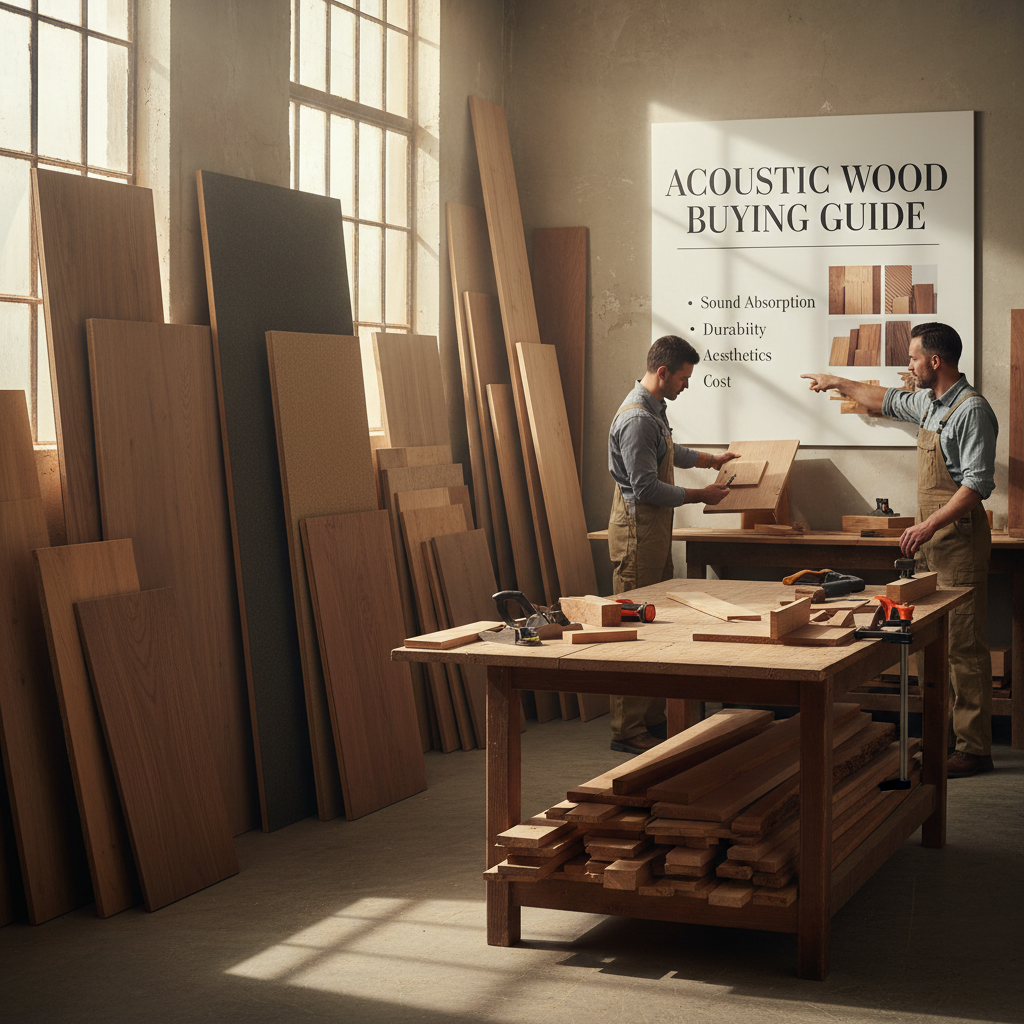
Species Comparison
White oak: Dense, excellent sound reflection for diffusion panels. Beautiful grain for feature walls.
Western red cedar: Lightweight, good natural absorption. Aromatic and visually warm.
Walnut: Premium appearance for high-end installations. Mid-range density works for both absorption and diffusion.
Maple: Clean, modern look. Hard and dense for effective sound diffusion. Takes finish well.
Spruce: Traditional musical instrument wood. Excellent resonance properties. Common in concert hall applications.
Size Guide
Acoustic slats: 1/2" to 1" thick, 1" to 3" wide, 8' long. Gap between slats typically 1/4" to 1/2".
Diffusion panels: 3/4" to 1-1/2" thick solid boards in varying widths to create mathematical diffusion patterns.
Acoustic felt backing: 1/4" to 1" thick. Thicker backing absorbs lower frequencies.
Ceiling panels: Same slat dimensions as walls. Lightweight species preferred for overhead installation.
Standard wall coverage: A typical 4' x 8' acoustic slat panel uses 40-50 linear feet of slat material.
Grade Guide
Clear/Select: Required for acoustic slat panels where every slat is visible. Consistent color and grain.
FAS (hardwood): Best grade for milling consistent acoustic slats. Minimal waste from defects.
#1 Common: Acceptable if you can work around minor defects. More affordable for large installations.
Note: Acoustic performance is independent of lumber grade — grading only affects appearance. The backing material and panel geometry determine sound management.
Budget Breakdown
DIY acoustic slat panels (per 4x8 panel): $100–$250 in materials (wood slats + acoustic felt + backing board).
Pre-made acoustic slat panels (per 4x8): $200–$600.
Custom hardwood diffusion panels: $30–$80 per sq ft.
Acoustic felt backing (per sq ft): $1–$3.
Professional installation: $5–$15 per sq ft.
A typical home theater accent wall (40 sq ft): $400–$1,200 in materials.
Common Mistakes to Avoid
- Assuming wood panels alone absorb sound — solid wood reflects sound. You need felt or foam backing behind slats for absorption.
- Choosing slat spacing for looks alone — the gap-to-slat ratio significantly affects which frequencies are managed.
- Mounting panels flat against drywall with no air gap — an air gap behind the panel improves low-frequency absorption.
- Ignoring fire codes in commercial spaces — raw wood may not meet fire rating requirements without treatment.
- Using inconsistent slat thickness — variations in slat dimensions create an uneven appearance that's highly visible at eye level.
Pre-Purchase Checklist
- Define your acoustic goal (absorption, diffusion, or both)
- Choose slat dimensions and spacing based on target frequency range
- Select species that matches your design aesthetic
- Specify acoustic felt backing thickness for desired absorption
- Verify fire rating requirements for your space
- Mill all slats to consistent dimensions with tight tolerance
- Plan mounting method including any air gap behind panels
Frequently Asked Questions
Yes, when combined with acoustic backing material. The slats allow sound to pass through to the absorptive backing while providing a beautiful wood surface.
Depending on slat spacing and backing thickness, acoustic slat panels typically target mid to high frequencies (500Hz-4000Hz). Thicker backing and air gaps improve low-frequency performance.
Yes. DIY slat panels are achievable with a table saw, consistent milling, acoustic felt, and a plywood backer. The key is precision — inconsistent slats ruin the look.
Acoustic panels manage sound within a room (reducing echo and reverberation). Soundproofing prevents sound from passing through walls and floors. They're different solutions for different problems.