Accent Wall Wood
2026 Accent Wall Wood Buying Guide: Planks, Patterns & Finishes (2026)
A wood accent wall is one of the fastest ways to add character, warmth, and visual interest to any room. From peel-and-stick reclaimed wood planks to geometric patterns and live-edge slabs, the design possibilities are nearly limitless. This guide helps you choose the right material, pattern, and installation method to create a feature wall that anchors your space.
Key Takeaways
- A wood accent wall is one of the fastest ways to add character, warmth, and visual interest to any room.
- From peel-and-stick reclaimed wood planks to geometric patterns and live-edge slabs, the design possibilities are nearly limitless.
- This guide helps you choose the right material, pattern, and installation method to create a feature wall that anchors your space.
- Material type: Solid wood planks, peel-and-stick panels, reclaimed wood, or engineered veneer
- Pattern: Horizontal, vertical, diagonal, herringbone, or chevron
What to Look For
- Material type: Solid wood planks, peel-and-stick panels, reclaimed wood, or engineered veneer
- Pattern: Horizontal, vertical, diagonal, herringbone, or chevron
- Thickness: 1/4" peel-and-stick to 3/4" solid planks
- Color and finish: Natural, stained, whitewashed, painted, or mixed-tone
- Installation method: Adhesive, brad nail, or clip system
Species Comparison
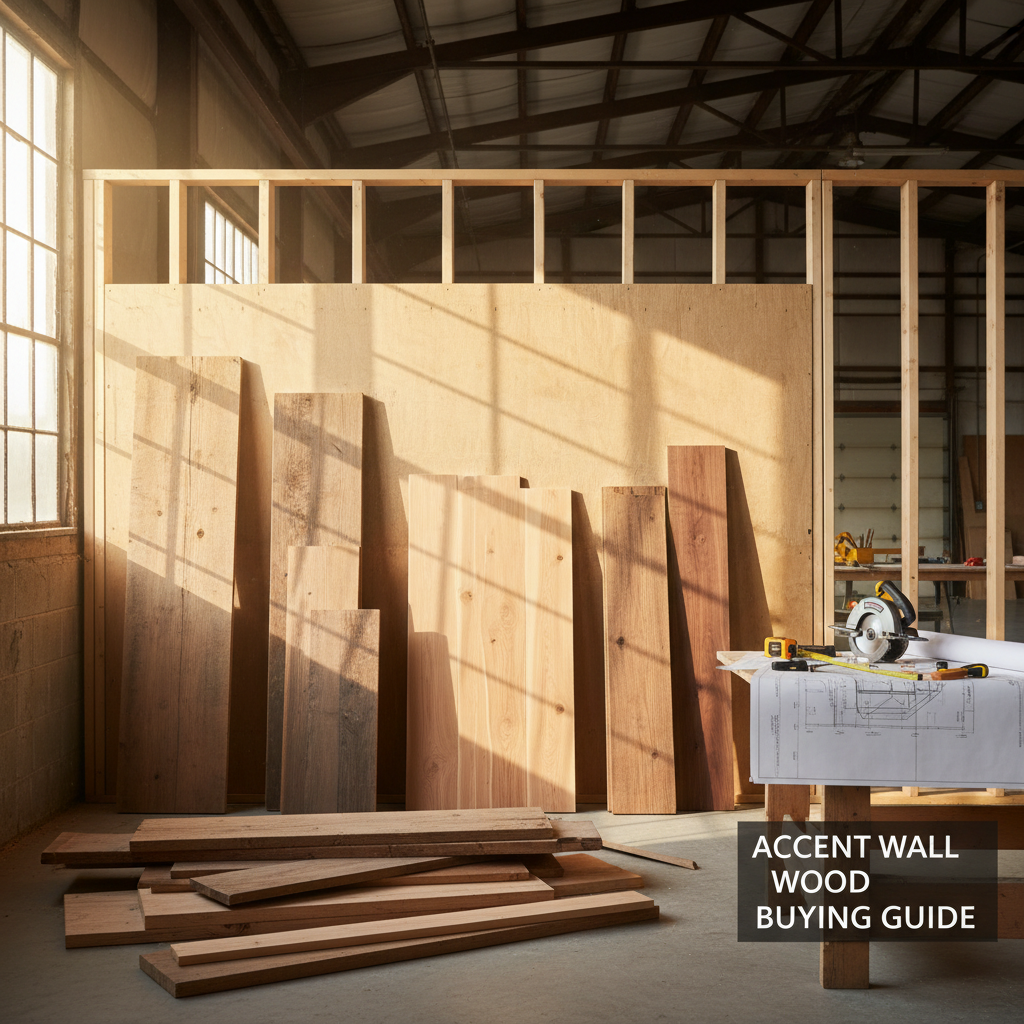
Reclaimed barn wood offers the most authentic character with unique patina and weathering. Pine is the most affordable solid-wood option and takes stain well. Cedar adds warmth and a subtle aroma. White oak provides a premium modern look. Peel-and-stick products typically use thin-sliced real wood (often pine, teak, or reclaimed) on a self-adhesive backing. For a budget option, wood-look vinyl planks mimic the appearance without the maintenance.
Size Guide
Peel-and-stick panels: 5" wide, 1/4" thick, 24"–48" long. Solid planks: 3-1/2" to 7-1/4" wide, 1/2" to 3/4" thick, 4'–12' long. 3D wall panels: 12"×24" or 24"×48" interlocking tiles. Average accent wall: 40–80 sq ft for a standard 8'×10' wall area. Patterned layouts (herringbone, chevron) require 15–20% extra material for angle cuts.
Grade Guide
Character/rustic grade: Knots, color variation, and natural marks — the most popular look for accent walls. Select grade: Clean, consistent appearance for contemporary or painted designs. Reclaimed grade: Varies widely — inspect for nails, lead paint (pre-1978 buildings), and insect damage. Mixed-width and mixed-tone packs create visual interest. Many accent wall products are sold in curated packs with pre-selected color variation.
Budget Breakdown
Budget: Peel-and-stick wood panels at $4.00–$8.00 per sq ft. Mid-range: Solid pine or cedar planks at $5.00–$10.00 per sq ft. Premium: Reclaimed barn wood or white oak planks at $10.00–$20.00+ per sq ft. Installation is typically DIY-friendly, saving $3.00–$6.00 per sq ft in labor. A 50 sq ft accent wall costs $200–$1,000+ in materials.
Common Mistakes to Avoid
- Not preparing the wall surface — peel-and-stick adhesive fails on textured or dusty drywall
- Choosing a pattern (herringbone, chevron) without buying enough extra material for angle cuts
- Using reclaimed wood without checking for lead paint, nails, or insect contamination
- Placing an accent wall on a high-moisture wall (exterior basement wall) without a moisture barrier
- Over-doing it — one accent wall is a feature; four wood walls can feel like a cabin
Pre-Purchase Checklist
- Measure wall area and add 10–20% for waste depending on pattern
- Prepare the wall: clean, smooth, and primed if using adhesive
- Decide on layout direction and pattern before purchasing
- Check reclaimed wood for contaminants (lead paint, old nails)
- Plan electrical outlet and switch plate locations
- Dry-fit several rows before committing to adhesive or nails
Frequently Asked Questions
Yes. Lightweight peel-and-stick products adhere directly to smooth, painted drywall. Heavier solid planks should be nailed into studs or furring strips for security.
Most quality peel-and-stick accent wall products use thin-sliced real wood (typically 1/8"–1/4" thick) adhered to a foam or MDF backing with peel-and-stick adhesive.
Peel-and-stick products may pull paint or paper facing when removed. Using a heat gun helps release adhesive. Nail-mounted planks leave small holes that are easy to patch.
Choose 3–4 complementary tones (light, medium, dark, and one accent). Stain boards before installation, mix them randomly, and dry-fit to check the overall balance before nailing.