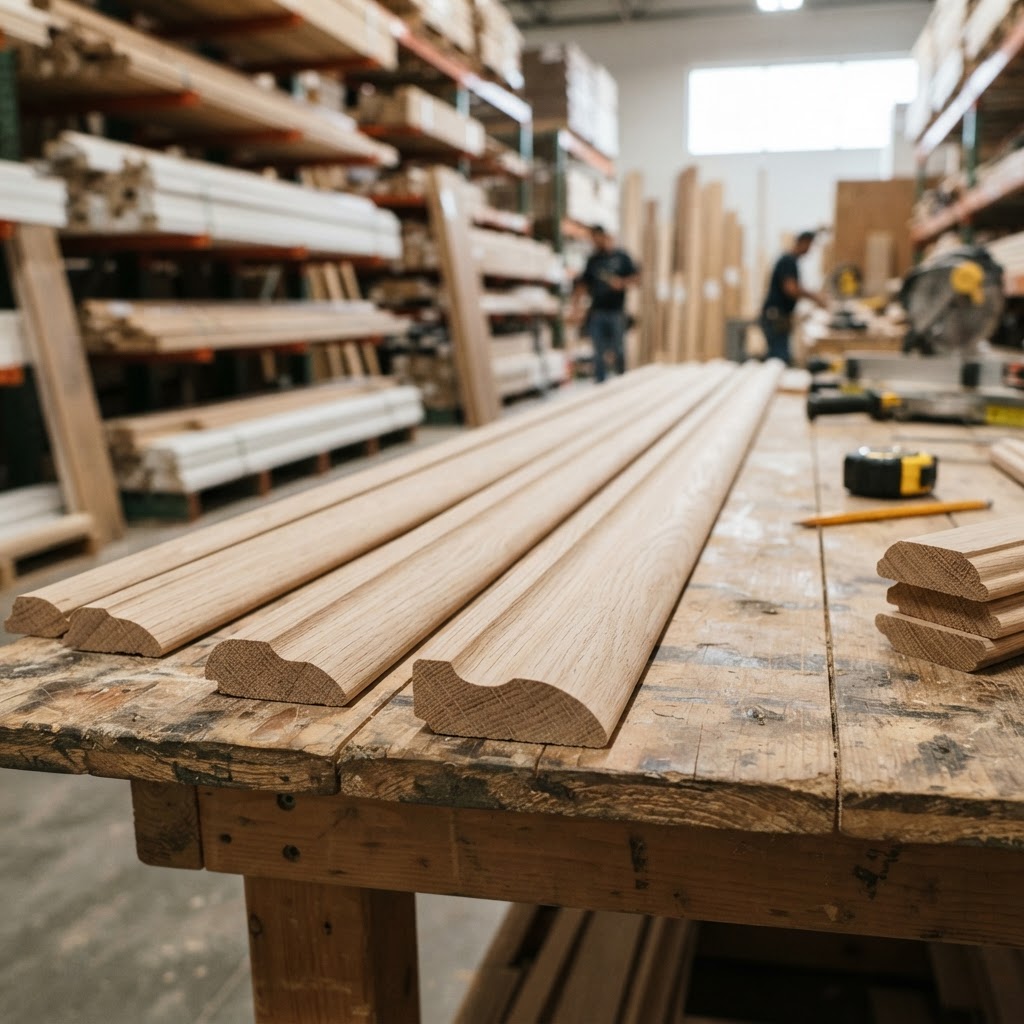
Shoe Molding (2026)
Shoe molding is a slim, narrow trim piece that covers the gap between baseboards and flooring with a more refined, less obtrusive appearance than quarter round. Its asymmetrical profile (taller than wide) sits neatly against the baseboard and floor. Preferred by designers for its subtle, professional look in finished rooms.
Key Features
- Slim
- refined profile
- Less obtrusive than quarter round
- Asymmetrical design fits tight to baseboard
- Paintable or stainable
- Available in multiple materials
Specifications
Applications
- Baseboard-to-floor transition
- High-end residential finishing
- Around cabinetry
- Designer room finishing
- Any room with baseboards
Installation Overview
Cut with a miter saw at 45-degree angles for corners. Attach with a 23-gauge pin nailer or small finish nails into the baseboard. Keep nails above the floor to allow floor movement. Fill and paint to match baseboards.
Pros & Cons
Pros
- ✓ More refined look than quarter round
- ✓ Less obtrusive profile
- ✓ Professional designer preference
- ✓ Sits tight against baseboard
Cons
- ✗ Covers slightly less gap than quarter round
- ✗ May not hide large gaps
- ✗ Harder to find prefinished
- ✗ More prone to splitting when nailed
Top Brands
Code Requirements
No specific code requirements. Install by nailing into baseboards rather than the floor to accommodate floor expansion.
Buying Tips
Choose shoe molding for a more refined, designer look. Match the material to your baseboards. Use a 23-gauge pin nailer for the least visible holes. Pre-paint before installation saves time.
Frequently Asked Questions
Related Guides
Trim & Baseboard Guide: Types, Cost & Installation
Finish your rooms with the perfect trim.
Read articleSunroom Guide: Types, Cost & Design Ideas
Add a bright and beautiful sunroom to your home.
Read articleScreen Porch Guide: Types, Cost & Design Ideas
Enjoy the outdoors without bugs.
Read article