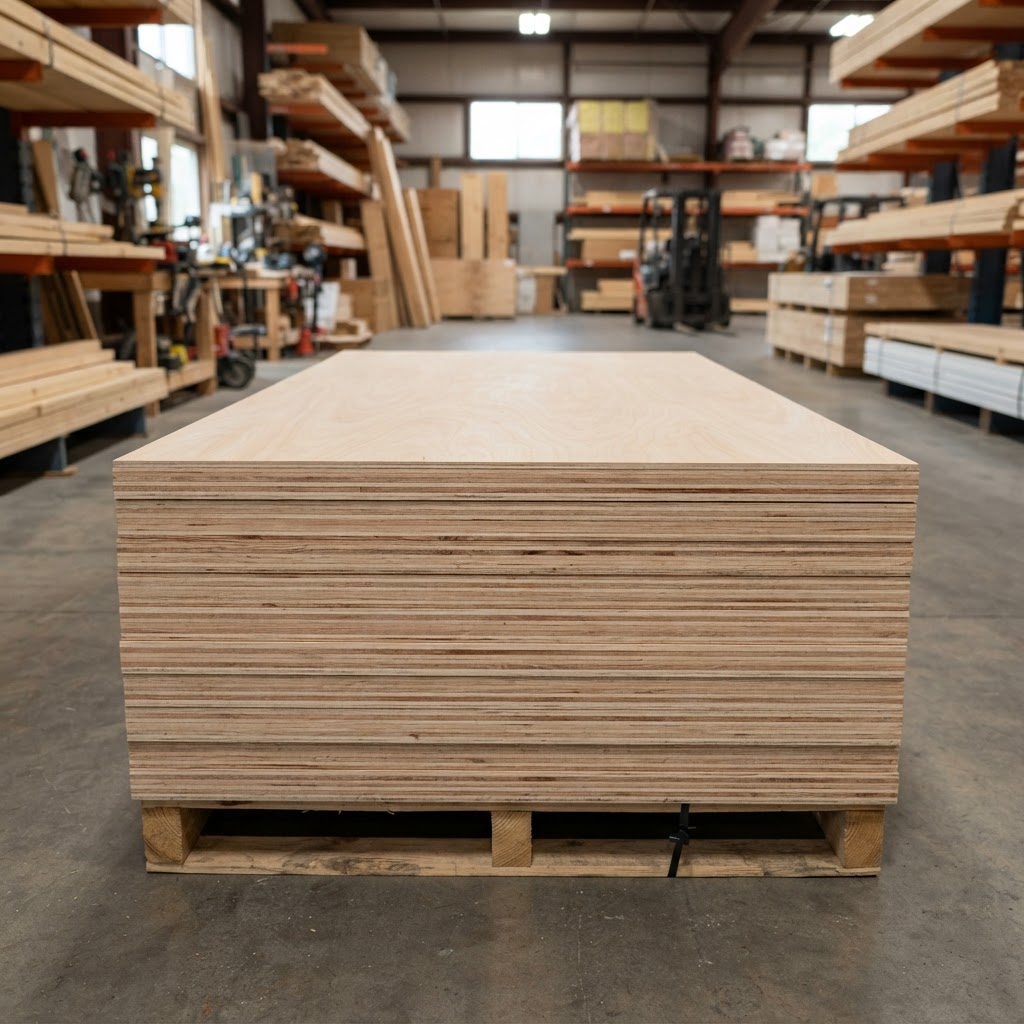
Hardwood Veneer Plywood: Technical Specifications and Usage (2026)
Hardwood veneer plywood consists of a core material, typically balanced veneer or medium-density fiberboard (MDF), bonded with a high-quality hardwood face and back veneer. It is utilized primarily for cabinetry, interior wall paneling, and high-end millwork where appearance and structural stability are both required.
Key Features
- Balanced construction to minimize warping and twisting. - Premium hardwood face veneers available in species like Birch
- Maple
- Oak
- and Walnut. - Dimensional stability superior to solid lumber for wide surfaces. - Available in both architectural and utility grades.
Specifications
Applications
- Custom cabinetry and built-in furniture. - Decorative interior wall paneling. - Architectural millwork and trim components. - High-quality shelving units.
Installation Overview
- Use proper sub-framing spaced at 16 inches on center for vertical applications. - For cabinetry, use mechanical fasteners (18-gauge brad nails or screws) supplemented by PVA adhesive. - Allow for 1/32 inch expansion gaps if installing in humid environments. - Maintain panel orientation for consistent grain pattern across large surfaces.
Pros & Cons
Pros
- ✓ Aesthetic appeal of genuine hardwood. - High structural integrity for cabinetry boxes. - Consistent thickness and surface quality compared to solid stock.
Cons
- ✗ Subject to humidity-induced movement if not properly sealed. - Expensive compared to softwood plywood or melamine. - Face veneers can be delicate and prone to sanding through during refinishing.
Code Requirements
- Must comply with ANSI/HPVA HP-1 for structural and appearance standards. - Formaldehyde emissions must adhere to TSCA Title VI / CARB Phase 2 requirements for composite wood products. - Interior usage requires fire-rated panels in specific commercial assembly occupancies.
Buying Tips
- Verify the face grade (A vs. B) before purchasing for visible surfaces. - Inspect edges for core voids, especially in veneer core panels. - Check that the face veneer is thick enough to handle light finish sanding. - Ensure the panel is stored flat and kept dry to prevent bowing.
Frequently Asked Questions
Related Guides
Heat Pump Guide: Types, Cost & How They Work
Heat and cool your home efficiently with one system.
Read articleAir Conditioning Guide: Types, Cost & Efficiency
Stay cool and save money on cooling.
Read articleWater Heater Guide: Types, Cost & Replacement
Choose the best water heater for your home.
Read article