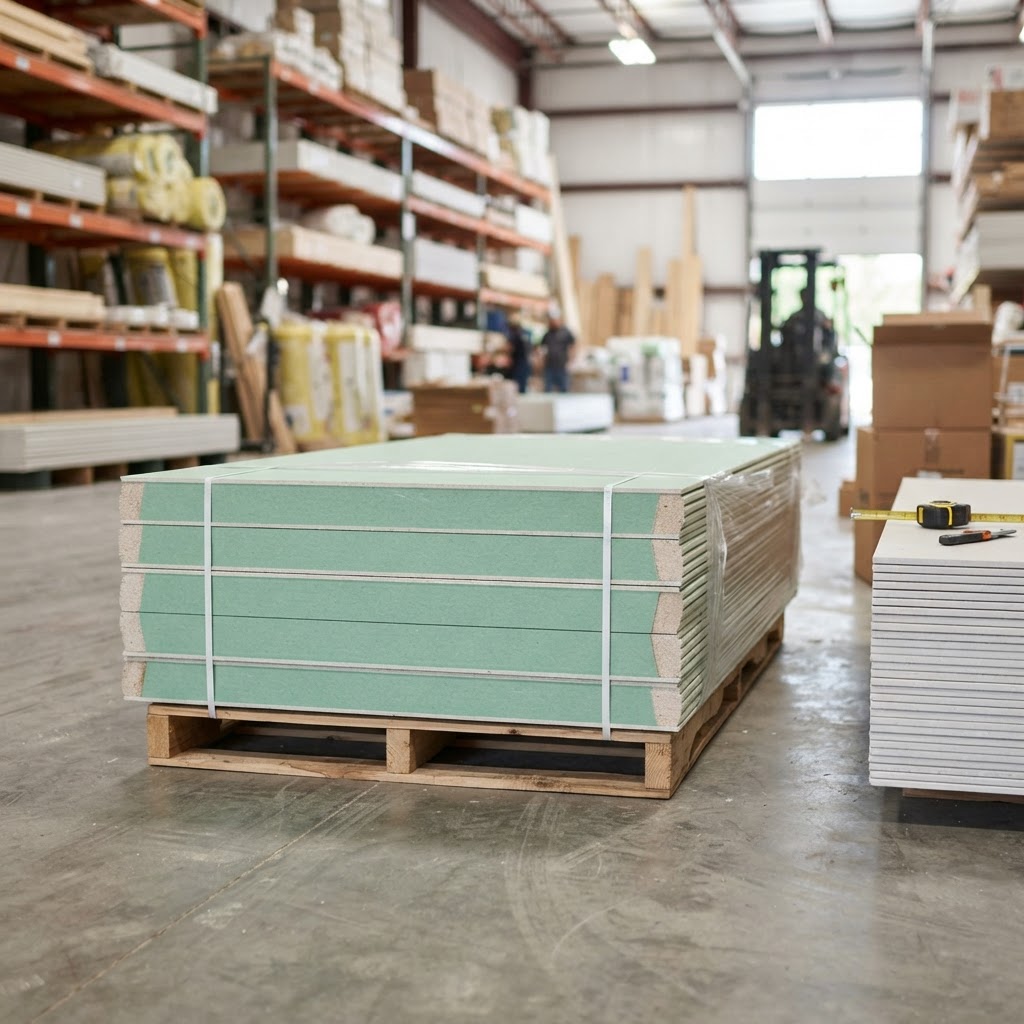
Moisture-Resistant Drywall: Green Board for Humid Areas (2026)
Moisture-resistant drywall, commonly called green board due to its green paper facing, is designed for use in areas with elevated humidity such as bathrooms, kitchens, and laundry rooms. Its water-resistant core and facing reduce the risk of mold and deterioration in damp conditions, though it is not waterproof.
Key Features
- Water-resistant core and facing; Green paper facer identification; 1/2 and 5/8 inch thickness; Mold-resistant options available; For humid areas
- not wet areas
Specifications
Applications
- Bathroom walls (not in showers); Kitchen walls; Laundry rooms; Utility rooms; Behind bathroom vanities
Installation Overview
Install the same as regular drywall with screws every 12-16 inches. Do not use in direct-wet areas like shower enclosures - use cement board instead. Tape and finish joints with standard or mold-resistant compound.
Pros & Cons
Pros
- ✓ Resists humidity damage; Reduces mold risk; Same installation as regular drywall; Available in standard sizes; Code-compliant for damp areas
Cons
- ✗ Not waterproof; Cannot use in showers or tub surrounds; Heavier than regular drywall; More expensive; Must still be properly ventilated
Top Brands
Code Requirements
IRC R702.3.8 requires water-resistant gypsum board or cement board in bathrooms. Not permitted behind tile in shower/tub wet areas - use cement board per IRC R702.4.
Buying Tips
Use green board or mold-resistant drywall in all bathroom areas outside the shower. Purple (mold-resistant) drywall is worth the premium for bathrooms with poor ventilation. Always pair with an exhaust fan.