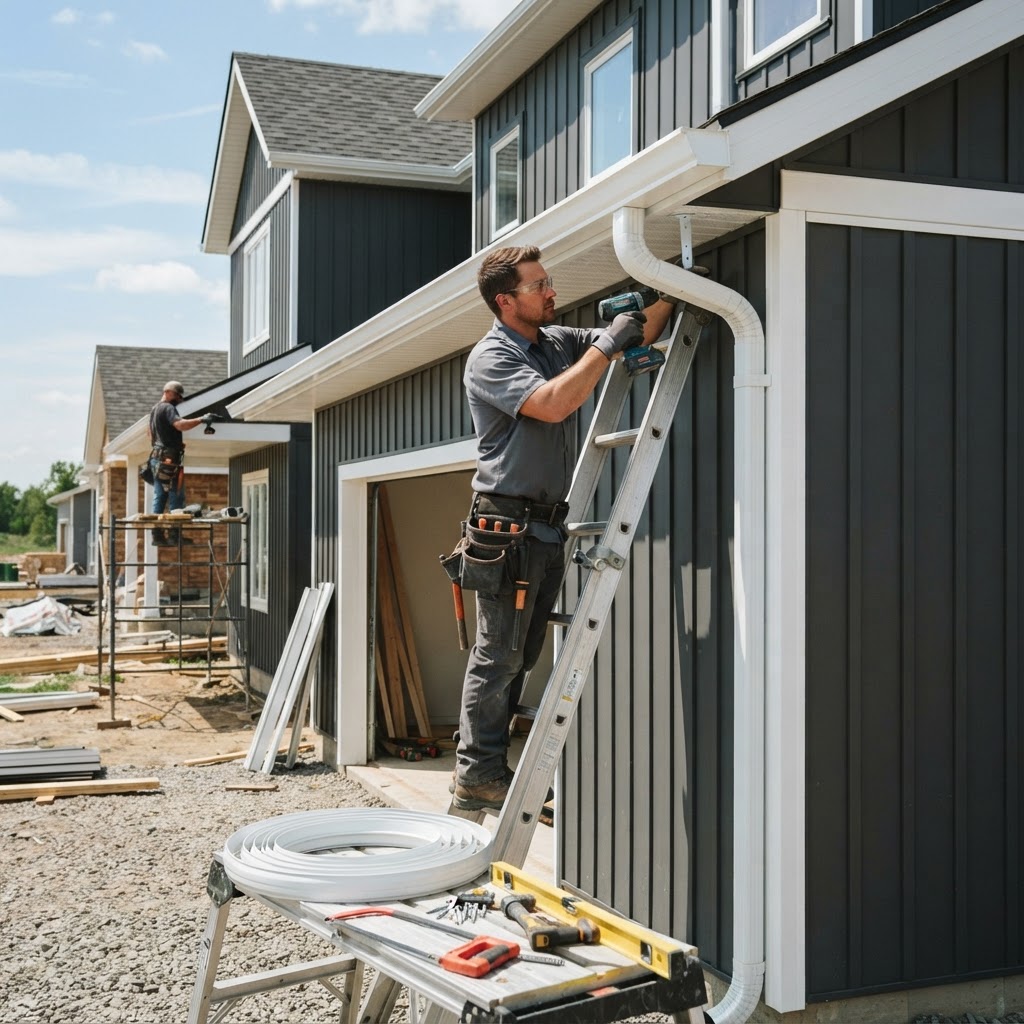
Gutter and Downspout Guide: Materials, Sizing, and Installation (2026)
Gutters and downspouts protect your foundation, siding, and landscaping by channeling roof water away from the structure. Undersized or clogged gutters cause water damage, basement flooding, and erosion. This guide covers gutter materials, proper sizing for your roof area, and the drainage details that keep water away from your home.
Key Takeaways
- Gutters and downspouts protect your foundation, siding, and landscaping by channeling roof water away from the structure.
- Undersized or clogged gutters cause water damage, basement flooding, and erosion.
- This guide covers gutter materials, proper sizing for your roof area, and the drainage details that keep water away from your home.
- inch K-style gutters handle most residential roofs.
- inch gutters are recommended for steep roofs, large roof areas, and regions with intense rainfall.
Types Overview
Aluminum gutters are the most popular choice — lightweight, rust-resistant, and available in seamless or sectional profiles. Vinyl gutters are the most affordable and easiest to DIY but have shorter lifespans and can crack in cold weather. Galvanized steel gutters are strong and economical but prone to rust over time. Copper gutters are the premium option with 100+ year lifespan and a developing patina. Zinc gutters offer longevity similar to copper at a lower cost. Half-round gutters provide a classic architectural look while K-style gutters carry more water and are the modern standard.
Selection Criteria
5-inch K-style gutters handle most residential roofs. 6-inch gutters are recommended for steep roofs, large roof areas, and regions with intense rainfall. Match downspout size to gutter capacity — 2x3-inch downspouts for 5-inch gutters, 3x4-inch for 6-inch gutters. Place downspouts every 30-40 feet of gutter run. Choose seamless aluminum for the best combination of performance and value. Consider gutter guards if trees overhang the roofline to reduce maintenance.
Installation Guide
Mount gutters with a slight slope — 1/4 inch per 10 feet toward the nearest downspout. Use hidden hangers spaced every 24-36 inches (closer in snow country). Fasten hangers into fascia board or rafter tails, not just into fascia trim. Overlap gutter sections by 2 inches and seal with gutter sealant. Install downspout outlets before mounting the gutter run. Connect downspouts to underground drain pipe or splash blocks that direct water minimum 4 feet from the foundation.
Code Requirements
IRC requires roof drainage to be discharged to the ground surface at least 6 inches beyond the foundation wall or to an approved drainage system. Many jurisdictions require gutters on all structures. Underground drain connections must not tie into the sanitary sewer system. Some local codes specify minimum gutter and downspout sizes based on roof area and local rainfall intensity. Overflow provisions may be required for critical areas.
Cost Breakdown
Vinyl gutters (DIY): $3-$6 per linear foot installed. Aluminum sectional (DIY): $5-$9 per linear foot. Seamless aluminum (professional): $8-$15 per linear foot installed. Galvanized steel: $6-$10 per linear foot. Copper: $25-$50+ per linear foot. Gutter guards: $3-$20 per linear foot. Downspout extensions: $5-$15 each. Underground drain pipe: $3-$8 per linear foot. Average home gutter system: $1,000-$3,000 for aluminum, $5,000-$15,000 for copper.
DIY vs Professional
Sectional vinyl and aluminum gutters are good DIY projects for single-story homes — the biggest challenge is working safely on ladders. Seamless gutters require a gutter machine and are exclusively a professional product. Downspout installation and underground drainage are manageable DIY tasks. Professional gutter installation ensures proper slope, secure mounting, and warranty coverage.
Common Mistakes to Avoid
Insufficient slope causes standing water, mosquito breeding, and ice damming in gutters. Too few downspouts overloads the gutter capacity in heavy rain. Not extending downspout discharge far enough from the foundation dumps water right where it does the most damage. Using screws through the gutter bottom creates leak points — use hidden hangers. Not sealing gutter joints and end caps causes dripping behind the gutter. Mounting gutter too high behind the drip edge causes water to overshoot.