Sandpaper and Sanding Guide: Grits, Types, and Techniques for Perfect Results (2026)
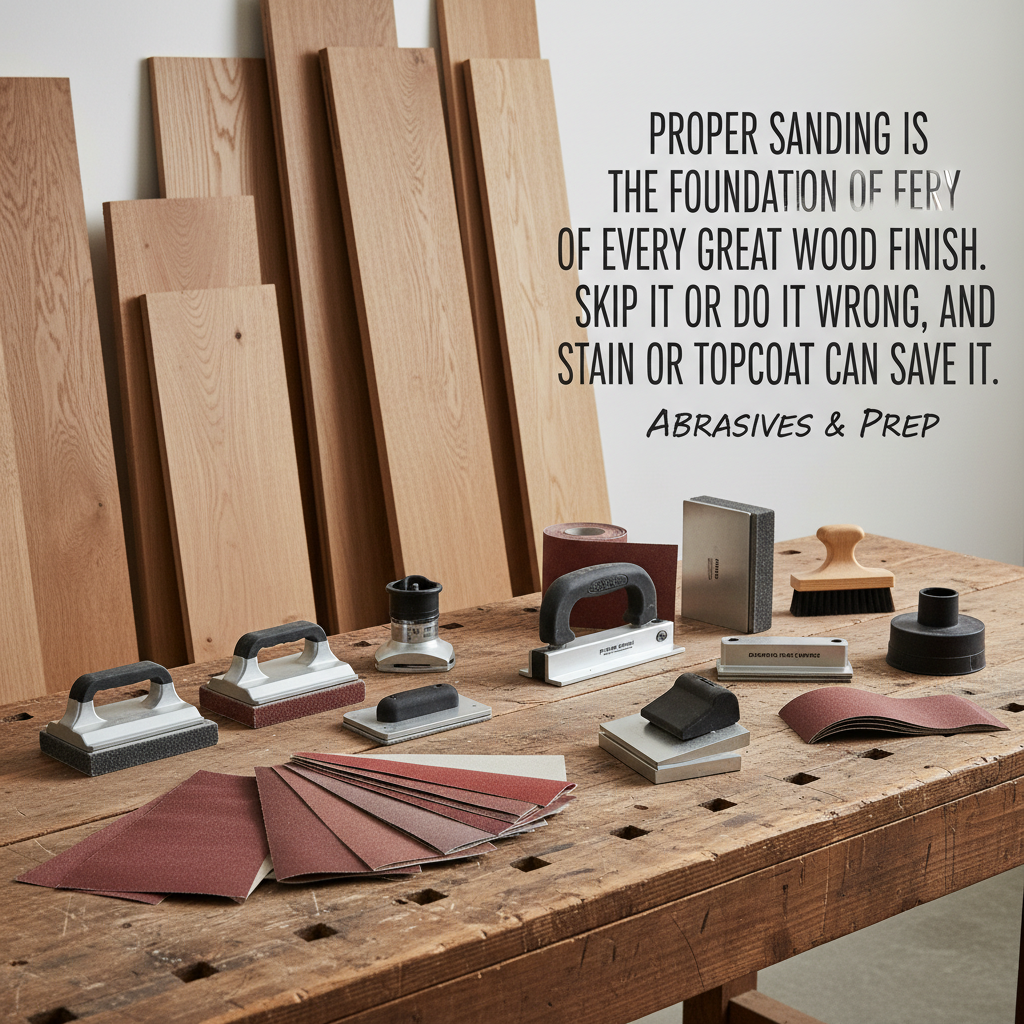
Proper sanding is the foundation of every great wood finish — skip it or do it wrong, and no stain or topcoat can save the result. Understanding grit sequences, sandpaper types, and sanding techniques separates amateur-looking projects from professional ones. This guide covers everything from choosing the right abrasive to achieving a glass-smooth surface ready for your finish of choice.
Key Takeaways
- Proper sanding is the foundation of every great wood finish — skip it or do it wrong, and no stain or topcoat can save the result.
- Understanding grit sequences, sandpaper types, and sanding techniques separates amateur-looking projects from professional ones.
- This guide covers everything from choosing the right abrasive to achieving a glass-smooth surface ready for your finish of choice.
- Grit number and sequence for your task, abrasive material (aluminum oxide, garnet, ceramic, silicon carbide), backing type (paper, cloth, film, or sponge), sanding method (hand, random orbital, belt, or drum), wet vs dry sanding requirements, wood species and hardness, and the type of finish you plan to apply after sanding.
- M Pro Grade Precision sandpaper features longer-lasting aluminum oxide on a durable backing.
What to Consider
Grit number and sequence for your task, abrasive material (aluminum oxide, garnet, ceramic, silicon carbide), backing type (paper, cloth, film, or sponge), sanding method (hand, random orbital, belt, or drum), wet vs dry sanding requirements, wood species and hardness, and the type of finish you plan to apply after sanding.
Product Comparison
3M Pro Grade Precision sandpaper features longer-lasting aluminum oxide on a durable backing. Norton ProSand offers premium quality with anti-clog coating that resists loading on resinous woods. Diablo SandNet is a mesh-style abrasive that eliminates dust clogging entirely. Mirka Abranet is the professional standard for dust-free sanding with hook-and-loop attachment compatible with most random orbital sanders.
Size Selection Guide
Standard sheets (9x11 inch) are the most economical for hand sanding. 5-inch discs fit most random orbital sanders (check your sander's hook-and-loop or PSA pattern). Belt sander belts come in common sizes: 3x21, 3x24, and 4x24 inch. For detail work, sanding sponges in various grits conform to curves and profiles. Buy assorted grit packs for the best value — you will always need multiple grits.
Installation Tips
Always sand with the grain direction, never across it. Start with the coarsest grit needed to remove defects, then progress through grits in sequence (don't skip more than one grit). For bare wood prep, a typical sequence is 80, 120, 150, 180. Sand between finish coats with 220-320 grit. Use a sanding block for flat surfaces to prevent dishing. Clean dust between grits with a tack cloth.
Common Mistakes to Avoid
Skipping grits in the sequence leaving visible scratch patterns. Sanding across the grain creating scratches that show dramatically under stain. Pressing too hard with a random orbital sander causing swirl marks. Not sanding between finish coats resulting in poor adhesion. Using worn-out sandpaper that burnishes rather than cuts, closing the grain. Sanding too fine for stain application (past 180 grit) which prevents stain absorption.
Budget Guide
Standard sandpaper sheets cost $0.50-1.50 each. Assorted grit packs (20-50 sheets) run $10-25. Random orbital sander discs cost $10-20 for packs of 50. Premium mesh abrasives like Mirka Abranet cost $20-35 per box of 50 discs. A complete sanding kit for a furniture project runs $15-30 in abrasives. Floor sanding abrasives for a room cost $50-100.