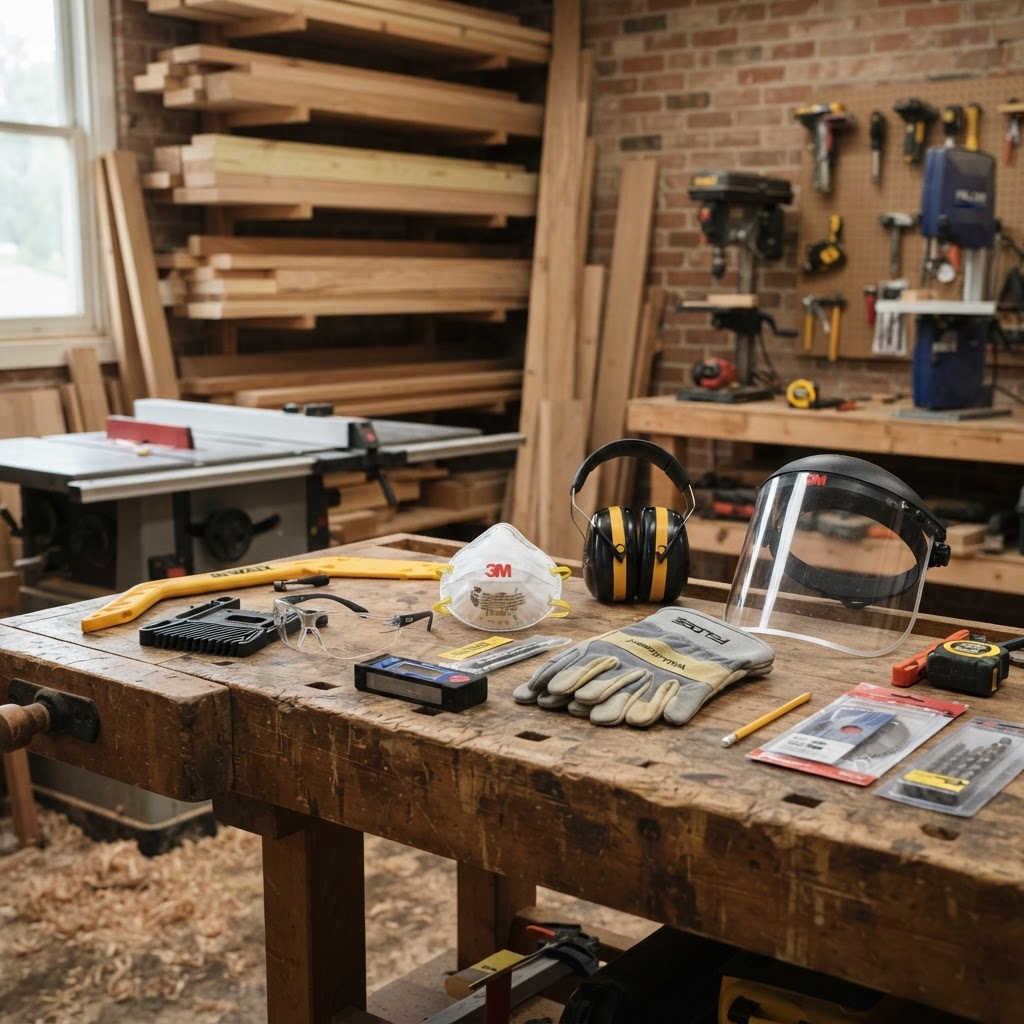
Woodworking Safety Equipment: Essential PPE and Shop Safety Gear (2026)
Woodworking involves sharp blades, fine dust, loud machinery, and flying debris that can cause serious injury without proper safety equipment. From eye protection and hearing defense to respiratory protection and dust collection, investing in the right safety gear protects your health for a lifetime of enjoyable woodworking. This guide covers essential PPE and shop safety equipment every woodworker needs.
Key Takeaways
- Woodworking involves sharp blades, fine dust, loud machinery, and flying debris that can cause serious injury without proper safety equipment.
- From eye protection and hearing defense to respiratory protection and dust collection, investing in the right safety gear protects your health for a lifetime of enjoyable woodworking.
- This guide covers essential PPE and shop safety equipment every woodworker needs.
- Eye protection rating (ANSI Z87.1 certified), hearing protection NRR (Noise Reduction Rating), respirator filter type (N95 minimum for wood dust, organic vapor for finishes), dust collection CFM requirements for your tools, push stick and featherboard compatibility with your table saw, first aid supplies, and fire suppression for finish storage areas.
- M WorkTunes hearing protectors combine AM/FM radio with 24 dB NRR hearing protection.
What to Consider
Eye protection rating (ANSI Z87.1 certified), hearing protection NRR (Noise Reduction Rating), respirator filter type (N95 minimum for wood dust, organic vapor for finishes), dust collection CFM requirements for your tools, push stick and featherboard compatibility with your table saw, first aid supplies, and fire suppression for finish storage areas.
Product Comparison
3M WorkTunes hearing protectors combine AM/FM radio with 24 dB NRR hearing protection. DeWalt safety glasses (DPG82-11) provide anti-fog, wraparound ANSI Z87.1+ impact protection. GVS Elipse P100 half-mask respirator offers superior comfort and filtration for wood dust. The SawStop table saw provides the ultimate blade safety with flesh-detection technology. Jet dust collectors provide whole-shop air filtration at various CFM ratings.
Size Selection Guide
Dust collectors: 400-650 CFM for single-tool home shops, 800-1200 CFM for multi-tool setups with ductwork. Respirators: measure your face for proper fit — most half-mask respirators come in small, medium, and large. Hearing protection: 22-25 NRR for most power tools, 28-33 NRR for prolonged router or planer use. Safety glasses should fit snugly without pressure points.
Installation Tips
Mount your dust collector as close to the primary dust source as possible. Use metal ductwork (not flex hose) for main runs to reduce static and improve airflow. Fit-test your respirator by cupping your hands over the filters and inhaling — the mask should pull against your face with no air leaks. Replace filters when breathing becomes noticeably harder.
Common Mistakes to Avoid
Wearing loose clothing or jewelry around spinning machinery. Relying on a dust mask instead of a proper P100 respirator for fine sanding dust. Not wearing hearing protection for quick cuts (cumulative hearing damage is permanent). Removing blade guards and push sticks for convenience. Not having a working fire extinguisher within reach of the finish area.
Budget Guide
Safety glasses cost $8-20 per pair. Hearing protection ranges from $10 earmuffs to $30 electronic muffs. Respirators cost $25-40 for the mask plus $10-15 per pair of replacement filters. A basic shop dust collector runs $200-400. Premium air filtration systems cost $300-600. Push sticks and featherboards cost $10-30. The total investment for comprehensive shop safety gear is $100-200 minimum.