Sustainable Lumber Sourcing: A Buyer's Guide
How to build responsibly without sacrificing quality. A practical guide to certifications, sustainable alternatives, and greener material choices.
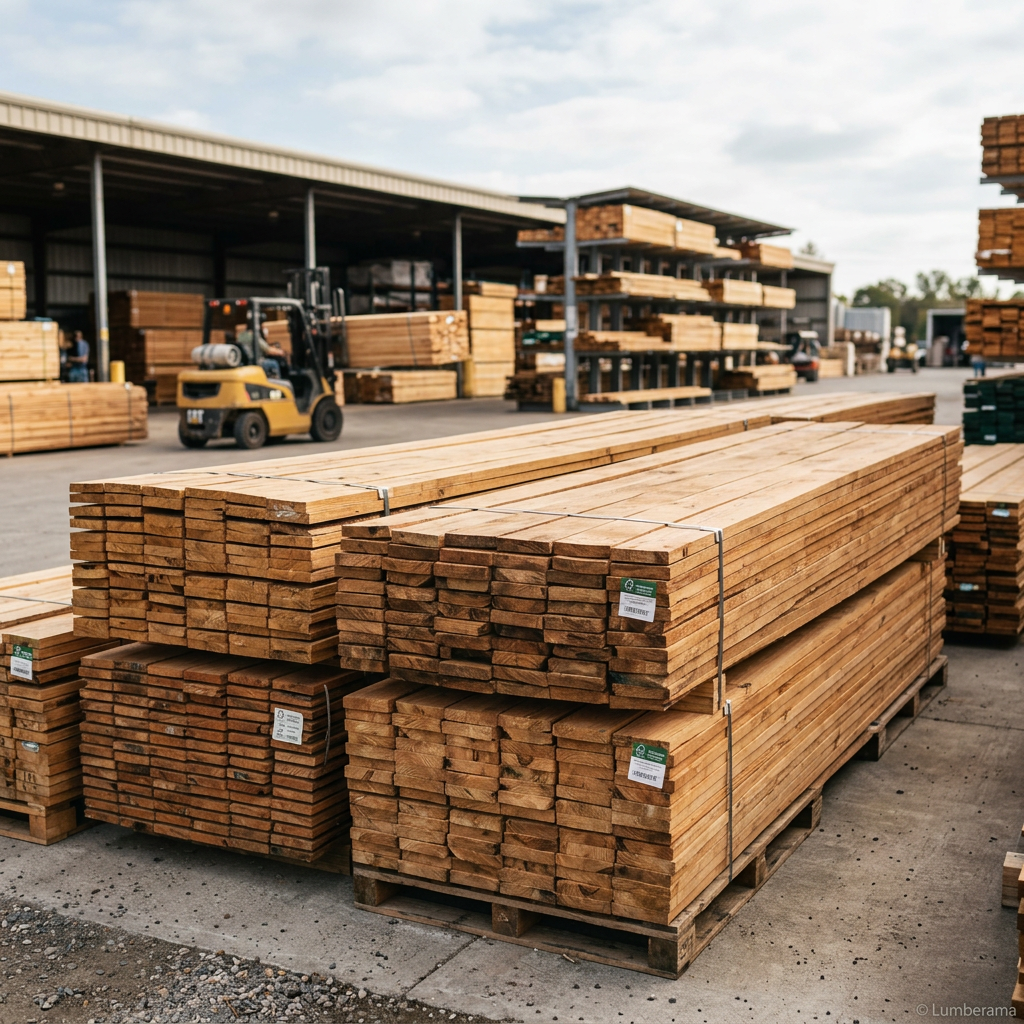
Responsible sourcing begins with a precise product requirement and evidence that supports it. Verify certificate scope, actual sale claims, harvest origin where relevant and intended-use documentation. No species, supplier listing or marketing label proves every environmental or durability claim.
Understanding Certifications
FSC
Distinguish forest-management and chain-of-custody certification. Verify current certificate scope and the specific claim on the sale documents; a logo alone is insufficient.
PEFC
An international framework endorsing national certification systems. Check the certificate, applicable standard, product scope and actual sale claim rather than assuming every supplier product is covered.
SFI
Separate forest-management, fiber-sourcing and chain-of-custody standards. Confirm which standard and product claim the supplier is documenting.
Lacey Act compliance is not a certification
Legal sourcing and applicable import declarations are separate obligations. A voluntary certificate does not replace required declarations, permits or due care.
Sustainable Alternatives
Thermally modified wood
Evaluate the actual modification process, product suitability, sourcing and maintenance. Heat treatment does not establish a universal carbon advantage.
Learn more →Reclaimed lumber
Reuse can recover existing timber. Check prior treatments, contamination, condition, grading and usable dimensions after processing.
Documented tropical hardwoods
Verify botanical identity, harvest origin, applicable import requirements and the certification claim required by the project.
Domestic hardwoods
Domestic origin is useful sourcing information, not proof of every environmental claim. Evaluate the actual supplier and product documentation.
Learn more →Plantation and fast-growing materials
Plantation timber can be useful, but land-use history, processing and traceability still matter. Rapid growth alone is not a certification.
Acetylated wood
Assess the exact product’s application approvals, sourcing, warranty and environmental disclosures rather than applying a blanket species ranking.
Learn more →Lumberama source-based editorial guidance · Updated October 1, 2026. This is not legal advice, certification approval or a verified supplier endorsement.
Start with a precise sourcing claim
“Sustainable,” “local,” “plantation-grown” and “reclaimed” describe different attributes and are not interchangeable certifications. State what your project requires: a particular certification claim, documented harvest origin, reclaimed history, product-level environmental disclosure or a treatment specification. Separate verified facts from supplier statements and unresolved questions. A listing in a directory or a platform verification badge does not certify the lumber.
Check the certificate holder, status and scope
For an FSC claim, search the issuing scheme’s official records. Match the legal supplier name, certificate number, current status, site or group-member coverage and relevant product scope. Forest-management certification and chain-of-custody certification serve different purposes. A logo on a website or a promotional licence is not proof that the specific shipment is sold with a valid certified-product claim. Record the lookup date and resolve discrepancies with the supplier and certification body.
Match the sale documents to the purchased product
Ask for the product description, quantity, applicable FSC claim and supplier certificate details on the appropriate sales documentation. FSC 100%, FSC Mix and FSC Recycled are different claims; do not relabel all of them as wholly virgin certified forest wood. Check the actual claim against your project specification and certificate scope. Preserve the purchase order, invoice, delivery note and supporting records together. Do not make a downstream certified claim without satisfying the applicable rules.
Separate legality from voluntary certification
Lacey Act compliance is a legal requirement, not a certification scheme or an assurance of every environmental attribute. APHIS determines declaration scope using the product classification, entry and other applicable conditions. When importing, identify the botanical species and country of harvest and work with the importer of record or customs broker on the current requirements. FSC or another voluntary certificate does not automatically replace an import declaration, CITES permit or other applicable obligation.
Read treatment tags for durability claims
For AWPA-standardized treated lumber, examine the AWPA U1 reference, use category, preservative, nominal retention and applicable quality mark. UC3A and UC3B concern different above-ground exposures; general ground contact requires UC4A or higher, with more severe or critical conditions potentially requiring a higher category. Retention values depend on preservative, species and application. A treatment tag does not establish a structural lumber grade, and natural durability is not a substitute for a required treatment specification.
Reclaimed timber needs history and condition checks
Record the prior use, source and any known treatment, coating or contamination. Inspect for embedded metal, decay, checks and sections lost during cleaning or remilling. An old beam is not automatically fit for structural reuse, and an attractive surface does not prove a clean interior or safe food-contact application. Arrange the required grading or professional evaluation for critical uses. Compare usable dimensions after de-nailing and milling, not nominal original dimensions.
Compare environmental impacts on an equivalent basis
A closer supplier does not automatically produce the lowest-carbon product. Compare documented manufacturing, transport, service life, maintenance and end-of-life assumptions for the same required function. For environmental product declarations, check product scope, declared unit, life-cycle modules, date and method before comparing numbers. Do not apply a universal percentage saving to every wood building, or assume reclaimed and plantation products have zero impacts.
What to keep in the order file
Include the supplier’s legal identity, product and botanical species, harvest origin where relevant, required grade and dimensions, sourcing claim, certificate lookup and date, product-specific sale documentation, treatment information and delivery inspection notes. Require written approval before substituting species, origin, grade or certification claim. If evidence is missing, label the claim unverified and pause acceptance of that attribute rather than inventing a confirmation.
Official sources and verification tools
- FSC: public certificate records and scope
- FSC: chain of custody and sales claims
- USDA APHIS: current Lacey Act declaration requirements
- AWPA: treatment tags, retention and use categories
References consulted October 1, 2026. Confirm the current requirements and product-specific documents before ordering.