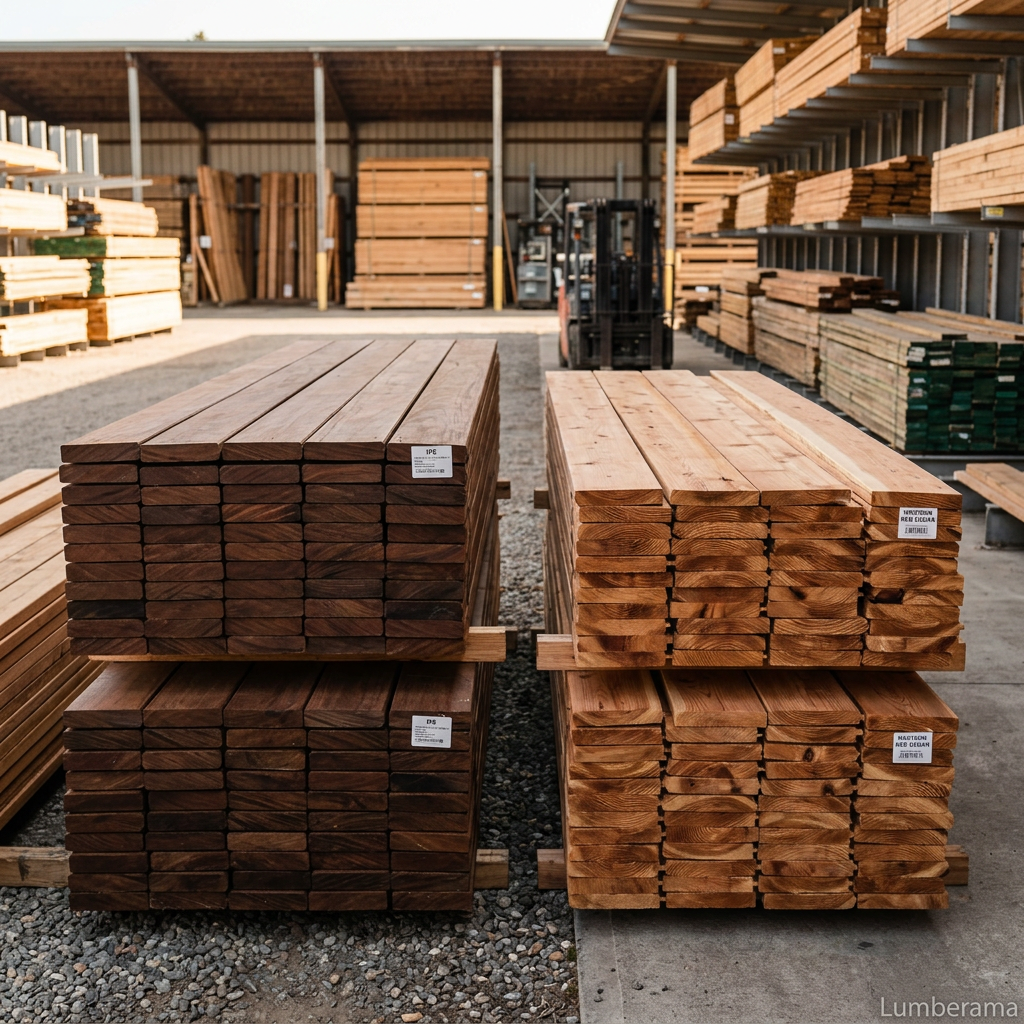
Ipe vs Western Red Cedar
Complete side-by-side comparison to help you choose the right wood
Ipe and Western Red Cedar are both popular choices for residential decking, but they sit at opposite ends of the hardness and price spectrum. Ipe is an ultra-hard exotic that lasts generations. Cedar is a lightweight softwood with natural beauty and easy workability. Understanding the tradeoffs will help you choose the right material for your budget, climate, and expectations.
| Property | Ipe | Western Red Cedar |
|---|---|---|
Janka Hardness | Better 3,680 lbf | 350 lbf |
Density | 69 lbs/ft³ | 23 lbs/ft³ |
Lifespan | Better 25–75 years | 15–20 years |
Price | $8–15/sq ft | Better $5–9/sq ft |
Fire Rating | Better Class A | Class C |
Maintenance | Better Optional annual oiling | Regular staining/sealing required |
Workability | Difficult — requires pre-drilling | Better Very easy — cuts and fastens easily |
Scratch Resistance | Better Excellent — extremely hard | Low — dents and scratches easily |
Weight | Very heavy (69 lbs/ft³) | Better Very light (23 lbs/ft³) |
Color | Rich chocolate brown | Warm reddish-brown |
The Verdict
Ipe is the performance king — it's harder, lasts longer, and requires less maintenance. Cedar is the budget-friendly classic — it's easier to work with, lighter, and has a warm natural beauty. Choose Ipe if you're building for decades; choose Cedar if you want a beautiful deck at a lower upfront cost and don't mind more regular maintenance.
Ready to Order?
Get competitive pricing from our nationwide supplier network.